Officina Italiana Design, a coherent evolution: from runabouts to superyachts
Officina Italiana Design, a coherent evolution: from runabouts to superyachts


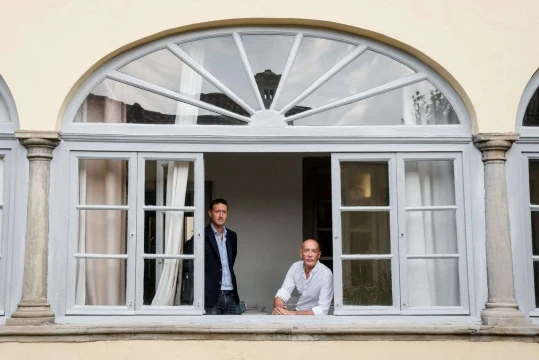
Over the past thirty years, Officina Italiana Design has established itself as one of the most recognisable names in international yacht design, developing a design language defined by formal consistency, rigour and a constant search for balance. Founded in 1994 by Mauro Micheli and Sergio Beretta, the studio has built a distinctive identity over time, closely linked to its long-standing collaboration with Riva.
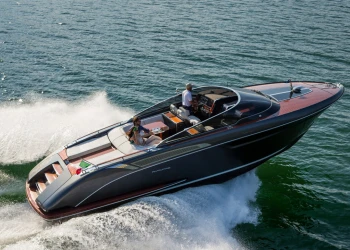
Since its inception, Officina Italiana Design has been responsible for both exterior lines and interior design across the entire Riva range, contributing to the reinterpretation of a brand historically associated with 1960s wooden motorboats such as the Aquarama, while supporting its evolution towards vessels of different sizes and segments.
According to Mauro Micheli, chief designer of the studio, the reference to the historical model could not become a design constraint: “Being bound to the Aquarama myth would have meant standing still.” In this context, the Aquariva represented a key step, demonstrating how it was possible to renew an icon while preserving its identity through an approach based on subtraction, balance and precision.
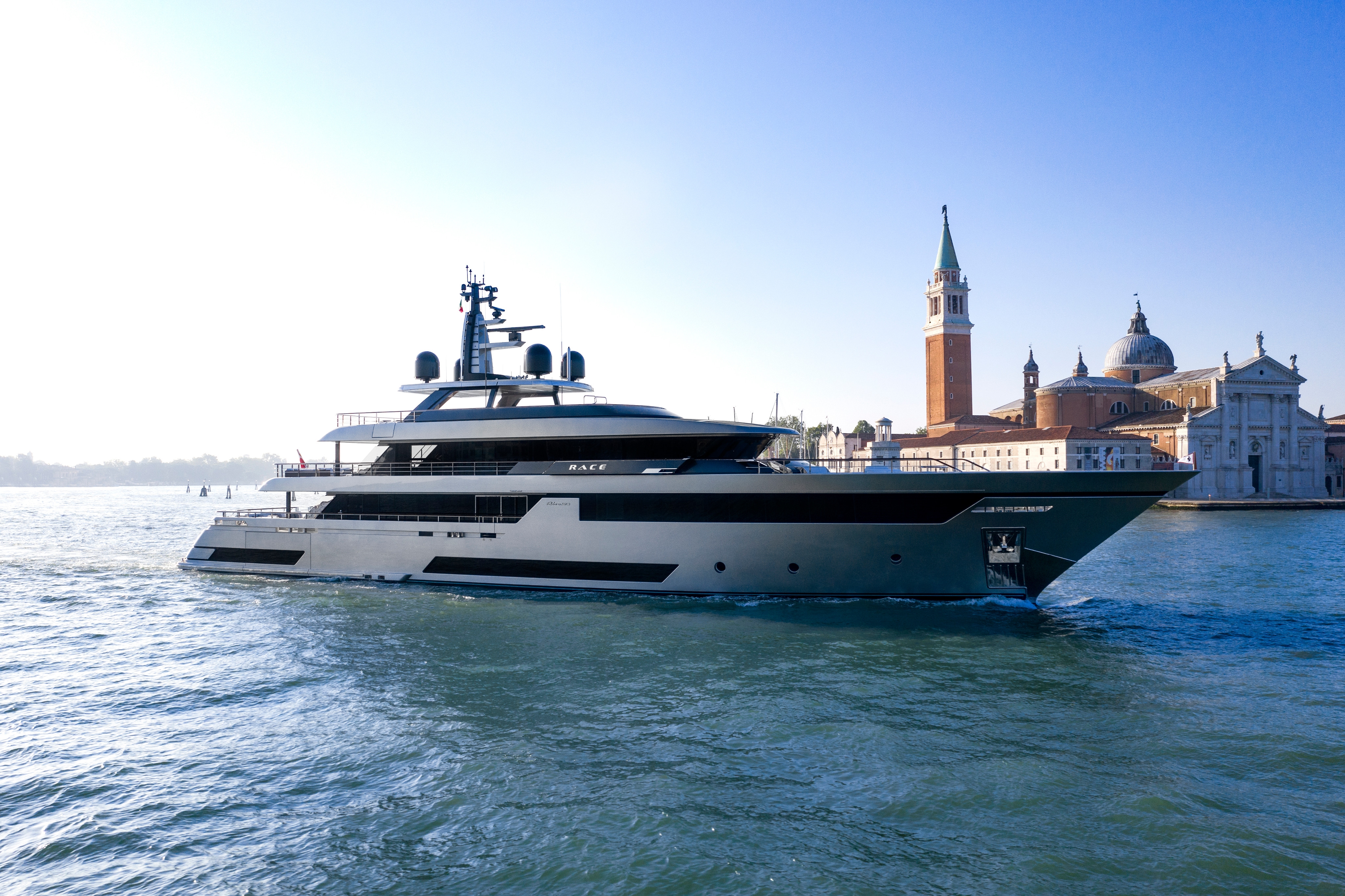
Over time, this process has supported Riva’s gradual evolution, leading the brand to consolidate its presence also in the large yacht segment. With the Riva Superyacht Division, the development of the Riva 50 Metri, with three units delivered, was followed by the launch of the 54 Metri in summer 2025, the presentation of the Riva 42 Metri Caravelle project, and the announcement of the Riva 70 Metri, currently the largest model planned by the shipyard.
At the same time, Officina Italiana Design developed specific expertise in the large yacht segment, starting in 2015 with projects for Sanlorenzo, including the 52 Steel and the 64 Steel. As highlighted by Sergio Beretta, CEO of the studio, this represented a significant step not only in terms of scale but also from a design perspective.
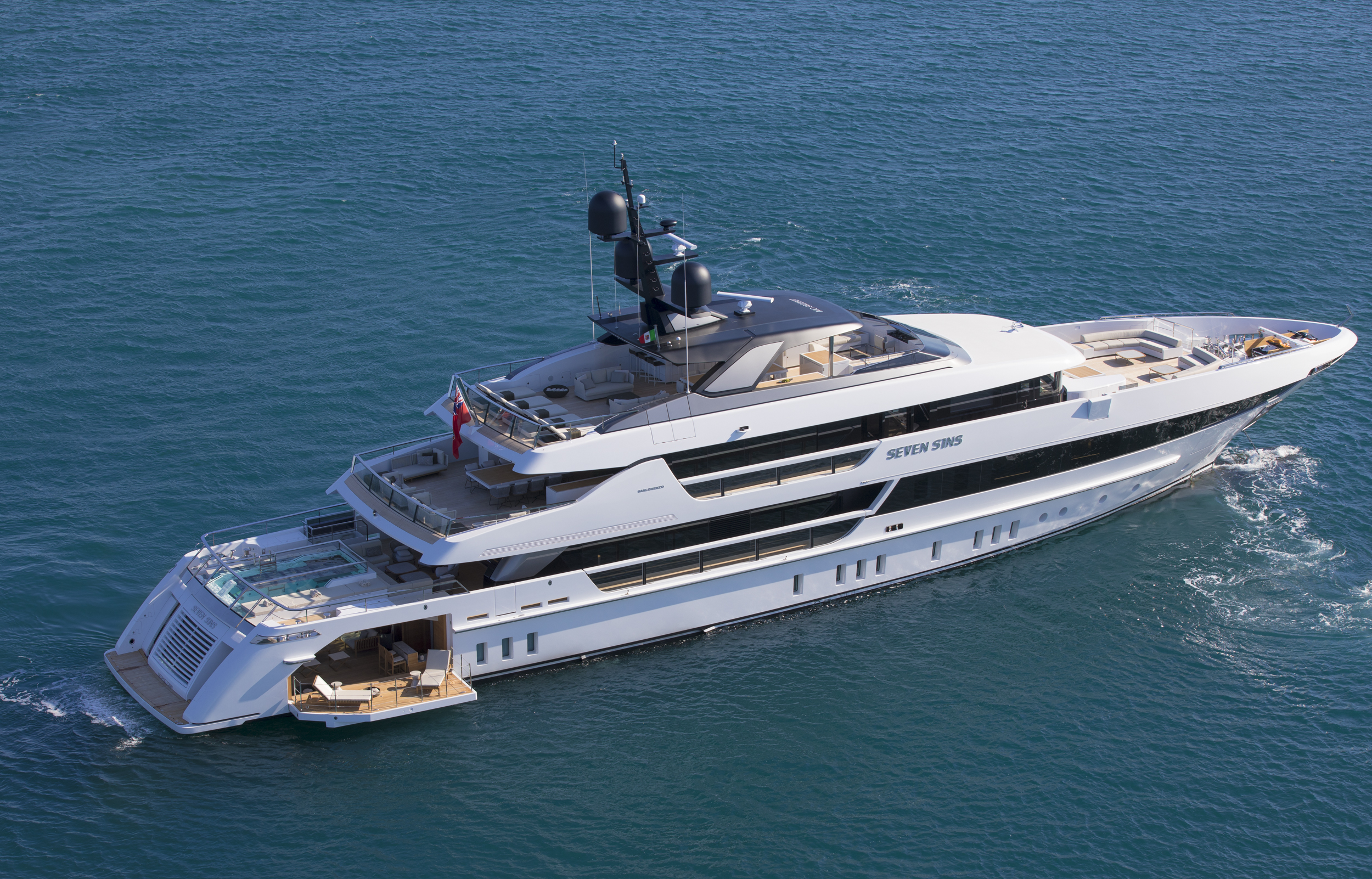
The experience gained on platforms exceeding 50 metres allowed the studio to explore solutions focused on space management and the relationship with the marine environment. These include fully open beach areas, stern configurations with multiple opening platforms, swimming pools integrated as architectural elements, and design solutions aimed at continuity between interior and exterior spaces.
According to Micheli, larger dimensions were not interpreted as a limitation, but rather as an opportunity to expand expressive freedom while maintaining stylistic coherence and brand identity.
Officina Italiana Design has therefore approached dimensional growth not as an exercise in scale for its own sake, but as a design evolution guided by balance and proportion. In this context, both classical and contemporary art have continued to represent a primary source of inspiration for defining proportions and volumes.
As noted by Beretta, the objective has remained to maintain a balance between form, function and character, avoiding that increasing size could lead to excess. The creative process has continued to develop from a strong design concept, capable of being applied across platforms of different lengths.
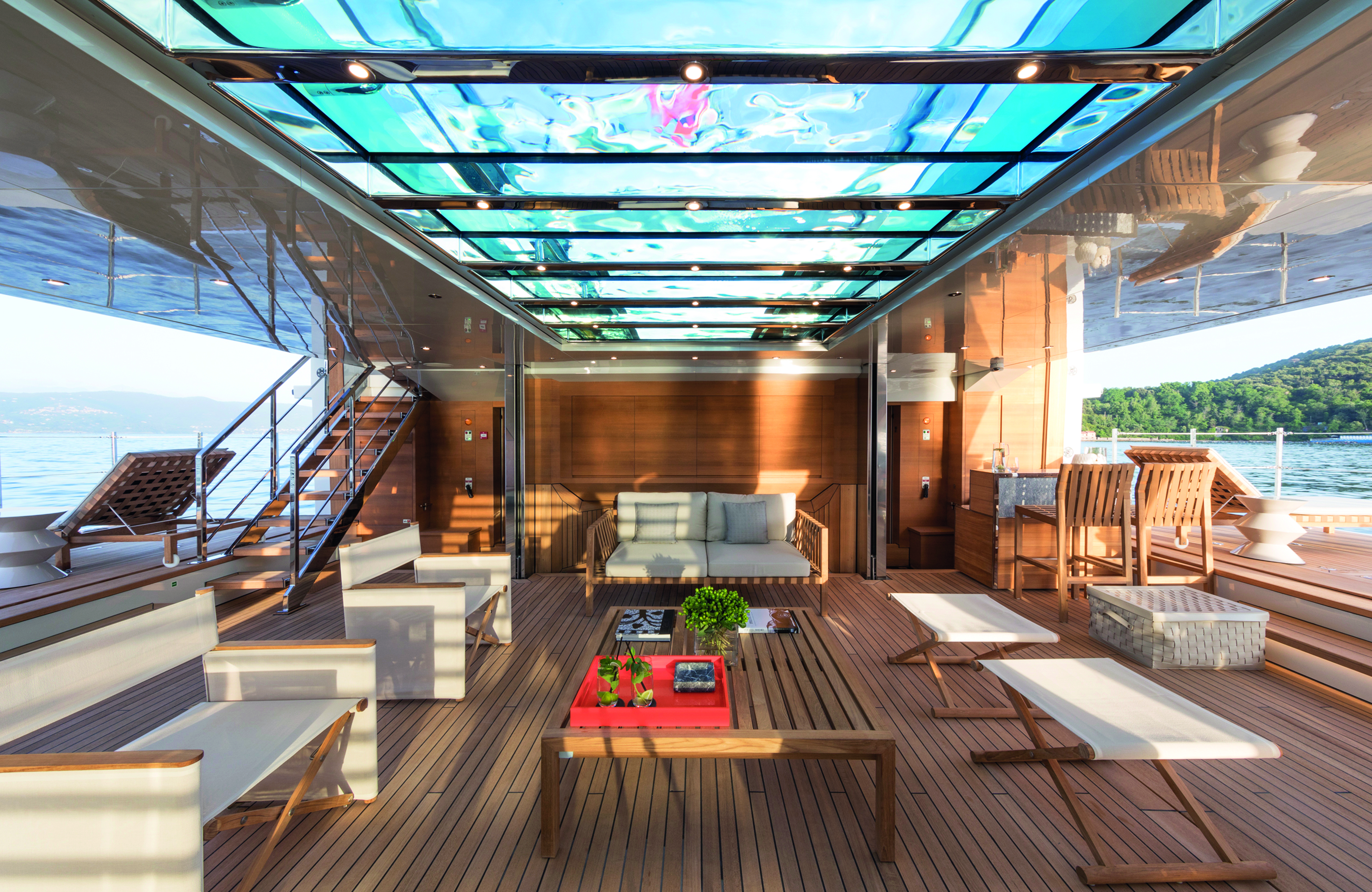
Stylistic elements developed on smaller units have thus been progressively adapted and reinterpreted on larger yachts, ensuring design continuity despite significantly different technical, functional and layout requirements.