
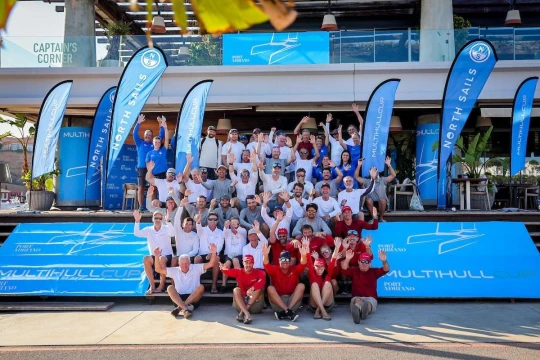
Multihull Cup 2026, Ten Years On, the Family is Growing


The 2026 edition brought together five very different high-performance multihulls for three days of racing off Mallorca. On the water, the competition was intense. Ashore, owners and crews shared the same dock, the same prize-givings and the same parties. For some, this was familiar territory. For others, it was their first taste of racing in this remarkable fleet.
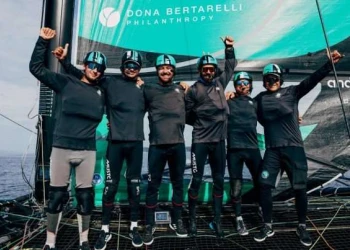
Allegra makes history as the Multihull Cup celebrates ten years of speed, competition and a very different kind of regatta. At the end of it all, Adrian Keller’s Irens 84 Allegra emerged as overall winner, claiming a record fourth Multihull Cup title and becoming the first team in the event’s history to successfully defend the trophy.
Behind Allegra, Zachary Plavsic’s Morelli & Melvin 65 Gaea finished second, just one point ahead of Irvine Laidlaw’s VPLP Custom 80 Highland Fling XVIII. Andrew and Anne Nisbet’s Gunboat 72 Layla and the 60-foot Frers-designed Ocean Explorer Cool Beauty II completed a fleet representing very different interpretations of the performance-cruising multihull. That diversity is precisely the point.
Three Days Around Mallorca
The racing began on Friday with an 18.5-mile stunning coastal course for Gunboat Race Day. In light Mediterranean conditions, finding pressure was as important as finding the shortest route. Highland Fling XVIII made the best of it, taking line honours and victory after ORCmh correction. Allegra finished second, while Gaea took third after another close battle with Layla.
Saturday brought a complete change of character. At the request of the owners, racing moved into the Bay of Palma for GT Rigging Race Day. After waiting for Palma’s famous sea breeze to establish itself, two windward-leeward races produced some of the closest racing of the regatta. Allegra won both.
In the first, Gaea finished second on corrected time, with Highland Fling XVIII only eight seconds behind and Layla another six seconds back. Second to fourth were separated by just 14 seconds. The second race brought a more established sea breeze and another victory for Allegra, setting up the final-day showdown.
Sunday’s North Sails Race Day provided yet another test. The race team waited patiently for conditions before getting away a short windward-leeward race in 7–8.5 knots. Highland Fling XVIII was first on the water but was subsequently disqualified following a protest by Gaea. After ORCmh correction, Allegra took her third race win of the regatta, with Gaea just 13 seconds behind on corrected time and Layla third. The result gave Allegra the title, with Gaea securing second overall by a single point from Highland Fling XVIII.
For Principal Race Officer Inés Cabrer and her race team, it had required flexibility and patience. Each day brought a different challenge and a different racecourse—from Friday’s coastal race to Saturday’s shifting breeze and classic Palma conditions, followed by the final tactical contest on Sunday.
The Multihull Cup thanks Inés and the entire race team for producing excellent racing in a sailing area that can be technically challenging but is also spectacularly beautiful. Ashore, Regatta Manager Claire Tibbott and her team was at the heart of making the event happen, working tirelessly throughout the week while somehow always retaining a friendly smile that is very much part of the Multihull Cup atmosphere.
That setting is an important part of the Multihull Cup formula. Mallorca in late September combines warm Mediterranean weather with some of Europe’s most celebrated sailing waters. Porto Adriano lies in Calvià, an area where the coastline, beaches, mountains and established yachting infrastructure all sit remarkably close together. Calvià has four marinas, including Porto Adriano and its location at the edge of the Serra de Tramuntana gives the region a distinctive combination of sea and mountain scenery.
For owners and crews coming to race for three days, it is also simply a very enjoyable place to spend time. Late September typically remains warm in Mallorca, and the combination of climate, restaurants, waterfront life, accommodation and easy access from across Europe makes the location an important part of the attraction.
Competitive Racing, Family Spirit
The Multihull Cup began because there simply were not enough opportunities for these boats to race against each other. “When we started, there were few multihulls and there were no events,” explained founder and Allegra owner Adrian Keller. “So the only chance we got to race against each other was by doing it ourselves.”
The concept has remained deliberately straightforward: create serious competition specifically for performance multihulls while building an event around the owners and crews who sail them.
For Allegra captain and regatta organiser Rob Grimm, that shared interest is fundamental. “It’s special because it is just for multihulls,” he explained. “It’s still quite a small community, so everyone really knows each other well. There’s mixing between boats occasionally, so it’s more a family.”
That family is becoming increasingly competitive. Grimm points out that the Multihull Cup may once have resembled “gentlemen’s racing”, but the standard has moved on considerably. The first protest in the event’s history came this year—proof that when the start gun fires, these teams are taking the racing seriously.
What happened afterwards perhaps says more about the Multihull Cup. “As soon as that protest was over, the guys that were involved were at a dinner table together,” said Grimm.
Competitive on the water. Convivial ashore.
The development of ORCmh is also helping very different multihulls race increasingly closely. The 14-second spread between second and fourth on Saturday was a striking example. Keller describes it as “eye-to-eye racing”—different boats, different concepts and different levels of outright performance brought together in meaningful competition.
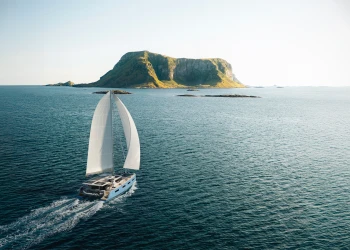
Perhaps the best illustration of the wider Multihull Cup ethos came from the newest boat in the fleet. Cool Beauty II arrived at Porto Adriano having never competed in a regatta before. Owner and crew wanted to discover what it was like to put their 60-foot performance cruiser on a start line alongside an exceptional fleet of high-performance multihulls. They left with far more than a set of results.
Skipper Simon Laight said the team had been fully integrated into the Multihull Cup family. Racing alongside the established boats accelerated their understanding of Cool Beauty II and provided valuable information about future sail requirements—knowledge that will benefit the yacht not only on the racecourse but when cruising.
With Cool Beauty II based in Andratx, Mallorca, the event also allowed the owner and team to discover another dimension to a boat designed to combine performance with comfortable cruising. The entire team thoroughly enjoyed the experience.
At the final prize-giving, Keller marked their first Multihull Cup with a simple but memorable gesture. He presented the owner of Cool Beauty II with a magnum of Champagne, welcoming the newcomers to the Multihull Cup family. It was not a prize for winning a race. It was a welcome—and in many ways it captured exactly what this regatta is trying to achieve.
Porto Adriano itself plays an important role. Grimm points to the practical advantage of being only minutes from open water, combined with the infrastructure required by large, technically sophisticated multihulls. Its combination of facilities, restaurants and waterfront spaces allows almost everything associated with the regatta to happen within a compact area.
For Keller, Mallorca’s accessibility is equally important. Crews arrive from across Europe and further afield, and for a three-day regatta efficiency matters. Boats can leave their berths and quickly reach the racing area; once back ashore, everybody is together again.
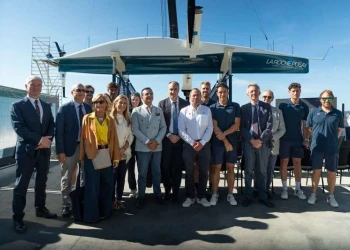
Friday’s racing flowed into the Gunboat Paella Party. Saturday’s GT Rigging Race Day ended with the Gala Dinner overlooking the fleet at Coast by East. Daily prize-givings brought everybody together immediately after racing. After the final prize-giving on Sunday, Gaea owner Zachary Plavsic invited the entire Multihull Cup family back to the team villa for sundowners and entertainment. The social programme is not something bolted onto the racing. It is part of the event.
The boats themselves explain much of the rest. These are not conventional stripped-out grand-prix racers. They are performance multihulls capable of crossing oceans, exploring coastlines and carrying their owners in comfort. Then the cruising gear can be stowed, the race sails brought out and the same boats pushed hard around a racecourse.
That combination attracts an equally interesting mixture of people: Olympians, America’s Cup winners, round-the-world sailors, professional crews and some of the sport’s most accomplished multihull specialists racing alongside owners who simply love sailing fast boats.
But nobody wants the Multihull Cup to become enormous. Its scale is one of its strengths. The ambition is instead to encourage more owners of suitable performance multihulls to come and experience it.
Keller’s invitation is simple. If you already own a boat and are interested, talk to the people who race here. If you are not ready to compete, come and watch. “One owner did exactly that two years ago. Now he is racing his own boat at the Multihull Cup. It is exciting, it is fun,” said Keller. “We are almost a family of owners, and we care about the sport.”
Ten years after the first Multihull Cup, perhaps that is the best description of all. Fast boats. Serious racing. A spectacular Mediterranean setting. Owners and crews who enjoy doing it together and room in the family for a few more.