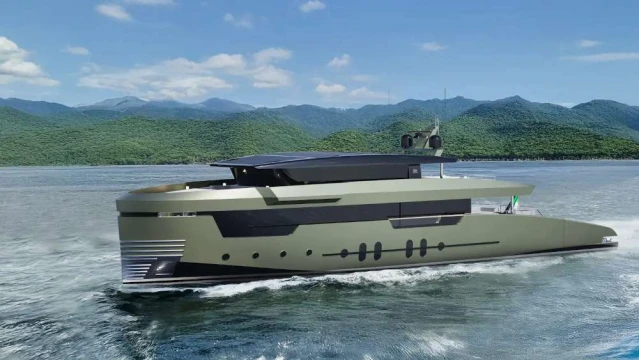
GX Superyacht GX38 Voyager
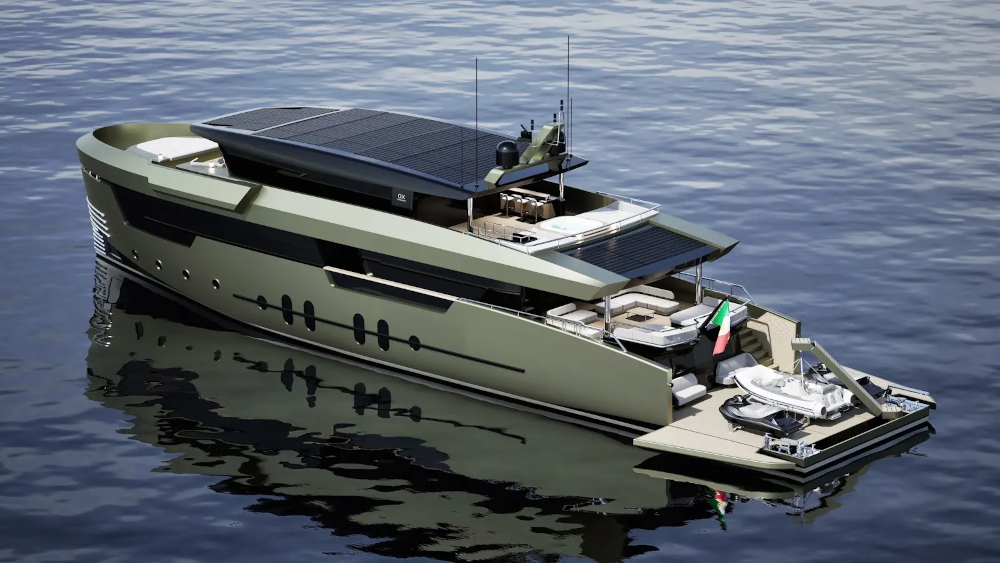
GX38 Voyager: the hybrid explorer by GX Superyachts unveiled at the 2025 MYS


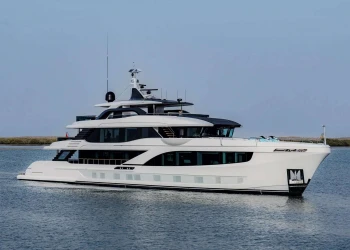
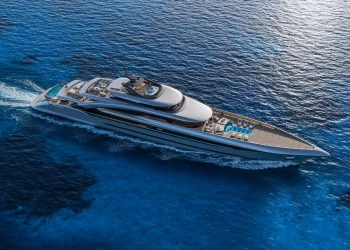
During the Monaco Yacht Show 2025, GX Superyachts — the premium brand of the Slovenian shipyard Greenline Yachts — unveiled the GX38 Voyager, an aluminum explorer equipped with a new-generation hybrid propulsion system and an optimized energy profile for extended “generator-free” stays on board. The brand had already introduced the first model in its semi-custom range, the GX42 RPH, during MYS 2024, which is now close to its launch.
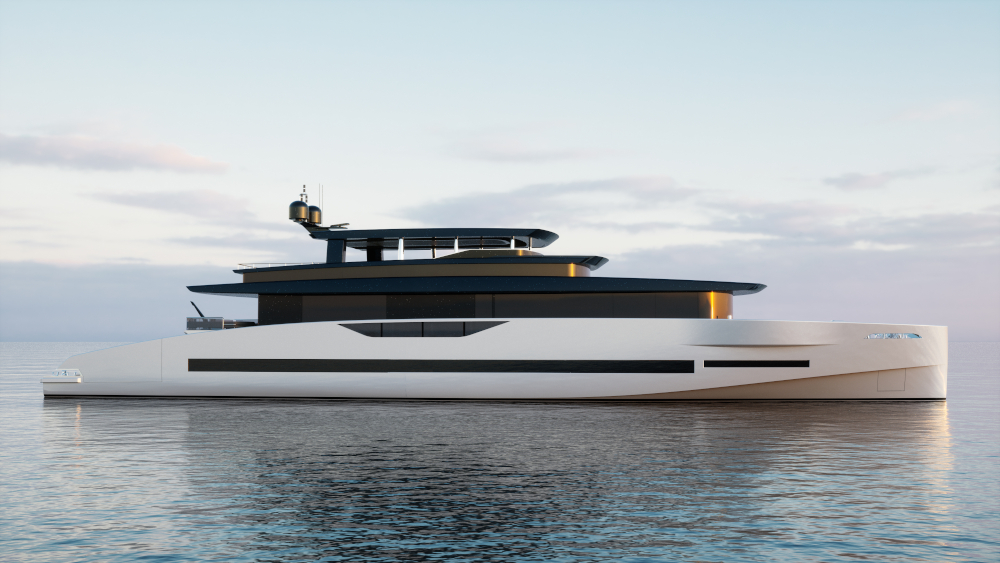
With these two models as a foundation, the GX range takes shape as a complete family designed to meet the needs of different owners and cruising styles: GX24, GX34, GX38 Voyager, GX42 RPH, and GX56, all sharing sub-500 GT platforms, highly efficient energy management systems, solar integration, and parallel hybrid propulsion solutions aimed at reducing fuel consumption, noise, and maintenance during cruising.
The yacht designer responsible for the exterior and interior styling of the GX line is Marco Casali of Too Design, while Francesco Rogantin of Studio Names is in charge of naval architecture.
At the Monaco show, PressMare met with Vladimir Zinchenko, CEO of GX Superyachts and Greenline Yachts, and Fatih Kapucu, Sales and Marketing Director of SES Yachts, the Turkish shipyard selected for the construction of these new yachts. The result was a technical and insightful double interview, focusing on the GX project’s vision, hybrid innovation, construction challenges, and global outlook.
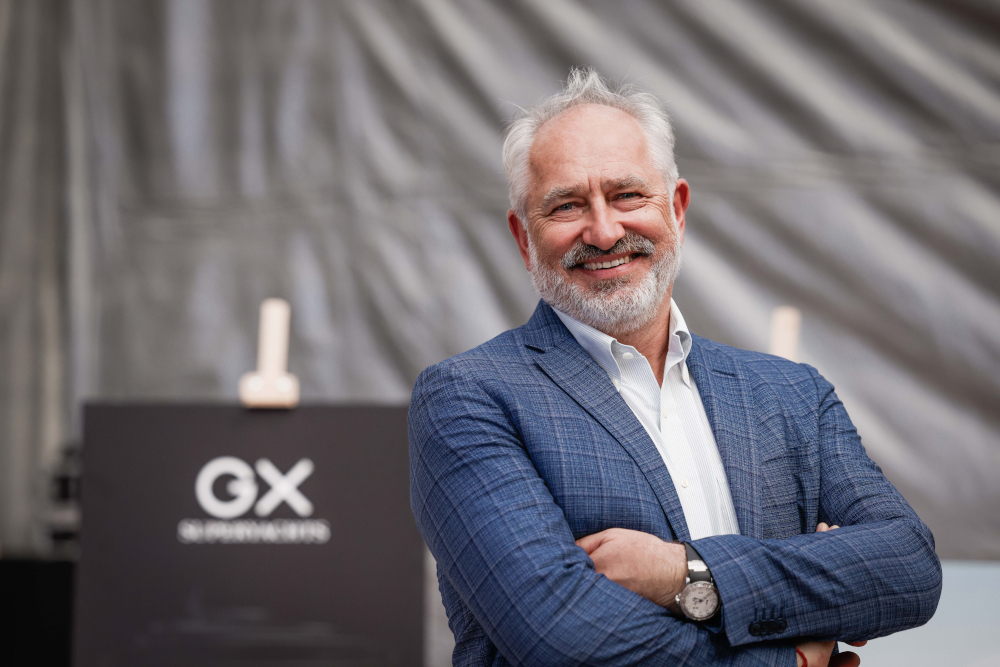
PressMare – Greenline is well known for the energy efficiency and hybrid propulsion of its boats. How did the GX Superyachts project originate?
Vladimir Zinchenko – The GX project is the natural evolution of the path Greenline has followed over the years. It builds upon our experience with hybrid systems for yachts up to around 20 meters and aims to bring the same “Responsible Yachting” philosophy to the superyacht segment.
By responsible yachting, we mean not only safety and comfort, but also an advanced concept that encompasses energy balance, environmental impact, and naval architecture quality for superior seakeeping. We want to rediscover a true seafaring culture — the “gentleman boating” of the past: slowing down to avoid making a wake, greeting other boaters, respecting others — all elements of a slow sailing approach that has nearly disappeared today.
PM – What is the energy management setup on board the GX, and how has it evolved?
VZ – The current setup is simpler than in previous generations. In Greenline’s 16 years of activity, we have developed six generations of advanced energy systems — progressively lighter, more efficient, and better integrated. We have delivered over a thousand Greenline boats worldwide — to Japan, Singapore, Hong Kong, Canada, Panama, Chile, and Alaska, among others.
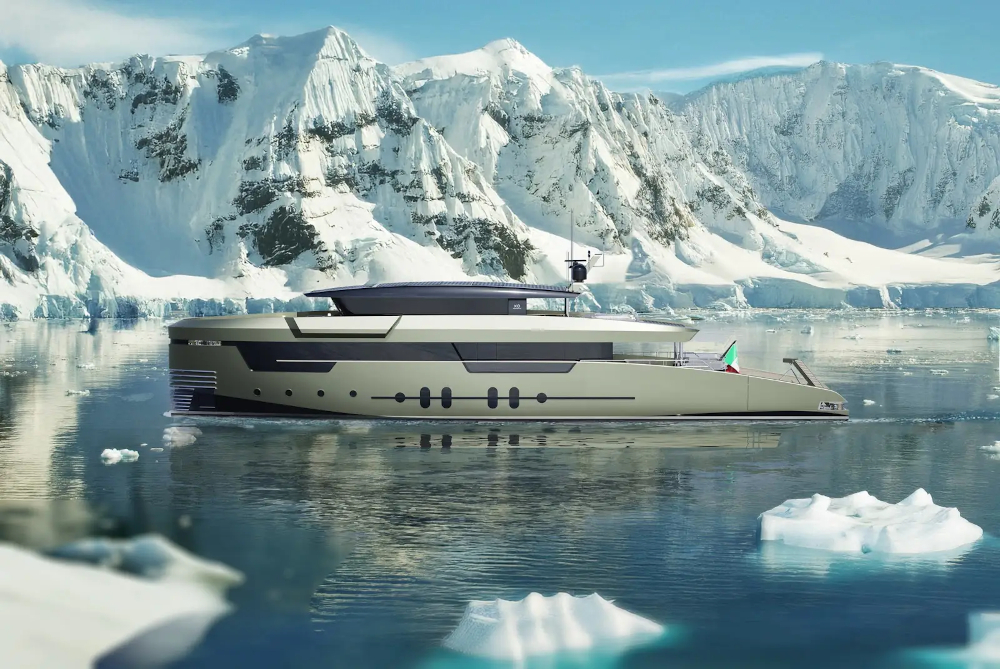
With GX, we aim to transfer that experience to the upper segment of the market. The GX38 Voyager represents a scale shift: conceived as a true voyager, not just a cruiser, capable of operating in demanding conditions such as the North Sea, combining strength and safety.
Starting from an estimated energy consumption for similar yachts (around 1.4 MW over 48 hours), we analyzed every system — air conditioning, watermaker, pumps, piping, galley, lighting, and so on — with the goal of eliminating waste and achieving an optimized onboard demand of 640 kWh over 48 hours. To support this, we designed a 1 MW battery pack, providing full autonomy without generators, ensuring silent operation — no vibrations, smells, or noise.
PM – Are you exploring next-generation battery technologies, such as solid-state batteries?
VZ – Yes, of course, we’re following developments closely. Some emerging solutions are interesting, but at present they have limitations in terms of energy density, life cycles, or weight, which make them impractical for yacht use. For now, we prefer optimized lithium-ion systems, with long life cycles (around 15 years) and high efficiency.
We complement this with an integrated solar array, which can cover up to 45% of onboard energy needs. In addition, we use a gas-based air conditioning system — more compact and faster than water-chiller systems — achieving up to 70% energy savings compared to conventional setups, with less noise and smaller installation volume.
PM – What passive thermal strategies have you implemented to reduce energy loads?
VZ – We studied how to optimize glass surfaces — which can cause interior overheating — and introduced a roof “eyebrow” that provides solar shading while hosting the photovoltaic panels. The panels themselves are air-cooled to maintain efficiency even on hot days.
The yacht will be able to generate up to 20 kW of solar power, enough to run essential systems, including air conditioning, for several hours in full autonomy.
PM – Regarding onboard electrification, what approach did you take?
VZ – We selected components with top energy-efficiency ratings — lighting, pumps, appliances — all optimized for minimal consumption. But technology is only part of the equation: the crew plays a central role in the system. They will be trained to use energy consciously, deactivating unused zones or reducing power in low-demand situations. Efficiency is, above all, a mindset — something one must be educated to.
PM – Let’s talk about the hybrid propulsion system: how is it configured?
VZ – We opted for a parallel hybrid architecture: the electric motor and the diesel engine are mounted on the same shaft. When the diesel engine is running, the electric motor functions as a generator to recharge the batteries; when the diesel is off, the electric motor provides propulsion. It’s a relatively simple, efficient, and low-maintenance solution.
In full-electric mode, the yacht can cruise at low speed (about 6 knots) or in protected areas with an estimated range of up to 100 nautical miles — around 75 miles if air conditioning is in use. When more range or higher speeds are needed, it switches back to diesel mode.
We also have a cross mode, where one diesel engine powers the electric motor…
PM – Essentially, a diesel-electric mode.
VZ – Exactly. It allows for more efficient use of energy, reducing total operating hours and extending system lifespan.
In performance terms, the GX38 offers an estimated range of 1,350 nautical miles at 16 knots. In diesel mode at 6 knots, the range reaches nearly 8,000 miles; in hybrid mode, alternating between electric and diesel, we estimate up to 10,000 miles.
PM – What are the main construction features of the GX38 Voyager?
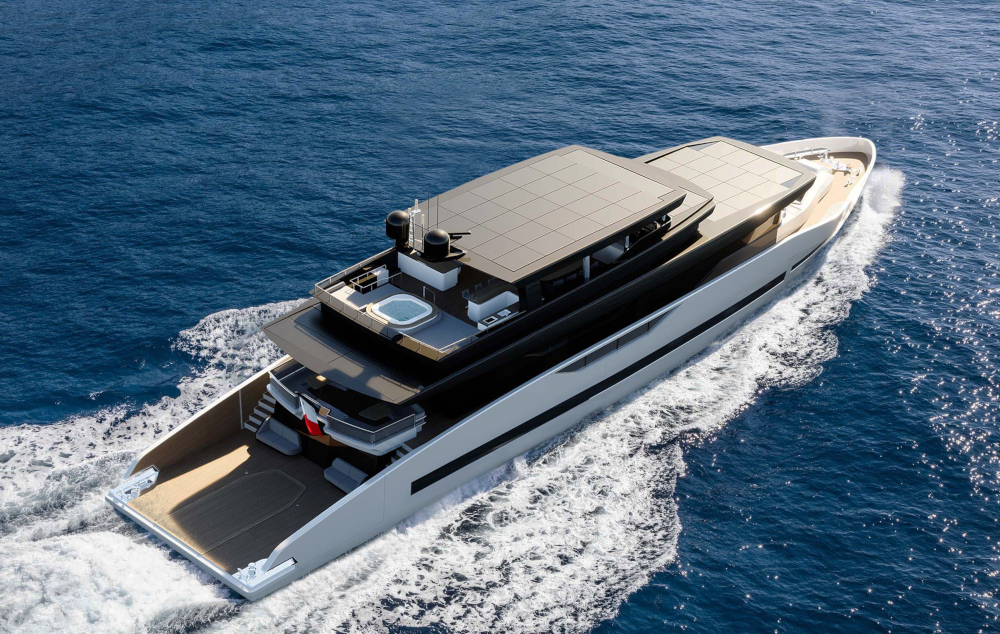
VZ – The yacht measures 38 meters in length, with a maximum beam of 9 meters (with an optional ultra-wide version, compared to the 8.2 m standard). The hull is built in aluminum, with an optional light ice-class configuration.
Two general layouts are offered: the Mediterranean version, featuring large relaxation areas and an aft pool; and the Explorer version, designed to carry a wide range of toys, tenders, amphibious vehicles, even a mini-submarine.
In any case, our focus remains on custom projects — we do not build series yachts. Each GX vessel is tailored to the owner’s individual needs and preferences.
PM – How did the collaboration with SES Yachts begin?
VZ – In Slovenia, we don’t have facilities suitable for building large hulls. That’s why we evaluated several metal-construction shipyards in the Mediterranean. We shortlisted five, then visited seven in total.
SES Yachts, based in Turkey, was chosen for its boutique shipyard character, strong family tradition, and exceptional build quality. Every stage of construction is personally overseen by family members, ensuring sensitivity and accountability — qualities we were looking for in a project like GX.
PM – What other models are planned beyond the GX38?
VZ – We’re planning GX platforms of 34, 42, and 56 meters, all based on the same hybrid and solar technologies. We intend to remain below the 500 GT threshold to maintain design agility. We’re not interested in competing in the 60–70-meter range — that would require investments and production scales that go beyond our philosophy. We prefer to focus on effective, innovative, and personalized yachts.
PM – When will we see the GX42 in the water?
VZ – The launch is imminent. We plan to exhibit it first at the Cannes Yachting Festival, and then at the Monaco Yacht Show 2026.
Fatih Kapucu (Sales & Marketing Director, SES Yachts)
PressMare – First of all, could you introduce SES Yachts?
Fatih Kapucu – Ours is a family-run company with more than fifty years of history. Today the third generation leads the shipyard, with truly shared management: my wife Elif, managing partner and naval engineer, coordinates the main operations with me, and in total, six family members are permanently involved across different operational areas.
PM – Could you briefly describe the GX42 RPH project?
FK – The GX42 RPH (Raised Pilot House) is a 42-meter aluminum motor yacht equipped with a hybrid propulsion system. It features a 940 kWh battery pack, capable of sustaining all onboard loads (including air conditioning) for 48 hours at anchor, during summer conditions, without running generators.
PM – Is there already a client for the first unit?
FK – Yes. The first GX42 has already been sold, and we’re in negotiations for the second hull.
PM – Does the GX42 represent a turning point for SES?
FK – In a way, yes. SES has always operated in the custom yacht segment, working with materials such as steel, aluminum, fiberglass, carbon fiber, and wood. The GX42 expands our horizons while staying true to our DNA.
We’ve launched fully custom projects that have been very well received by owners, such as Farniente — a 32-meter yacht we presented at MYS 2024, which was nominated as a finalist in three categories at the Boat International Design & Innovation Awards 2025 (Best Naval Architecture, Best Exterior Design, and Best Interior Design), and also shortlisted for the World Superyacht Awards 2025.
Farniente features a steel hull, wood/composite superstructure, and teak decks. It perfectly showcases our shipyard’s construction capabilities. Over the past year, we also launched the 39-meter sailing yacht Linnea Aurora and, more recently, the 26-meter motor yacht Dark Sky. Our current fleet comprises 91 yachts between 20 and 42 meters.
With the GX series, we want to introduce a semi-custom approach to our construction process: yachts with optimized base platforms (hull layout, systems) that shorten delivery times and reduce costs, while still allowing for technical customization and full personalization of interiors and outfitting.
PM – How is the shipyard structured today, and what are your development plans?
FK – We operate three main sheds on two sites and can build yachts up to 500 GT. We deliberately limit production to 2–3 yachts per year to maintain control and quality over every single project.
To meet the commitment with Greenline for the GX line, we’re planning to expand our facilities, creating a dedicated area exclusively for building these yachts. We expect it to be operational within 2–3 years, depending on permits and local authorities.
PM – How many people work at SES Yachts?
FK – We have around 45 direct employees, and including suppliers and subcontractors, more than 150 people enter our shipyard every day. The organization is flexible, but every member — internal or external — is an integral part of the construction process.
©PressMare - All rights reserved