
Zero-Waste Shipyards: Towards Sustainable Refit
Zero-Waste Shipyards: Towards Sustainable Refit
With this article, PressMare continues its collaboration with Alfonso Postorino, Technical Director of Cantiere Rossini in Pesaro. Following his previous insights into yacht refit, he now shares his expertise on one of the most relevant topics for yacht owners and industry professionals today: sustainability.

In a previous article I discussed the sustainability of refit activities. The title was “Refit and Sustainability: Extending Life, Reducing Impact.” The simple fact that a refit extends the service life of a yacht by many years reduces the carbon footprint generated during its construction and, consequently, improves the environmental sustainability of both the yacht and its operation.
However, it is equally true that refit shipyards generate a significant amount of waste that must be managed carefully and responsibly. In reality, I believe that only those who work in the sector fully appreciate how complex it is to properly handle the large volume and wide variety of waste generated over the four to six months typically required for a yacht refit. Listing every type of waste produced would be both lengthy and tedious, but mentioning the most common examples helps illustrate why every refit yard must be equipped with dedicated facilities and well-defined procedures for waste collection and disposal in compliance with applicable regulations.
The challenges begin immediately after haul-out, when the underwater hull is pressure washed. The resulting water is classified as waste in its own right (CER 161002 – aqueous waste solutions) and must therefore be collected and disposed of by specialised companies. Some shipyards have installed their own treatment systems, but when the volumes exceed certain thresholds it becomes more cost-effective to rely on external waste treatment facilities. To give an indication of the scale involved, Cantiere Rossini disposes of approximately 330 cubic metres of hull washing water every year.
A different case is represented by bilge water (CER 160708* – waste containing oil). In this case the volumes are certainly lower, but the waste is classified as hazardous due to the presence of diesel fuel and/or lubricating oils (this is the meaning of the asterisk at the end of the code). Water used to clean fuel tanks also falls into this category.
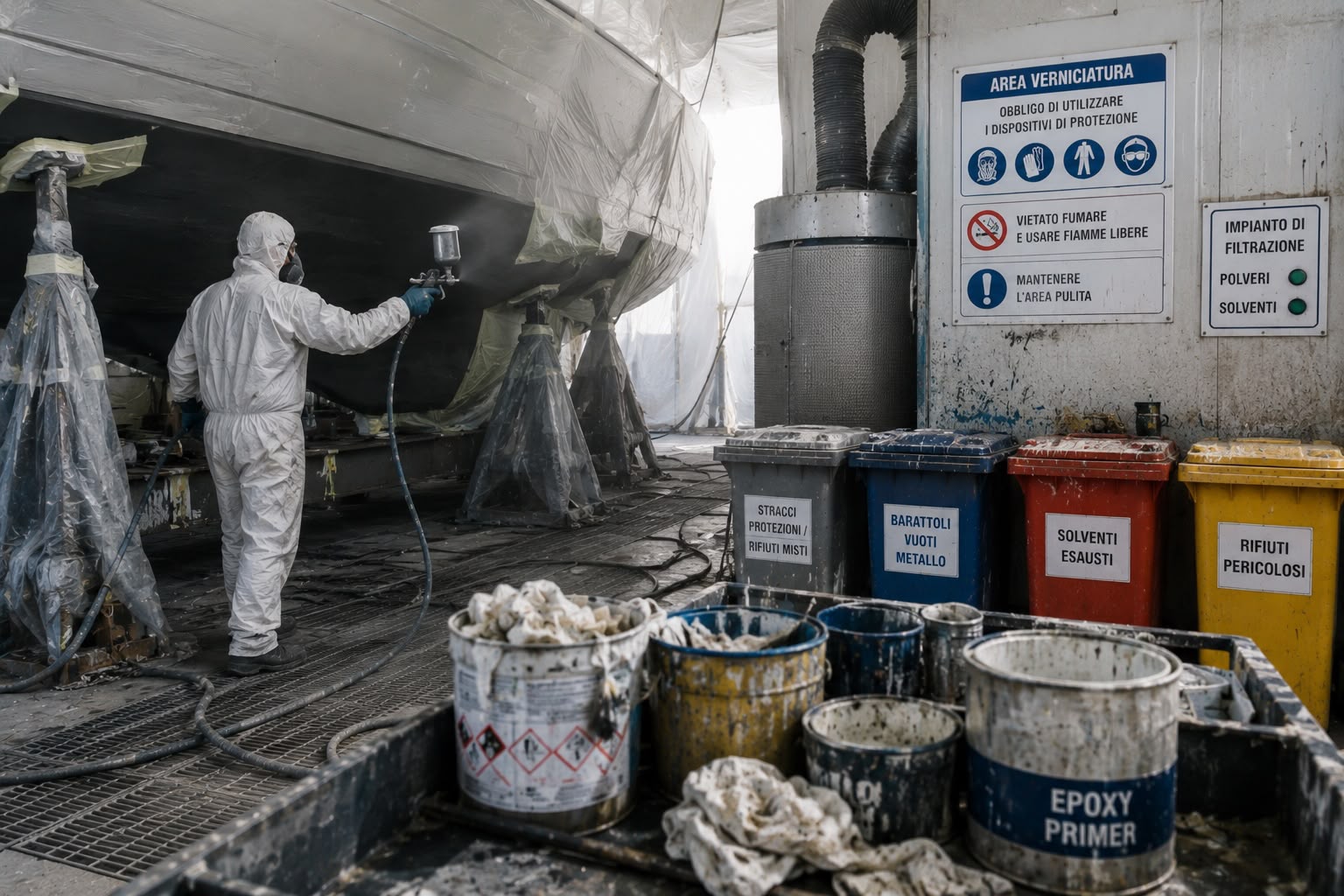
Painting operations generate several different types of waste: airborne dust and solvent emissions, leftover paint, empty paint cans, solvents used for cleaning tools, contaminated rags, protective materials and much more.
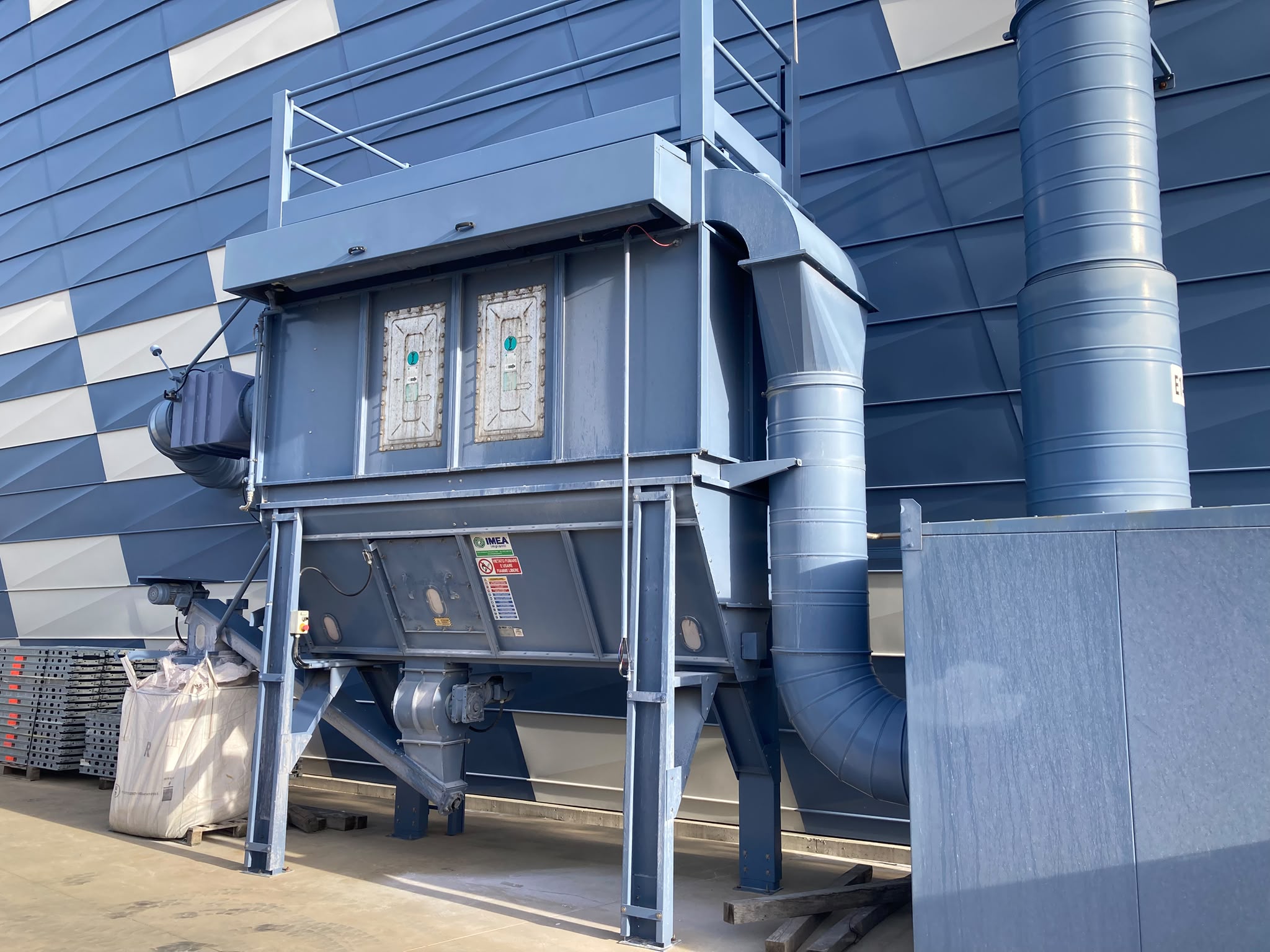
To control atmospheric emissions, shipyards must be equipped with suitable fixed or portable filtration systems, preferably using separate units—one for dust and another for solvents. These systems themselves generate waste, as the filtering media they use (fabrics, activated carbon and similar materials) must be replaced periodically. Consequently, the spent filter materials also require proper disposal.
Even empty paint cans present a challenge because of their considerable volume and the contamination caused by residual paint. Not all waste treatment facilities are authorised to process this type of waste. It is therefore essential to verify that the selected operators hold the appropriate permits, certifications and valid authorisations.
The repainting of a yacht also generates an enormous quantity of protective material, essentially sheets of paper or plastic used to protect freshly painted surfaces, teak decks and glazing. If the yacht is repainted inside the traditional shrink-wrap cocoon, a considerable amount of heat-shrink plastic sheeting must also be disposed of. Covering a 50-metre yacht requires approximately 2,000 kg of shrink-wrap film.
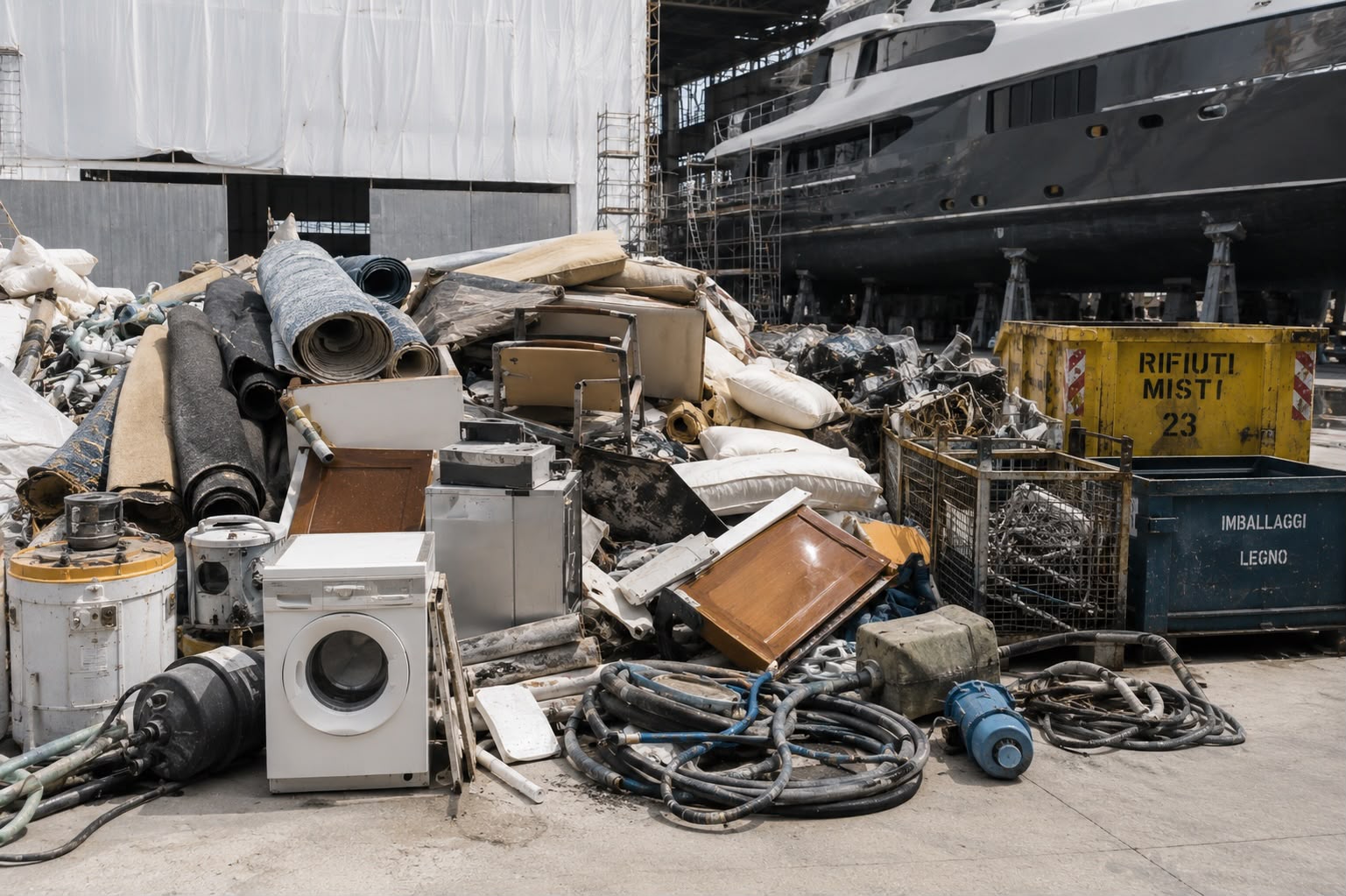
Any item removed from a yacht during a refit automatically becomes waste that must be disposed of. Here the list becomes extensive: interior furnishings, upholstery, exterior cushions, mattresses, awnings, carpets, glass panels, household appliances, audio-video equipment, spotlights, wall lights, pumps, piping, filters, electric motors, batteries, waste oil and much more.
Packaging should not be overlooked either. Every spare part required for a refit, as well as new furnishings, arrives in wooden or cardboard packaging, often containing a significant amount of plastic. Fortunately, these materials are recyclable, but recycling is only possible if the shipyard implements an effective waste separation system. In refit yards, packaging generated by the shipyard’s own activities is joined by packaging resulting from purchases made directly by the crews. Crew members buy virtually everything online—not only equipment for the yacht but also personal items. Online shopping platforms are widely used, to the extent that some shipyards have installed dedicated parcel collection points similar to Amazon Lockers to avoid overwhelming their warehouses with the dozens of packages arriving every day.
Even the provisioning of a yacht before the start of a new season generates a considerable amount of packaging that the refit yard must be prepared to collect and dispose of properly. Suffice it to say that a 50-metre yacht typically accommodates a crew of eight to ten people plus twelve guests. This is effectively a small community of around twenty to twenty-two people, with the corresponding consumption of food and beverages. Moreover, many supplies are delivered to the dock in their original packaging—wine cartons, fruit crates and so on—but, due to the lack of storage space on board, the packaging is usually left ashore.
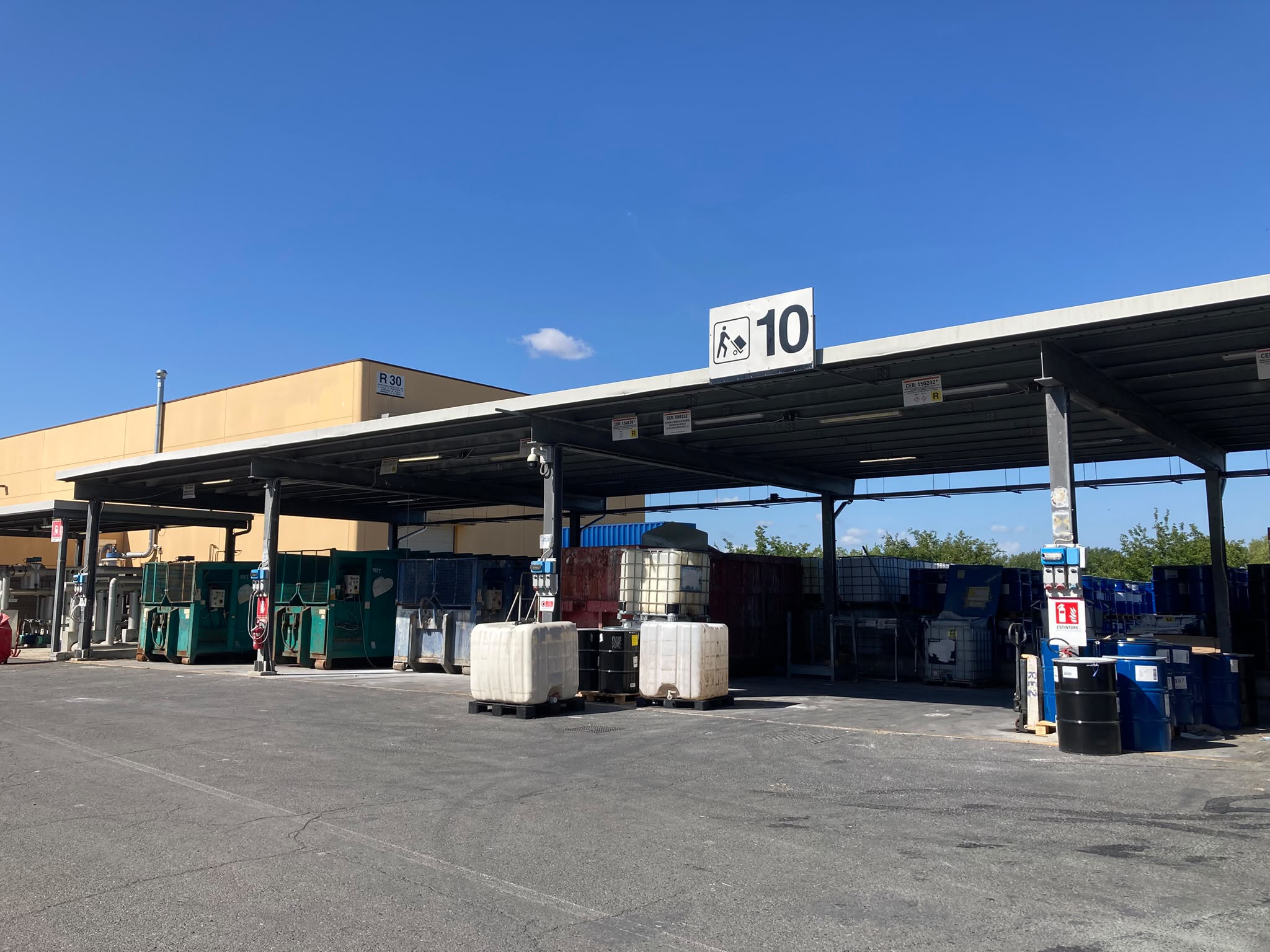
To manage this substantial volume of waste correctly, a refit shipyard must have a dedicated storage area—preferably covered—where different waste streams can be kept separate pending disposal. Every waste type must be identified by its corresponding CER code and disposed of within a maximum period of twelve months. Disposal must be carried out by specialised companies holding the appropriate authorisations and certifications. Every movement of waste must also be recorded in a dedicated loading and unloading register, which must always be available for inspection by the competent authorities.
In addition to waste and atmospheric emissions, the sustainability of a refit shipyard must also be assessed in terms of energy consumption, including electricity and, where applicable, natural gas or diesel used for heating. Electricity consumed directly by refit activities is generally only a fraction of the total electricity used by a yacht’s onboard systems while the crew remains on board. Many people assume that crews leave the yacht during a refit, but in reality this is rarely the case. On the contrary, crews usually continue living on board even when the yacht has been hauled ashore, leaving only when the nature of the work—such as extensive repainting or work inside the crew accommodation—makes their presence impossible. As a result, shipyards have limited opportunities to reduce electricity consumption itself, but they can do a great deal to reduce the carbon footprint associated with that consumption.
First of all, shipyards can install photovoltaic panels—typically on the roofs of their workshops—to reduce the amount of electricity drawn from the grid. As for the remaining electricity purchased from the grid, they can buy Guarantees of Origin, which certify that the electricity comes from renewable sources. In Italy, Guarantees of Origin are issued by GSE (Gestore dei Servizi Energetici – Energy Services Manager). This certification effectively protects the shipyard against any accusations of greenwashing.
Shipyards can also do a great deal to reduce the consumption of natural gas or diesel used for heating. First and foremost, they can build well-insulated workshops to minimise heat loss. Clearly, this is not possible where the shipyard relies extensively on heat-shrink cocoon coverings. Heating a yacht enclosed within a shrink-wrap cocoon requires an enormous amount of energy, most of which is almost immediately dispersed into the surrounding environment. Consider that heat-shrink film is less than half a millimetre thick. Its insulating properties are virtually non-existent.
Assuming that the shipyard has properly insulated workshops, the best solution would be to install high-efficiency heat pumps, ideally powered by electricity generated from renewable energy sources.
The fact that crews remain on board throughout the refit period also means that the shipyard must manage the grey water and black water produced by the yacht. How many shipyards are equipped with collection systems for wastewater from yachts both alongside and ashore? For yachts stored ashore, shipyards often rely on temporary holding tanks placed beneath the hull, which are periodically emptied by vacuum tanker trucks. A much better solution would be to install an underground wastewater collection network leading either to a large storage tank or directly to the municipal sewer system.
The quantities involved are far from negligible. During the first six months of this year alone, Cantiere Rossini collected and disposed of approximately half a million litres of grey water and black water.
Talking about “zero-waste” refit shipyards is therefore far from reality. Waste generation is an inherent part of maintenance and refit activities. What refit yards can—and should—do is implement procedures that minimise waste production and ensure it is managed and disposed of as efficiently and responsibly as possible.
A valuable contribution in this direction comes from adopting the procedures required by ISO 14001 environmental management certification, which should be regarded as a best practice for every refit shipyard. Likewise, yacht owners, captains and yacht managers should consider these aspects alongside the commercial offer when selecting a shipyard for their yacht’s next refit. Not all shipyards devote the same level of attention to waste management and, more broadly, to environmental sustainability.
After all, it would be paradoxical to speak of sustainable yachting without also considering the long periods that yachts spend in shipyards during the winter maintenance season.
Alfonso Postorino
©PressMare - All rights reserved