
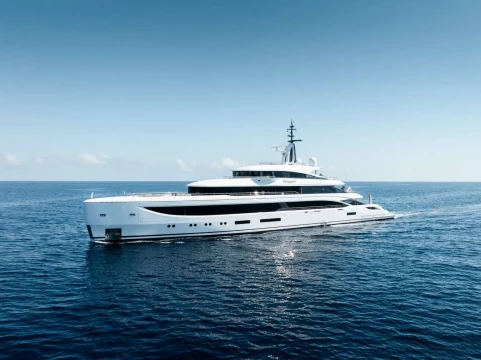
Benetti Dagger: hybrid B.Now 67M superyacht - Photo Tom Van Oossanen
Benetti Dagger, a hybrid B.Now 67M with Sinot interiors
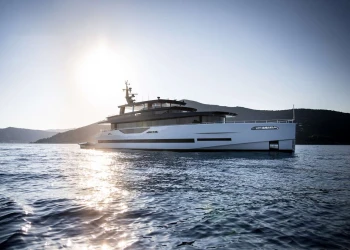
Benetti has developed and built Dagger (FB288), a 67-metre superyacht from its B.Now line, at the company's Livorno yard. She has a steel hull, an aluminium superstructure and a gross tonnage of 1,334 GT. The yard engineered the naval platform, the British studio RWD drew the exterior lines and Sinot Yacht Architecture & Design created the fully custom interior. At the centre of the project is a modular hybrid propulsion system, which Benetti links to lower noise and vibration on board and to greater operational flexibility.
Founded in 1873 and part of the Azimut|Benetti Group, the yard places Dagger within its Green Route, a sustainability programme that goes back more than twenty years. The starting point it cites is 2006, when a diesel-electric propulsion system was installed on a yacht; one of the more recent projects is B.Neos The Soul of Silence, offered only in a full hybrid configuration. The programme is run by Benetti's R&D department, which develops, tests and validates technical solutions.
In the engine room, the main engines, generators and battery pack can run in different combinations. Propulsion comes from two Caterpillar C32 engines rated at 1,193 kW at 2,000-2,300 rpm, supported by three Caterpillar generators: two C7.1 units of 118 ekW and one C9.3 of 200 ekW. Two 200 kW VEM shaft generators link the mechanical and electrical sides and can work either as generators or as electric propulsion motors. In PTO (Power Take-Off) mode they draw power from the main engines to supply the hotel load and charge the batteries; in PTI (Power Take-In) mode they turn energy from the generators or the batteries into thrust on the shafts. The controllable pitch propellers (CPP) adjust blade pitch in real time, so speed and direction can be changed without reversing shaft rotation or moving the engines away from their ideal rpm.
The captain can choose between three operating profiles. In Enhanced Comfort Mode, at 7 knots, the yacht runs on fully electric propulsion with the main engines off: the generators power the electric motors and the batteries absorb load peaks (peak shaving). Benetti sees this mode as suited to coastal cruising and night passages. In Extended Range Mode, at 12 knots, only the diesel main engines are running and the generators stay off, with the shaft generators covering the entire hotel load. According to the yard, this cuts generator running hours and reduces fuel consumption by up to 15% compared with a conventional installation. Eco Transfer Mode, at 10 knots, is intended for long passages at displacement speed and uses a single main engine supported by the batteries to limit fuel use and wear on mechanical components.
The battery pack uses sodium-metal chloride, or salt, chemistry, with a capacity of 360 kWh and peak shaving capability of up to 150 kW. Benetti says the electrolyte is non-flammable, which removes the risk of fire and thermal runaway. As a result the modules are installed without an isolated battery room with its own fire suppression systems, and the space can be used for other purposes. The yard also states that the batteries do not degrade when left inactive and recover their performance once reactivated. At anchor they allow the generators to be shut down for about 2 hours, with zero local emissions and hotel services fully running. For time spent at anchor, the exhausts are routed high above the superstructure to keep the air and the water astern clean, while heat exchangers recover heat from the generators for onboard use.
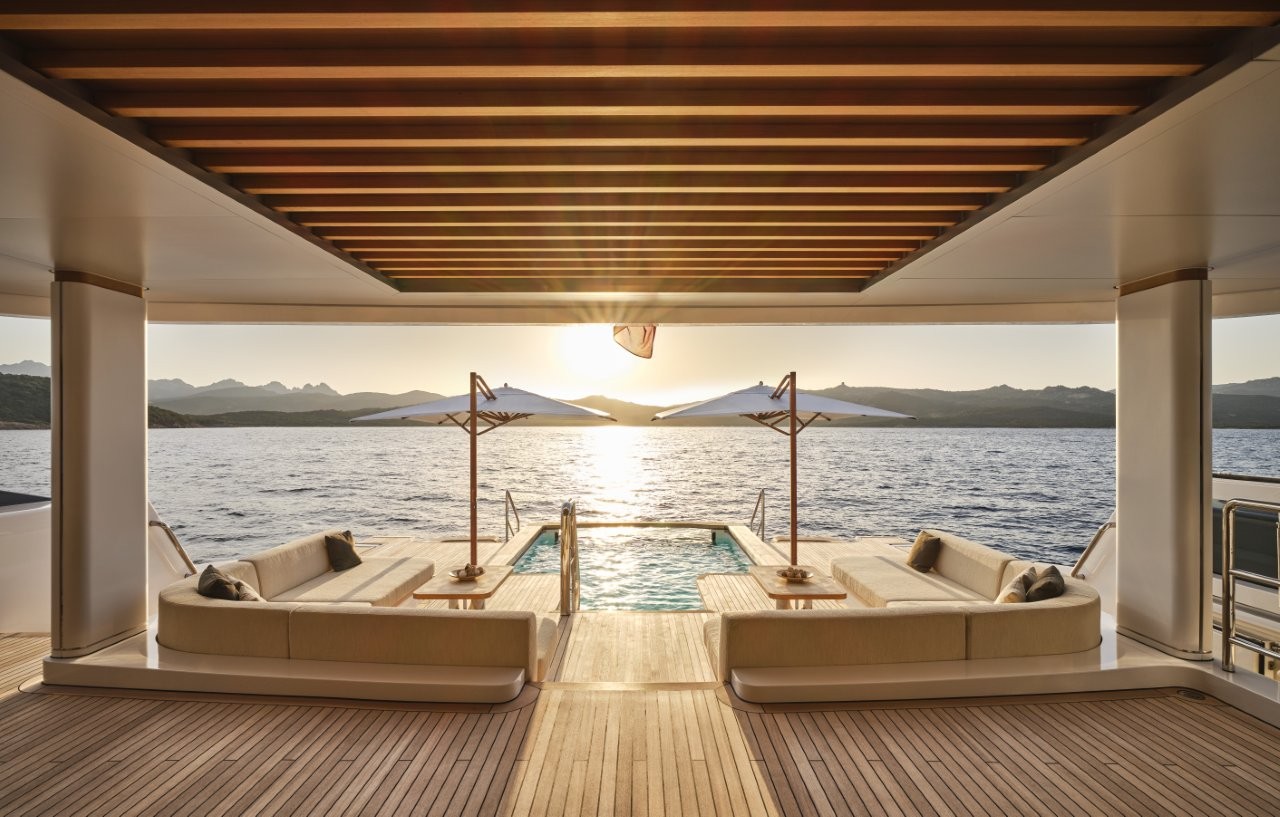
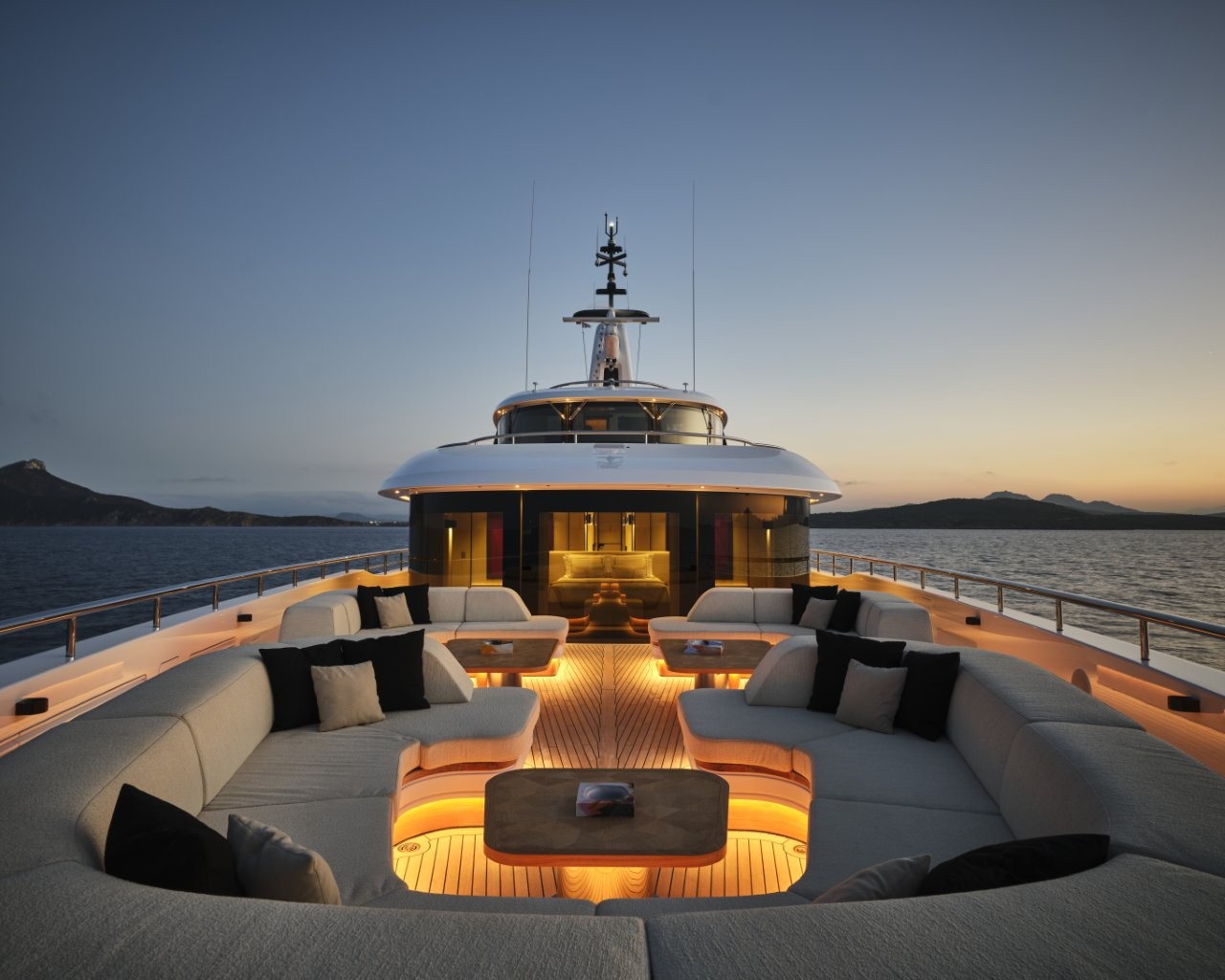
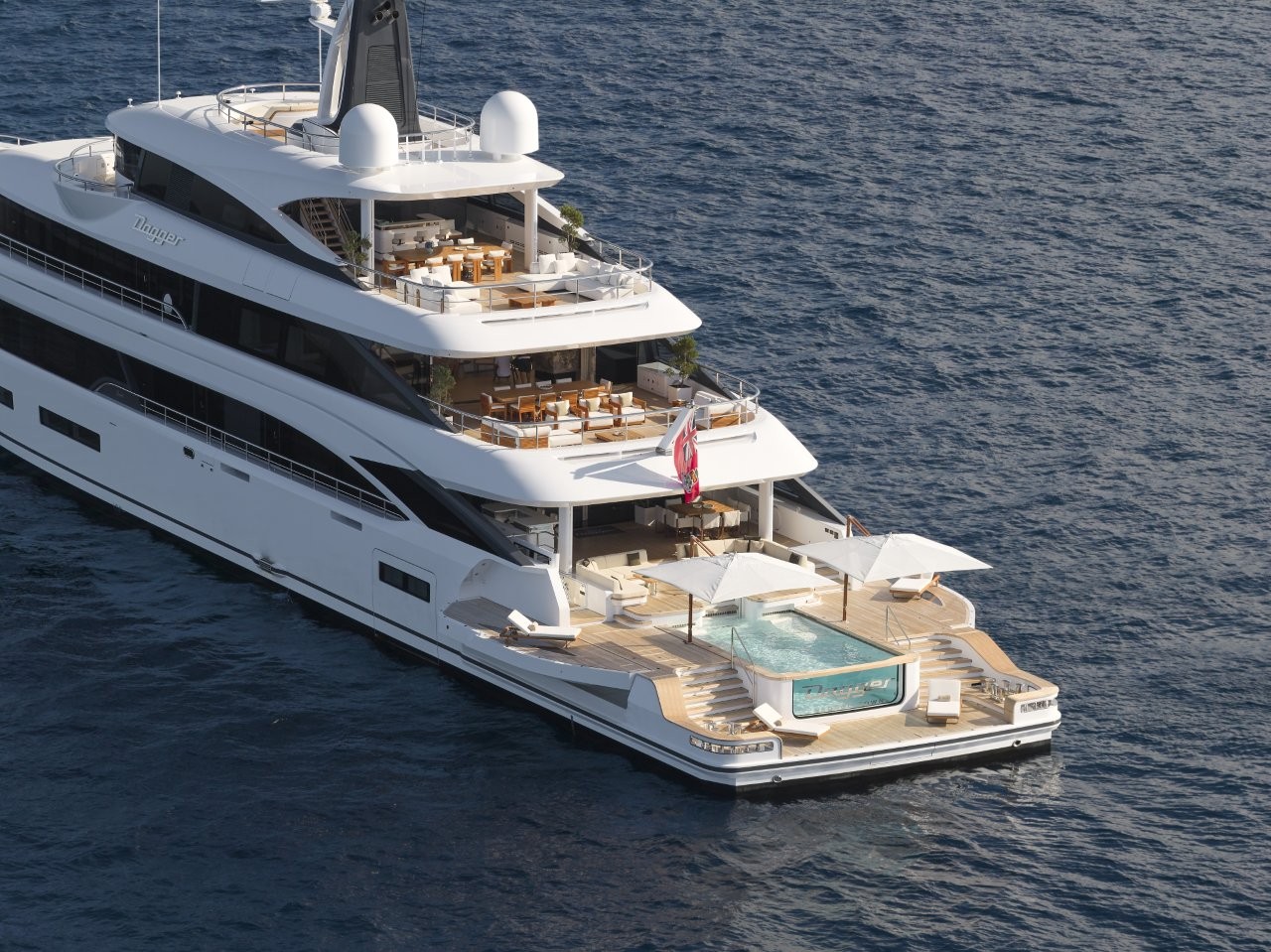
On the main deck, the exterior space is built around the Oasis Deck®, with fold-out side wings that extend the beam to up to 14 metres and an infinity pool. Inside are the main saloon and a guest area with 6 guest and VIP cabins with large windows. The deck above combines the wheelhouse, an office and the captain's cabin with the owner's area, made up of a master suite, a private study, two bathrooms and a private foredeck terrace. Aft, a terrace sits next to the Owner's Lounge, enclosed by 6-metre full-height glazing. The lower deck houses the beach club and wellness area, a garage for tenders and toys and accommodation for 16 crew in 9 cabins.
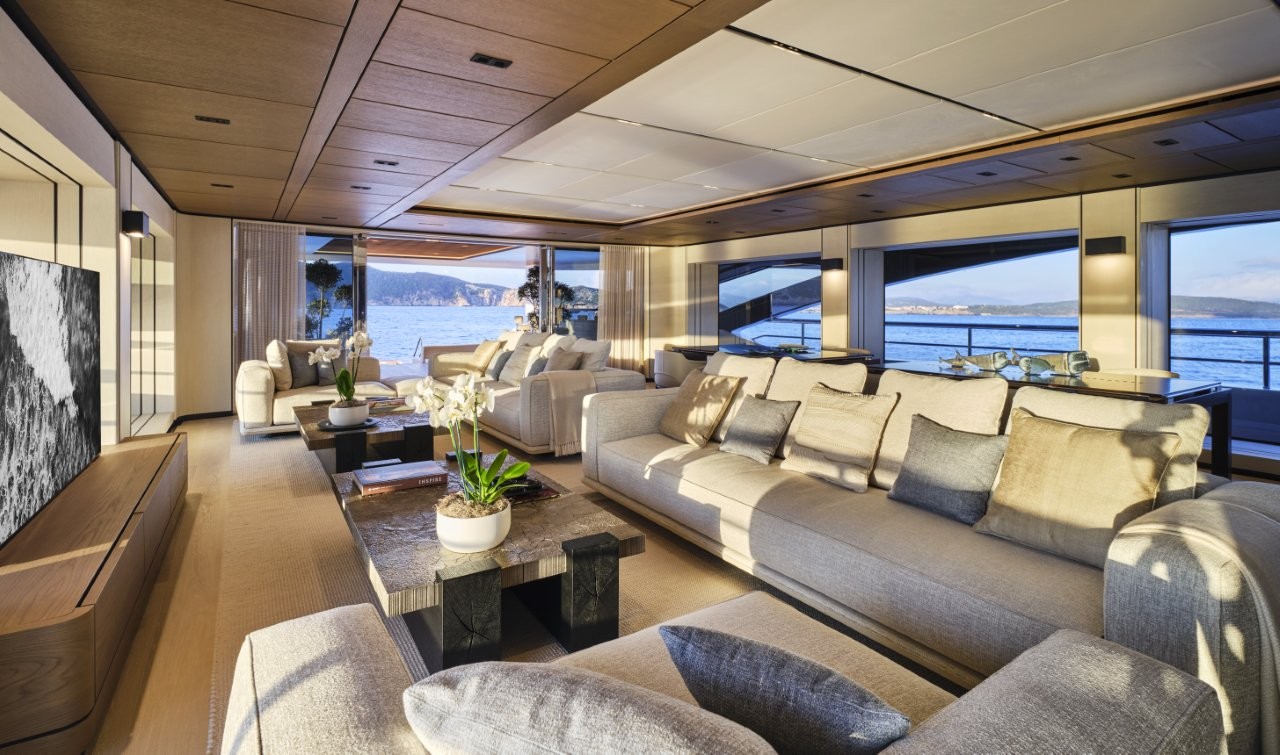
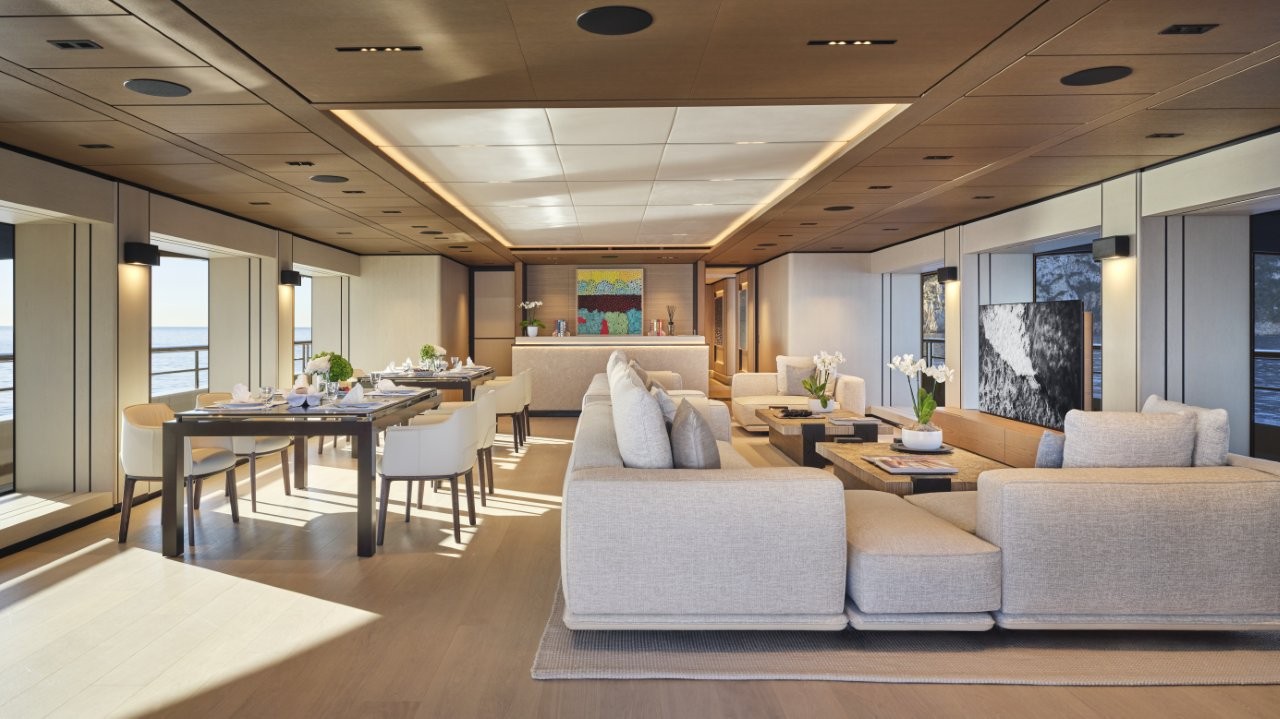
Sinot designed the interior as an environment that adapts to different moments on board, from family life to larger and more formal occasions. Light woods, natural stones, tactile wall finishes and soft upholstery are set against darker architectural lines that continue across furniture, doors, floors and ceilings. Straight lines give way to rounded corners and curved furniture. In the Main Deck Lounge the studio chose an asymmetrical layout, departing from the symmetry it describes as common on large yachts, to create a more informal and residential atmosphere.
In the same lounge, the traditional formal dining table has been replaced by two smaller tables for everyday family meals or breakfast, which can be joined to seat up to fourteen guests. The same approach applies to the cabins: four of the six guest cabins can switch between double and twin configurations, while the two forward guest cabins can be combined into a single VIP suite. According to Sinot, these changes are built into the architecture of the spaces.
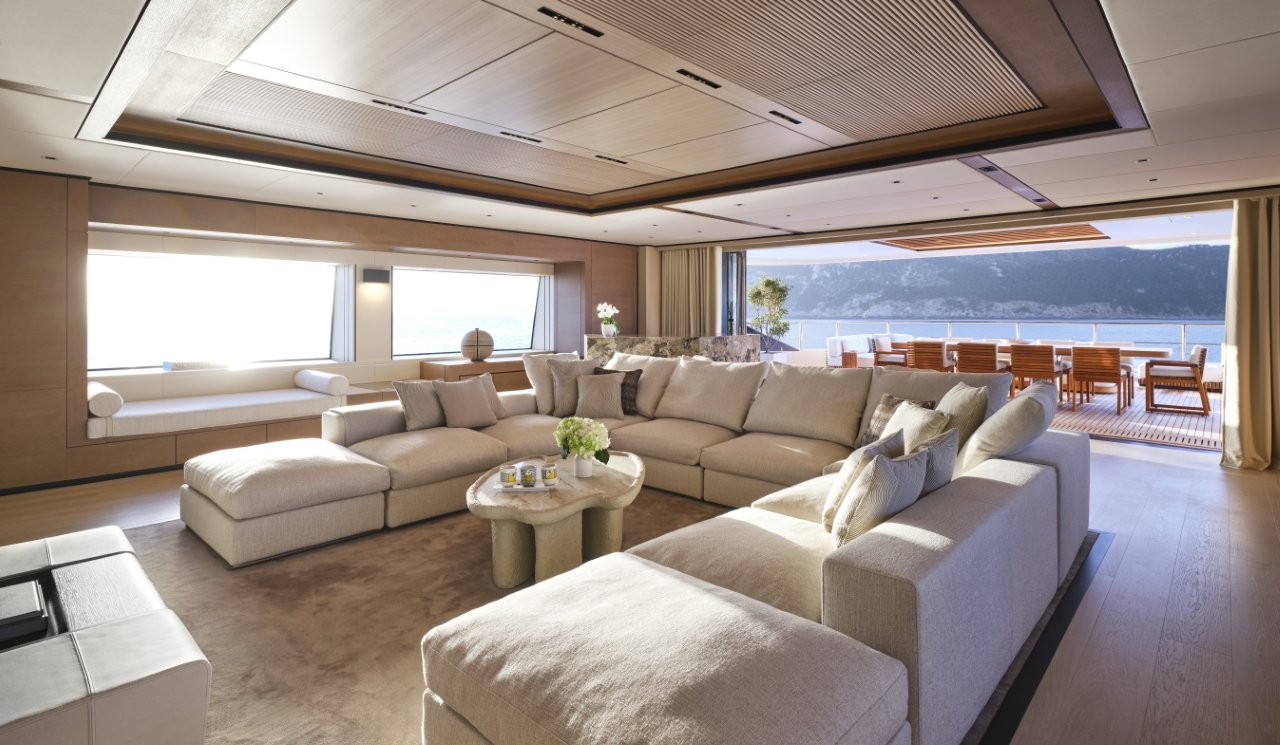
The central staircase and glass lift visually connect the decks. The large windows were part of the concept from its earliest stages, and furniture layouts and material transitions were developed around them. Lighting relies on concealed and indirect sources that bring out volumes, textures and floating elements, while daylight changes the atmosphere over the course of the day. Artworks add colour to the restrained natural palette. Sinot sums up the result as an interior that is "precise yet comfortable, refined yet informal, architectural yet deeply human."
©PressMare - All rights reserved