
Ralph Chami
Former IMF economist Ralph Chami joins One Ocean Foundation


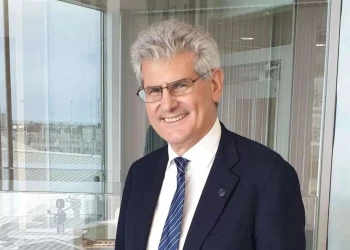
Ralph Chami has joined the scientific committee of One Ocean Foundation. A financial economist with more than thirty years of experience, twenty-five of them in senior positions at the International Monetary Fund, Chami is now co-founder and CEO of Blue Green Future and co-founder of Rebalance Earth. The foundation made the appointment official on 2 November in Milan.
The two sides have worked together before. The journal “Cell Reports Sustainability” recently published “Building equitable and nature-positive blue natural capital markets”, a study led by Chami with contributions from Jan Pachner and Ambra Cozzi of One Ocean Foundation. The research grew out of an international round table the foundation organised in 2024 at SDA Bocconi School of Management. The appointment brings the study’s lead author onto the body that steers the foundation’s scientific work, with the stated aim of strengthening its focus on blue natural capital, nature finance and the link between healthy marine ecosystems and economic and financial stability.
The starting point is a specific question: how to channel private capital into protecting and restoring ocean ecosystems without reducing nature to a commodity, by building the scientific valuation of ecosystem services into economic and policy decisions. In the foundation’s view, putting a price on nature is not enough. It takes robust measurement systems, transparency, governance, clear rules and the direct involvement of local communities and Indigenous peoples. Seen this way, marine ecosystems stop being a purely environmental issue and become part of natural capital, with a bearing on jobs, tax revenue, financial risk management, long-term investment and market resilience.
Chami makes the same point. For him, the challenge goes beyond putting a price on nature: it is about making its economic value visible to policymakers, financial markets and society, because healthy ecosystems underpin economic prosperity and sound public finances. “Our work on Regenerative GDP (ReGDP™) aims to promote a new economic model in which protecting and restoring nature can generate new sources of income and revenue for states, strengthen public finances and create lasting incentives to conserve ecosystems,” he says.
Joining the scientific committee, he added, is a chance to connect research with economic policy and financial innovation, so that ocean protection comes to be seen as an investment in shared prosperity rather than a cost.
©PressMare - All rights reserved