The Ocean Race Atlantic, a stunning debut


This month, for the first time in its 53-year history, The Ocean Race staged a point to point transatlantic race from New York to Lorient, France. There was no shortage of firsts during this competition: the first IMOCA race featuring 100% mixed-gender crews, the launch of the daily “Super Sprint” concept, daily OnBoard Live shows featuring the live connections to the boats, as well as 24-hour streaming from deck cameras.
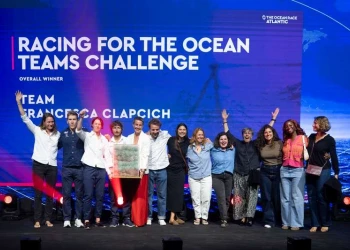
It was a tremendous race on the water with just 27 minutes separating the top four boats, and marked the racing debut of two brand new IMOCAs. There were also new prizes on offer with the Racing for the Ocean Teams Challenge, with the overall win here going to Team Francesca Clapcich powered by 11th Hour Racing.
In short, The Ocean Race Atlantic delivered plenty of promise for what lies ahead with less than five months to go before The Ocean Race around the world, which starts from Alicante, Spain on 17 January 2027.
“Can you tell us about the race?”
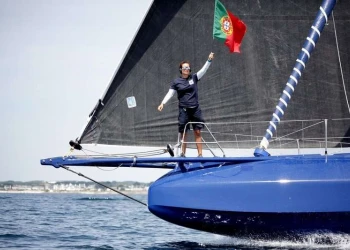
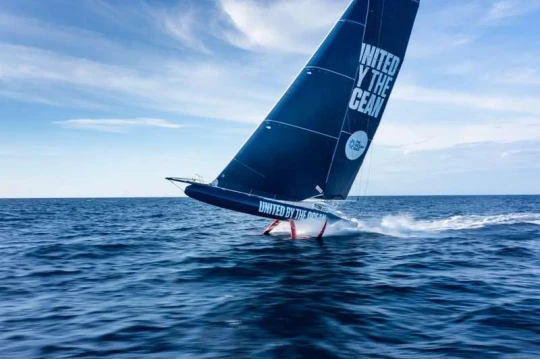
That is the question put to the winning skipper Paul Meilhat, still crouched on the deck of United by the Ocean, as he fields queries from the media as his boat is tied to the dock in Lorient. The freshly crowned champion smiles. “Oh wow… that’s going to take a while!”
Time takes on a different meaning once you head offshore. The skippers competing in The Ocean Race Atlantic can certainly attest to that. Although all six boats crossed the finish line less than 10 days after the start in New York, the race was packed with twists and turns.
Back on the pontoons in Lorient, the mood is light and exuberant. The skippers are still riding the high of finally setting foot on solid ground, their words offering fleeting glimpses of the relief and happiness of being back ashore. Perhaps their bodies tell a more complete story: deep-set dark circles beneath their eyes, hands worn raw by hours of hard work and handling wet, salt encrusted lines, backs slightly hunched over. These are the physical reminders of what it takes to compete in The Ocean Race Atlantic on an IMOCA.
New York: a spectacular backdrop for the start
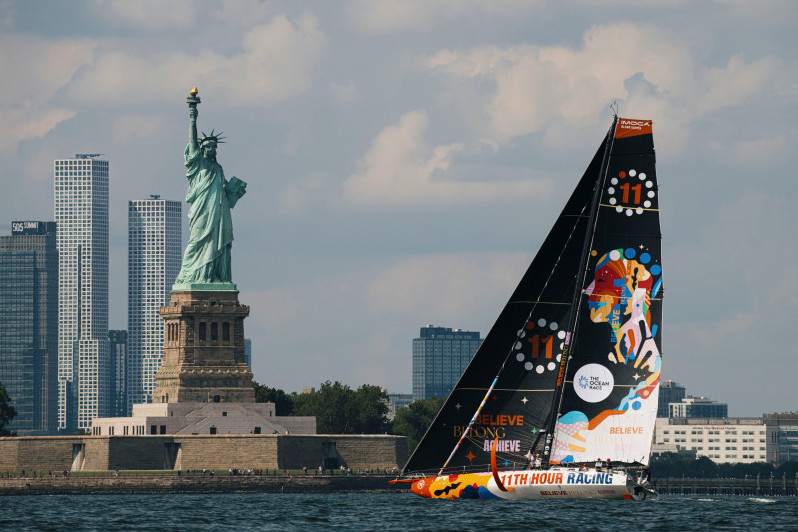
Ten days earlier, more than 5,480 kilometres from Lorient, the six boats competing in The Ocean Race Atlantic lay moored at the Brooklyn Bridge Marina. It was a breathtaking setting for an historic first transatlantic race and one that helped draw some of the crews into the adventure.
“When we arrived in New York, we all had a big smile on our faces,” Paul Meilhat recalls. “You can’t go there and not feel the energy!”
The magic was still there on Tuesday, September 2, when the six boats cast off, sailed past the Statue of Liberty and then under the Verrazzano Bridge and out into the Atlantic Ocean. The mist seemed to freeze the scene in time, with the New York skyline emerging in the background and the brightly coloured hulls filling the foreground. A perfect picture before the race got underway.
From there, the real story unfolded offshore, with a virtual starting line 150 miles from the coast, designed to keep the boats away from known marine mammal and ocean megafauna habitats and quite literally in the middle of the ocean.
“It’s a bit unique to be starting the race offshore,” said Oliver Heer (Embrace the Challenge). But strange or not, the race started with the teams close on the wind. Conditions were already demanding, with winds building to near 20 knots. The first night was particularly warm, thanks to the Gulf Stream, and the fleet remained tightly bunched, with Team Malizia leading the way.
A testing 48 hours
But a new weather system was building, ready to propel the fleet quickly, but violently eastwards. Gradually, the wind strengthened, the sea state grew rougher, and both sailors and boats were pushed to their limits.
DMG MORI Global One suffered an electronic blackout, while MSIG Europe reported a problem with its furling system. They were the first crews to report technical difficulties.
The leader was not spared either. After a ballast leak on Friday, Boris Herrmann and his team were then forced to deal with an impact to the port foil on Saturday. On Sunday, part of the mainsail aboard Embrace the Challenge tore away.
For more than 48 hours, tension was high on board all the boats in the fleet as the crews battled exhausting conditions.
“The sea state was terrible, and the angle of the waves made everything incredibly painful,” explains Francesca Clapcich from on board the 11th Hour Racing boat. “It demanded more mental energy than physical energy.”
“Sometimes we had to ease the sheets just to make sure the boat didn’t go too fast and crash violently off the waves,” recalls Nicolas Lunven (DMG MORI Global One).
If the boats took a beating, so did the sailors.
Oliver Heer describes “two very difficult, stressful and exhausting days”.
On board, helmets stayed on. Everyone clips themselves on and hand holds are vital to any movement. Sleep becomes almost impossible. Conversation dwindles. The goal is simply to get through it.
A thrilling finale comes down to the wire
And yet, despite everything, the boats kept moving forward.
Resilient and determined, as the worst of the weather passed, the sailors quickly had to adjust from survival mode to race mode again. A tactical reset was coming with the light winds of a high-pressure system in front of the fleet slowing the leaders and effectively nearly re-starting the race.
Four boats were now fighting for the top positions: Team Malizia furthest north; the duo of United by the Ocean and 11th Hour Racing in the middle; and DMG MORI Global One further south.
On Monday, they were separated by 50 miles. On Tuesday, just 30. Then, with the finish line only a few miles away, the gap had shrunk to just 10.
The result was a nail-biting finish, with four genuine contenders still in the hunt for victory during the final hours.
“That morning, we had two options: anticipate a shift in the wind to the right, or keep going straight and hope the wind stayed favourable,” explained Will Harris from the 11th Hour Racing boat. “But the wind changed direction after United by the Ocean went through.”
After a suspense-filled final stretch, Paul Meilhat and his crew managed to take the win by the narrowest of margins. Just 27 minutes separated the four leading boats at the finish.
The Ocean Race 2027 is already in sight
In an ironic twist, it was the two IMOCAs from the previous generation - United by the Ocean in first and 11th Hour Racing in second - that came home ahead.
Nevertheless, DMG MORI Global One, a Verdier design, took third, while Team Malizia, a Koch design, finished fourth. Both demonstrated that they already have everything it takes to fight at the sharp end of the fleet.
Paul Meilhat puts it simply: “They’re boats with huge potential. I think they’ll finish more races at the front than at the back.”
The two newer IMOCAs were also the fastest boats in the “Super Sprint”, one of The Ocean Race Atlantic’s innovations, in which the fastest boat over a 20-minute period was rewarded each day.
Team Malizia won the daily showdown four times, taking the overall honours in this “race within the race”, while DMG MORI Global One finished second on four occasions.
For most of the skippers, The Ocean Race Atlantic was just one step along the way.
On the horizon lies another challenge, a much bigger one: The Ocean Race itself, the iconic fully-crewed race around the world.
The countdown has already begun, with everyone set to reunite in Alicante on January 17 for the grand start.
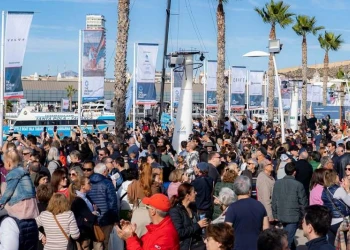
In Lorient, The Ocean Race Atlantic is the biggest show in town
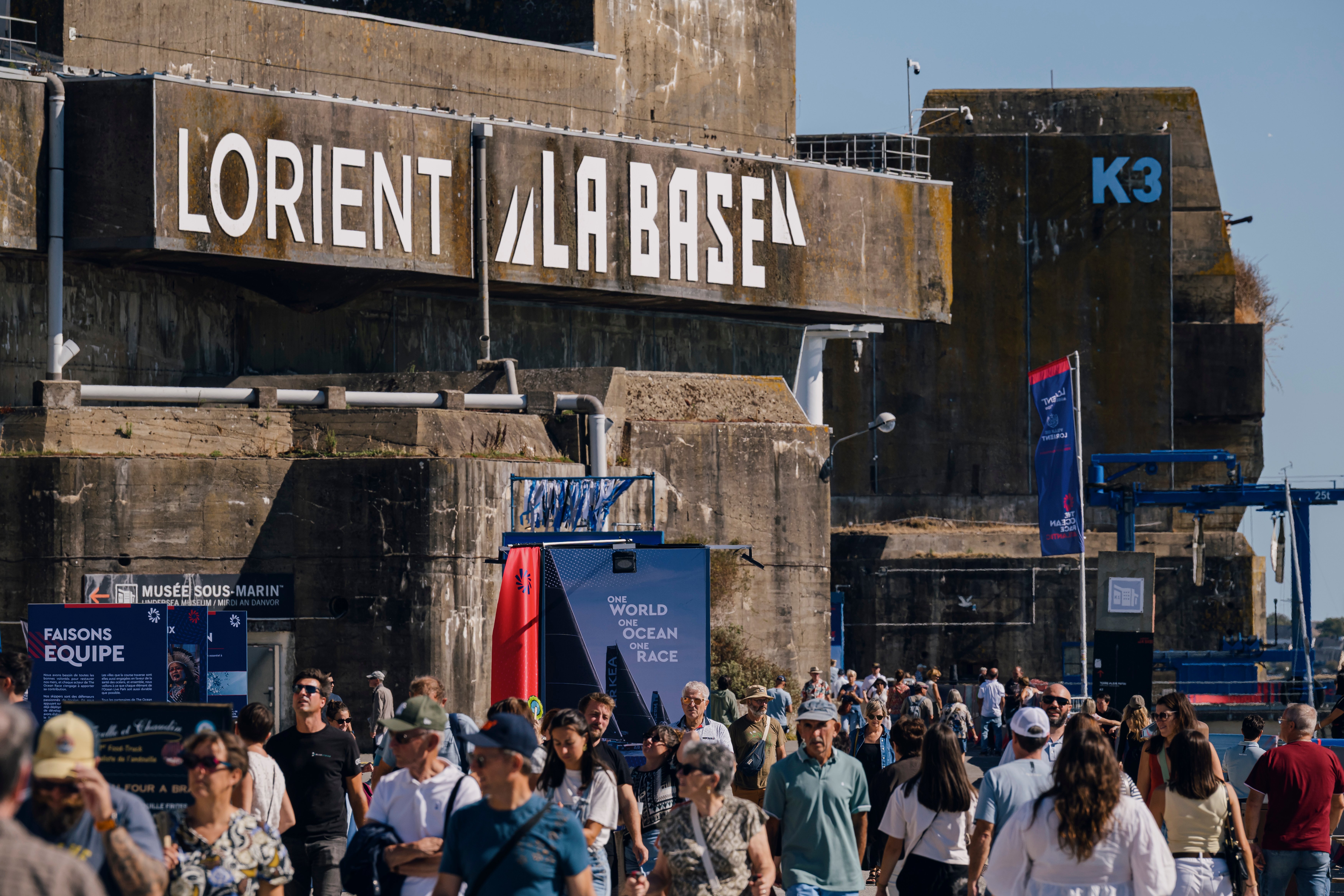
To welcome the skippers and immerse visitors in the world of The Ocean Race, a whole host of events and activities were organised for audiences of all ages at the Ocean Live Park at La Base.
As in the build-up to the start in New York, activations around ocean health and literacy were a high priority, developed in collaboration with Impact Partner 11th Hour Racing.
A special evening hosted by the Sailorz Film Festival set the tone on Monday, September 7. From Wednesday 9 to Sunday 13, Ocean Live Park opened its doors, transforming Lorient into a major celebration of the ocean for the public.
Exhibitions, talks, treasure hunts, documentary screenings, a “Fan Day” and much more gave visitors the chance to learn about how onboard data collection contributes to scientists understanding of the ocean, and engage in ocean literacy and learning programmes.
Young people were very much at the heart of the programme, with more than 2,000 children taking part in educational activities and STEM programming. They were able to join educational tours, try their hand at sailing and take part in beach clean-ups organised with Surfrider.
The race teams did more sailing and boat tours over the weekend giving numerous guests the opportunity to step aboard the boats.
Delegations from cities due to host The Ocean Race next year also travelled to Lorient, including Alicante deputy mayor Antonio Péral.
Sunday’s “Sport and Inclusion Day” brought together more than a dozen local port and activity clubs, with the The Ocean Race Atlantic sailors joining in the various activities in a relaxed and festive atmosphere.
Lorient contributed with an impressive local effort: nearly 60 local businesses were involved, alongside more than 20 associations and NGOs.
And with the sun shining throughout, the celebrations continued well into the night, thanks to three evenings of live concerts that kept the summer, and the party spirit, going until the early hours.