Designed for life at sea: Inside Pioneer One, the first PY60 solar-electric catamaran
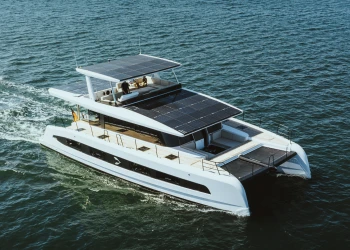
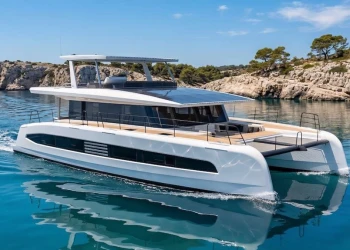
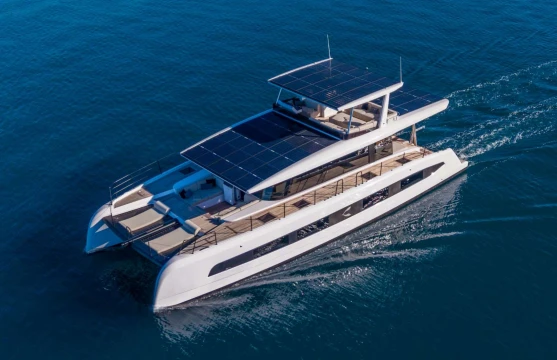
The Stralsund-based boat builder, Pioneer Yachts, has unveiled the interior of its Pioneer One, the first unit of its PY60 solar-electric catamaran. The PY60 represents a new generation of solar-electric cruising yachts, developed around an integrated energy architecture and designed for reliable operation in real-world conditions.
German engineer and entrepreneur Mike Frank founded Pioneer Yachts after recognising a market gap for a genuinely capable solar-electric yacht designed for continuous use at sea.
The vessel’s naval architecture and exterior design are by Cossutti & Ganz, whose hull design and weight optimisation enable Pioneer One’s efficient performance and independence at sea. The majority of the interior areas on board were designed by the owner’s favourite Berlin-based architecture studio, aside from the interior saloon. This was taken care of by the highly experienced studio Micheletti + Partners, who have previously worked with Nautor’s Swan, Baltic Yachts, Bavaria Yachts and Italia Yachts, amongst others.
The 60-foot solar-electric catamaran combines German engineering and production quality with contemporary Italian design, bringing together efficiency, functionality and carefully considered living spaces.
Designed for independent life at sea
The interior layout was developed around the owner's established cruising habits and the way he spends time at sea. Designed to support extended periods away from shore, the yacht combines carefully planned living spaces, onboard energy generation and practical storage solutions.
The interior of Pioneer One has been designed around the practicalities of life on the water, with each space created to support the owner’s daily routines, from dining and relaxing to moving easily around the vessel and making the most of its efficient storage for his on-water activities. The result is a considered balance of materiality, functionality and smart comfort, with every element designed to make independent life on the water practical and enjoyable.
Typically travelling 200nm per week exploring islands in Croatia, Greece or in the Balearics, the owner commented that the PY60: “works so well for me, because I can be fully out at sea, and I have all the energy I need.”
In summer, the PY60 is capable of generating 100 kWh per day, with the water maker producing 100l per hour, and it has been designed to include ample storage. Featuring all of the necessary appliances and amenities for independence on the water and built from premium, high-quality materials, including furniture by the exclusive Italian brand RODA, Pioneer One provides a thoughtfully designed living space at sea.
Quiet cruising meets greater independence
As for its power generation, the PY60 is built around an Integrated Energy Architecture, in which propulsion, solar generation and energy storage operate as a single coordinated system.
The yacht’s expansive solar roof has an installed peak capacity of 16.7 kWp for electric propulsion and onboard loads, while 246 kWh of battery storage provides energy for quiet cruising and greater independence from shore power, with the sweet spot for speed on board 5-7 knots.
Pioneer Yachts founder Mike Frank explains how the PY60 can be energy neutral or even negative: “In strong sun, up to 17kW per hour of solar energy is produced by the solar panels. At 5-7 knots with relatively flat seas, we only need about 5-15 kW per hour to push the boat and to make sure that all the hotel load is covered.
In such situations, PY60 operates in an Energy-plus-mode which even gives us the possibility to charge the battery.”
Considered materiality and spatial design
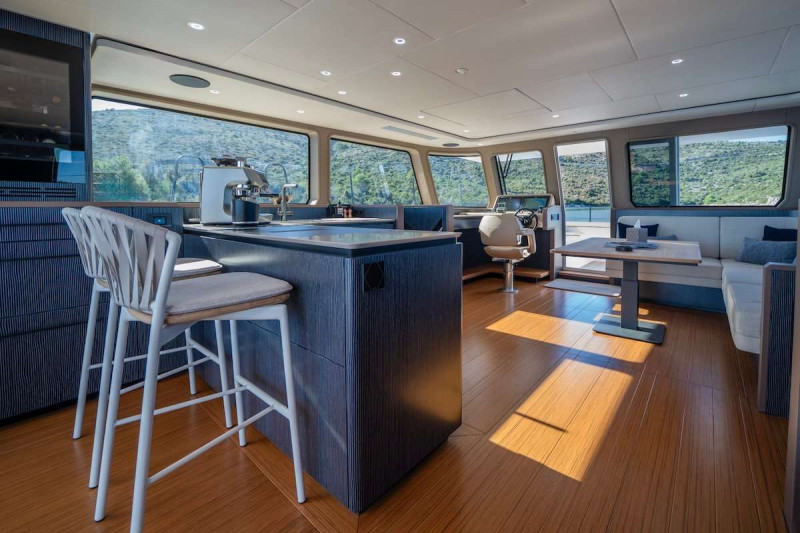
The interior of Pioneer One’s main saloon was designed by Milan-based studio Micheletti + Partners, who brought a thoughtful approach to materiality. Warm wood is paired with dark blue pinstriped walls, offering a considered balance of materials and comfort.
Elsewhere on board, the other interior areas were designed by Pioneer Yachts’ in-house team, alongside the owner’s chosen architecture studio, and were carefully executed throughout. Throughout the interior, the selection of materials, finishes and furnishings has been shaped by their suitability for life at sea, ensuring that design decisions are as practical as they are aesthetic.
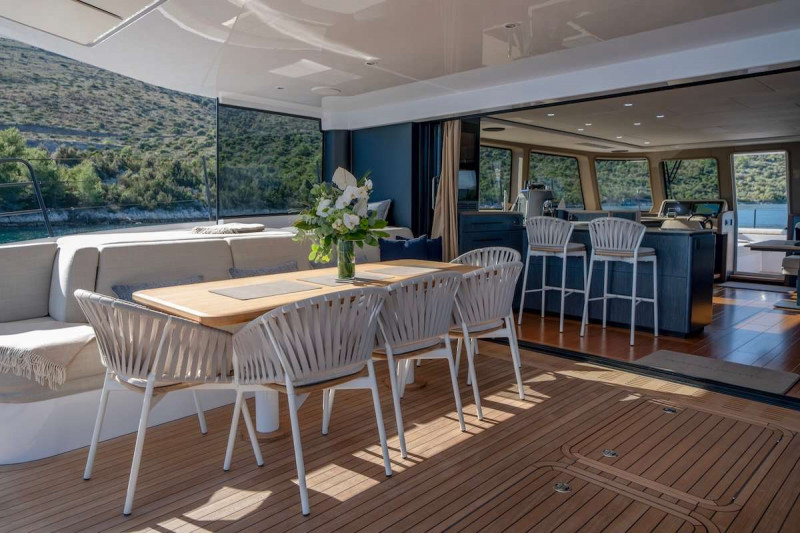
The well-designed interior and exterior spaces function together seamlessly on board the PY60. The main saloon provides direct access to both the foredeck and the aft deck, featuring expansive windows, generous 2.1m headroom in the saloon and on the lower deck, and a bright, airy ambience.
The layout is convenient and spacious across multiple distinct zones: a dining and seating area aft, a comfortable and ergonomic main saloon, sun loungers on the foredeck, and modular furniture on the flybridge that converts effortlessly between a sofa and a sunbed.
Notably too, environmental considerations were also taken into account in the design of the PY60 solar-electric catamaran, with its designers making every effort to minimise weight across all components and areas. Furthermore, the onboard Dometic air conditioning system was chosen specifically due to having the lowest possible power consumption at just 1.7 kWh at full load.
A bright future
Looking to the future, a second hull of the PY60 is currently under construction and slated for completion by summer 2027, while a new charter version of the model is also in development. Future PY60 yachts are planned to feature an increased battery capacity of 288 kWh, compared to the 246 kWh configuration aboard Pioneer One, providing greater energy autonomy and further reducing reliance on shore power. Further customisation will depend on each client's needs, with options to adjust materials, finishes and layouts.
Frank comments: “We are delighted with the response to our PY60 yachts so far, and so will be building four units per year going forward. Solar electric catamarans offer the best of both worlds for owners: there is no mast in the middle to contend with, and yet there is still ample sailing speed available, meaning those on board can enjoy their trip in comfort, without any noise or vibrations. This showcases how naturally premium, purposeful yacht design and efficient solar-electric propulsion can co-exist.”