
Gianluca Ciniero
Energy, Method, and Identity: The Technical Vision of Cantiere delle Marche as Told by COO Gianluca Ciniero


Energy on board — one of the key topics currently engaging designers, engineers, and technicians across the yachting sector. Even on large yachts, where the demand for power and onboard services is high, reducing emissions has become a fundamental goal. Work is progressing on two parallel fronts: lowering overall consumption to reduce energy demand and identifying alternatives to conventional internal combustion engines powered by fossil fuels.
The search for “green” solutions is leading to unexplored technical territories, often promising but still experimental. Green fuels such as hydrogen and renewable methanol, while potential energy sources of the future, still face major limitations: high costs, complex production, strict operational parameters, and onboard storage challenges — which inevitably reduce volumes available for comfort — compounded by a distribution network still far from accessible.
Even HVO, though compatible with marine engines, remains limited by cost, the availability of sustainable feedstock, and the lack of port infrastructure, which hinders its large-scale adoption.
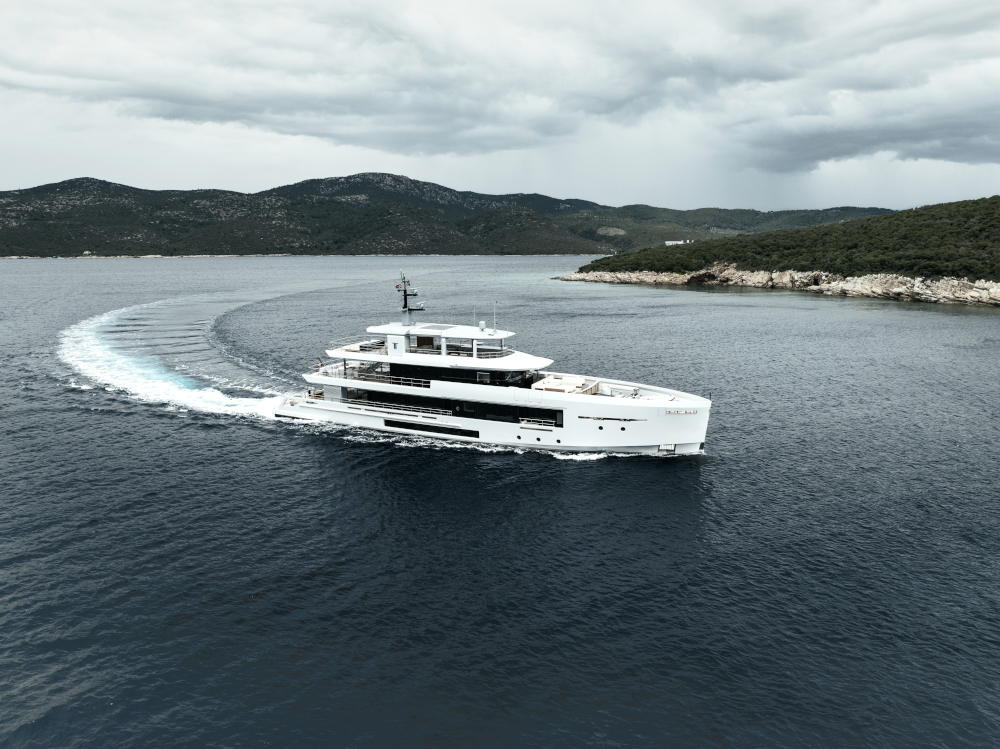
Against this backdrop comes part of the work led by Gianluca Ciniero, Chief Operating Officer of Cantiere delle Marche, who together with his team and a group of renowned consultants and designers, headed by Product Manager Vasil Truja, is developing an innovative proprietary system for heat recovery on board. The research aims to make yachts more efficient without altering their naval platforms, layouts, or the shipyard’s core construction philosophy.
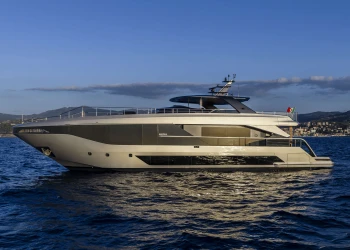
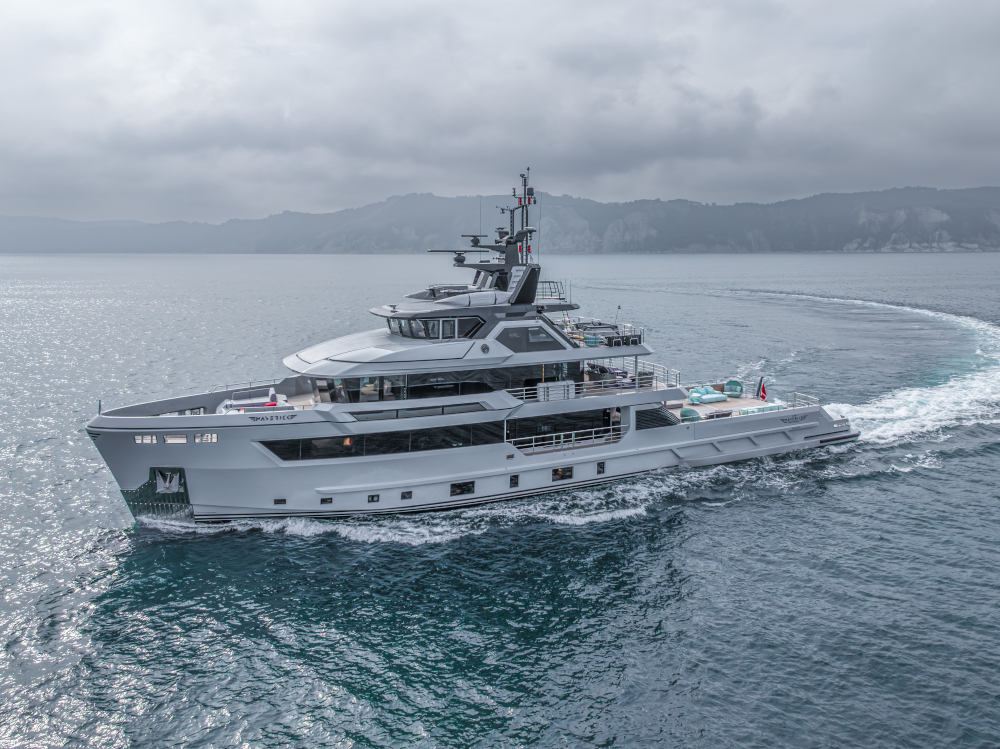
Under Ciniero’s direction, Cantiere delle Marche is further consolidating its position as one of the world’s leading builders of steel and aluminium explorer yachts, based on a production model that blends engineering innovation with craftsmanship identity.
We discussed these topics in the following interview.
PressMare – Engineer Ciniero, you’re leading a project that could represent a paradigm shift in onboard energy management. What inspired this research, and what is its main goal?
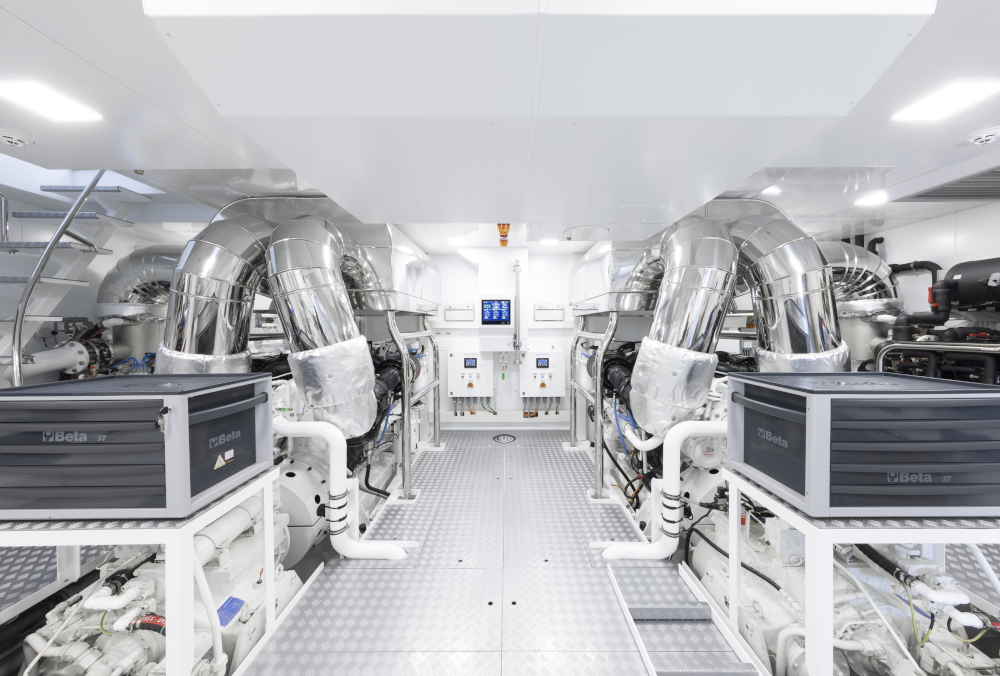
Gianluca Ciniero – The idea came from a simple observation: there’s a great amount of available energy on a yacht, but much of it is lost as degraded heat. Instead of introducing new fuels or complex solutions, we chose to enhance what already exists by recovering the heat generated by propulsion and generator engines.
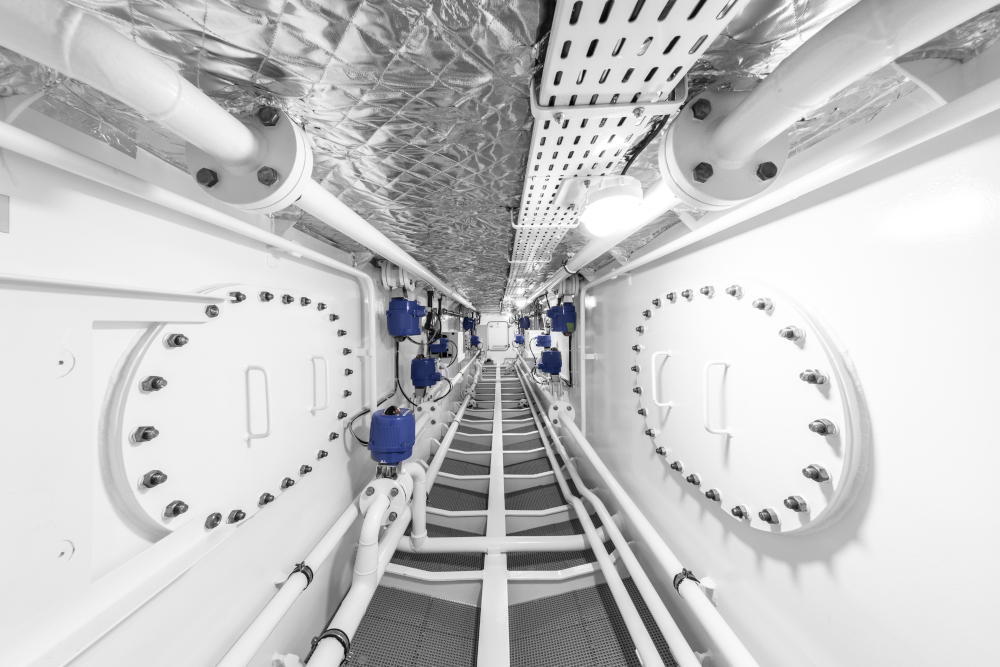
We are working on a system that doesn’t address the issue partially but rather comprehensively. The concept is a substantial recovery of heat from all main sources — from cooling circuits but also from exhaust gases, which are the hottest and most “energy-rich” components.
The principle is straightforward: the energy dissipated as heat can be converted into useful work, reintegrated into the vessel’s system, feeding the Power Management System, and actively contributing to propulsion and operational efficiency. This conservative approach not only improves technical performance by reducing fuel consumption but also lowers environmental impact, as cooler discharges result in less thermal stress on the surrounding environment.
PM – At a time when many shipyards are experimenting with alternative fuels or zero-emission propulsion, you seem to be taking the opposite direction…
GC – Exactly. It’s a countertrend choice — but a rational one.
Green alternatives, although fascinating, still face significant barriers. Even in an ideal scenario with perfect infrastructure, mature technology, and scalable sustainable production, the balance between cost, safety, and yacht layout remains challenging, particularly for vessels below 500 GT. Alternative fuels may require bulky tanks, complex management systems, and stringent safety protocols.
That’s why we chose another route: not to disrupt the naval platform but to enhance it, maximizing its energy recovery potential. It’s a realistic, tangible approach that can be applied to increase the overall efficiency of existing onboard systems. We’ll soon be ready to share more about it.
GC – Not for now, but in due time, I’ll be glad to provide PressMare readers with all the technical details.
PM – Let’s move to broader technical evolution. Cantiere delle Marche is known for the robustness of its naval platforms — what are you focusing on today?
GC – In recent years, we’ve consolidated and refined our platforms, supported by long-standing relationships with owners, their surveyors, and captains.
These relationships, built on mutual trust, are a strategic asset for continuous improvement. Their feedback drives interventions on every design detail — not only regarding handling and onboard experience but also technical aspects such as hull and appendage optimization to improve performance and comfort.
Our hydrodynamic simulations go beyond traditional steady-state models and now employ LES (Large Eddy Simulation) and DES (Detached Eddy Simulation) methods — advanced CFD (Computational Fluid Dynamics) techniques used to simulate complex flows with a high degree of precision, typically applied in aerospace engineering. This allows us to refine geometries, anticipate transient phenomena, vibrations, and structural noise more accurately, thus improving hull efficiency and comfort underway.
PM – You often use the concept of “soft industrialization” in the shipyard. What does it mean in your context?
GC – It’s our production philosophy. “Soft industrialization” doesn’t mean sterile standardization but rather establishing order and consistency without taking freedom away from people.
CDM is probably one of the last Italian shipyards where production still enjoys real freedom. Our team leaders and production supervisors play an active decision-making role, with recognized technical autonomy to implement onboard solutions that can’t be defined from a computer terminal.
This keeps the “yard standard” alive — not only as a written procedure but as the living expression of human competence and experience. Industrialization, as we see it, connects operational areas, prevents information loss, and smooths the transition from product development to engineering and production.
PM – So it’s a matter of method rather than structure.
GC – Exactly. Our goal is to optimize without standardizing.
In a production environment that’s increasingly complex, with many builds running in parallel, it’s essential to adopt high levels of pre-fitting and early engineering. This allows us to maintain effective governance of operations, even with outsourced work, while ensuring design consistency and product identity.
We work upstream — during the pre-contract phase and sometimes even earlier, when aligning with the business plan. Preparation is crucial: having a clear project vision and an already-started derisking process. Anticipating issues means reducing uncertainty and building a solid foundation for the entire production cycle.
I always say the first six months of engineering and cross-department collaboration determine the success of a 50- or 60-metre yacht. That’s when most of the project takes shape — layout, systems, documentation, suppliers — and afterwards, production becomes a “spontaneous chemical reaction.”
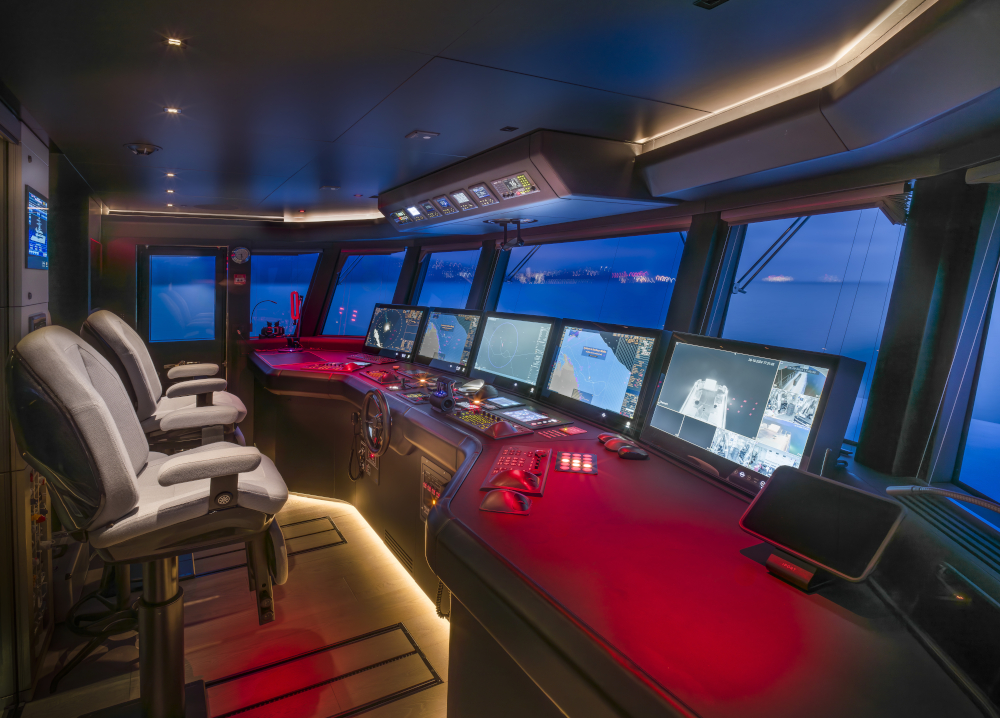
PM – While many shipyards increasingly outsource, you continue to keep control in-house. Is that also a cultural choice?
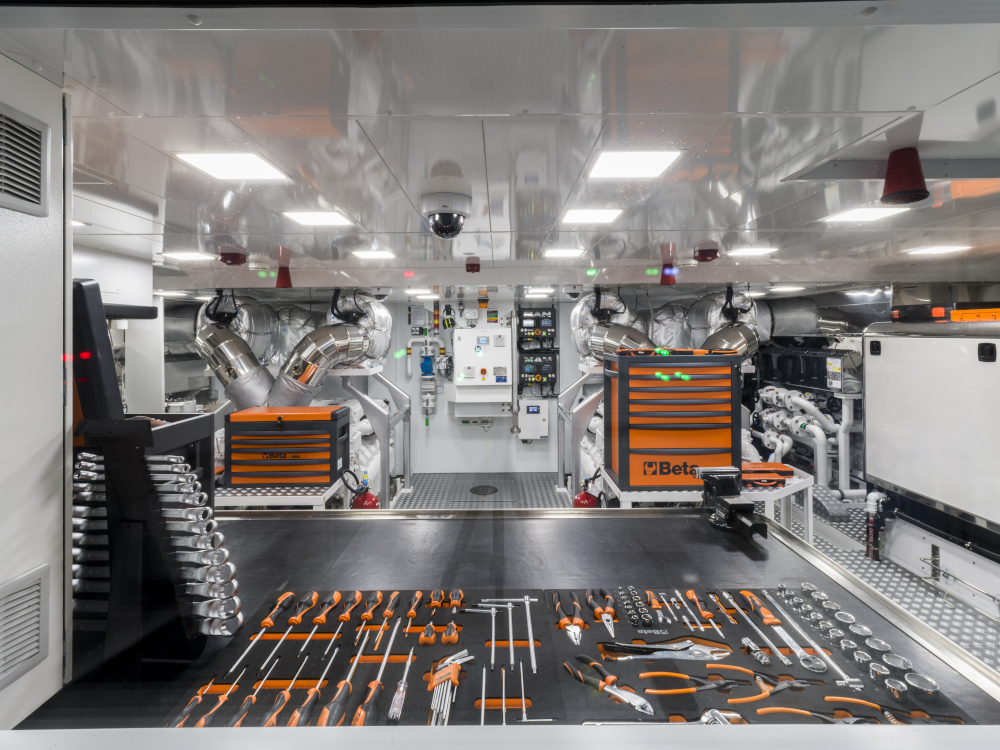
GC – Absolutely. Today, when you enter a yacht’s engine room, you often recognize not the shipyard but the subcontractor who engineered the systems. To me, that’s a loss of identity.
At CDM, we maintain in-house technical development areas where distributed know-how is a core part of product value. It’s more demanding, but it’s what allows us to guarantee perceivable quality — the kind you notice when the yacht is at sea.
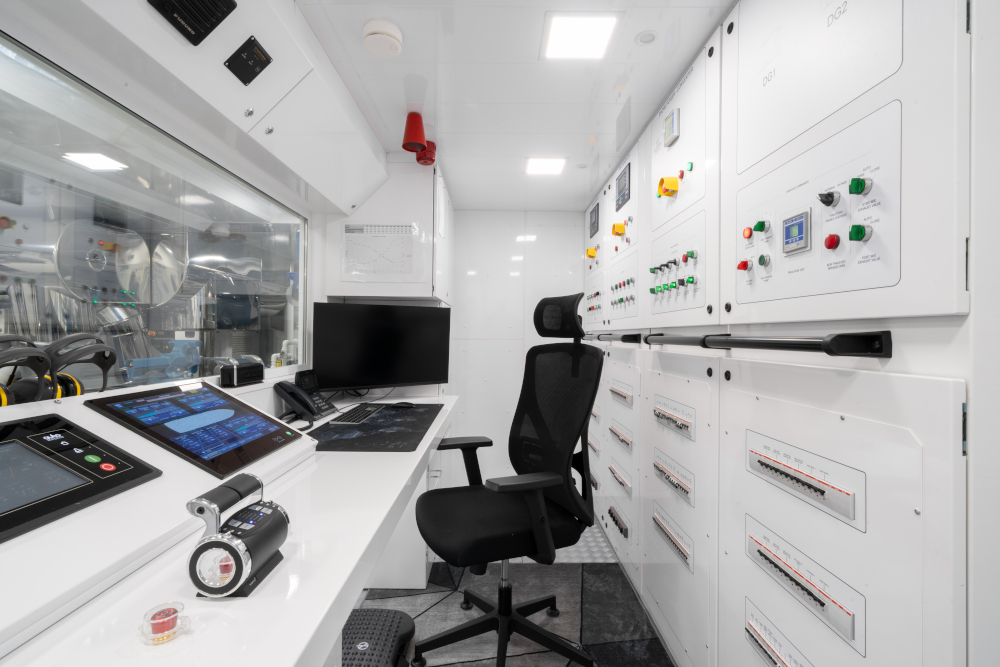
PM – How would you define Cantiere delle Marche’s current technical direction?
GC – It’s a path of technical and cultural awareness. We’re working on several fronts: improving energy efficiency, optimizing platforms, and at the same time preserving the artisanal soul of our construction. The real challenge is to keep innovating without losing identity — because excellence is not a formula but a balance: between engineering and sensibility, method and freedom, industry and craftsmanship.
©PressMare - All rights reserved