The Italian Sea Group, Share Capital Falls Below Legal Minimum: Restructuring Plan Underway
After weeks in which the market had already understood that the situation was far more serious than a temporary financial difficulty, The Italian Sea Group has now formally acknowledged one of the most delicate moments in its recent history: losses have eroded the company’s share capital to the point where it has fallen below the minimum level required by law.
The statement released a short while ago by the group led by Giovanni Costantino represents the first official recognition of a capital crisis under Article 2447 of the Italian Civil Code, the rule that applies when losses reduce a company’s share capital below the legal minimum required for a joint-stock company. The Board of Directors, which met on May 21, acknowledged that the analyses carried out as part of the preparation of the new business plan and financial restructuring measures revealed losses significant enough to compromise the group’s capital structure. The final amount has not yet been determined, as accounting and expert assessments are still ongoing, but the Board states that it is already “certain” that the capital has fallen below the threshold established by Article 2327 of the Italian Civil Code.
This is an extremely serious step from a corporate standpoint, as it obliges the directors to immediately initiate a series of procedures required by law: from convening the shareholders’ meeting to preparing an updated financial position that will precisely quantify the losses. At the same time, however, the group is trying to send another message to the market: business continuity, at least in the view of management and its advisors, is still considered achievable. Not surprisingly, the statement repeatedly refers to the concept of “going concern”, meaning the company’s ability to continue operating normally while maintaining relationships with clients, suppliers and the banking system.
And it is precisely around this objective that the guidelines of the new restructuring plan revolve.
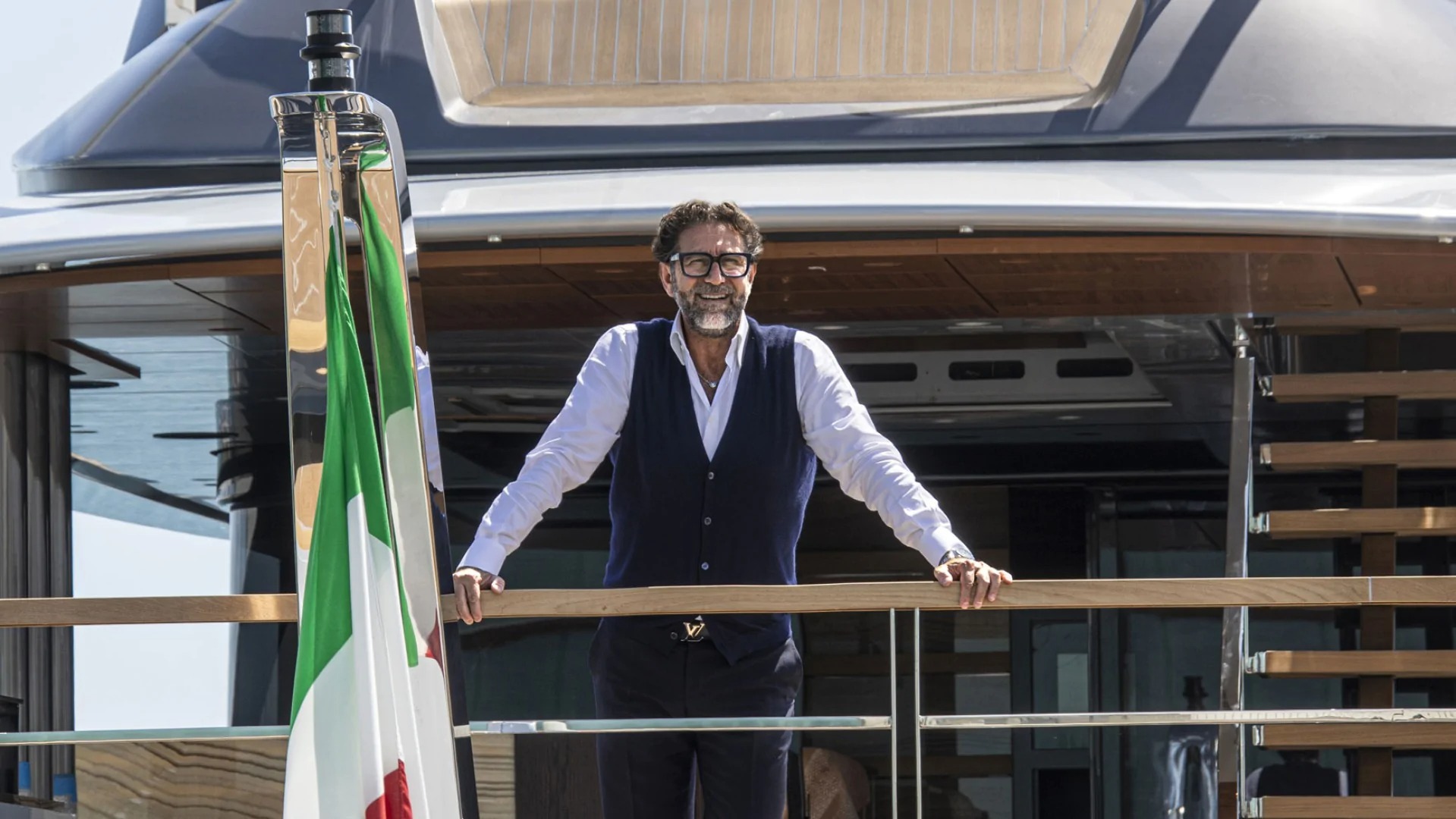
The strategy outlined by the Board is based on several fairly clear directions. The first concerns ongoing renegotiations with a number of yacht-owning companies in an attempt to recover part of the extra costs accumulated on various contracts. This suggests how much the financial deterioration has primarily affected large custom and made-to-measure projects, a segment in which cost increases, delays and industrial complexity can have a very significant impact on margins. Alongside this, the plan includes the revaluation of the company’s real estate assets and the possible sale of properties no longer considered strategic. This is a lever the group could use to strengthen its balance sheet and improve financial stability without directly affecting the operational continuity of its brands and core industrial activities.
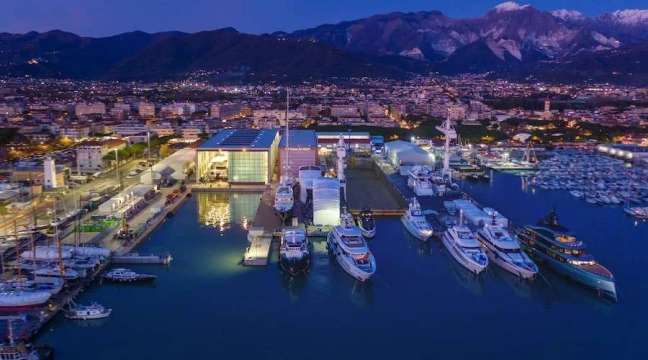
Thinking about which assets within TISG could potentially be sacrificed in exchange for a substantial cash injection, attention inevitably turns to the shipyard once known as Beconcini, later renamed Picchiotti in La Spezia. Even during the Perini Group crisis, the facility had attracted the interest of both Massimo Perotti — looking to expand Sanlorenzo’s production capacity — and Alberto Galassi, now former CEO of Ferretti Group, who eventually shifted his focus toward the Rosetti yard in Ravenna. And today, several other players could well be interested in gaining access to that facility, located in the “Miglio Blu” area where everyone is searching for docks and industrial sheds.
The statement also refers to “possible positive effects” arising from an agreement with the tax authorities, suggesting that discussions are also underway regarding fiscal and tax-related matters.
The Board explicitly attributes the origins of the crisis to the "disloyal conduct of certain senior managers acting in coordination with one another," thereby confirming the line already adopted by the group in recent months. It is a very strong statement, continuing to shift the focus of the crisis toward internal management responsibilities and remaining closely linked to the forensic investigations entrusted to KPMG Advisory.
However, there has also been a delay on the forensic investigation front. The forensic due diligence launched in February 2026 will not be completed before late June or early July. According to the company, the delay is linked to the need to prioritise activities necessary to safeguard business continuity, as well as operational difficulties caused by the reduction of senior management personnel, which has since been rebuilt.
In the meantime, the group has also decided to activate the protective measures provided for under Article 20 of the Italian Corporate Crisis Code, an instrument that temporarily shields the company from creditor actions while the restructuring process and financial recovery plan are being defined. From an industrial standpoint, the picture that emerges is that of a group trying to preserve the value of its production assets and brands — Admiral, Tecnomar, Perini Navi, Picchiotti and NCA Refit — while simultaneously attempting to restore order to its financial and capital structure. The key issue, at least in the short term, will be whether the measures identified will actually succeed in restoring balance without compromising operations, backlog and the confidence of clients and suppliers.
Because in situations like this, the most delicate issue is not only the balance sheet itself. It is above all the ability to preserve industrial credibility in a sector such as large custom superyachts, where construction timelines are long, contracts are worth many millions and the owner’s trust often remains the company’s most strategic asset.
Attached to this article readers can download the press release issued earlier today by The Italian Sea Group.
©PressMare - All rights reserved