
The Next Onboard Experience: How Yachts and Interiors Will Change
The Next Onboard Experience: How Yachts and Interiors Will Change
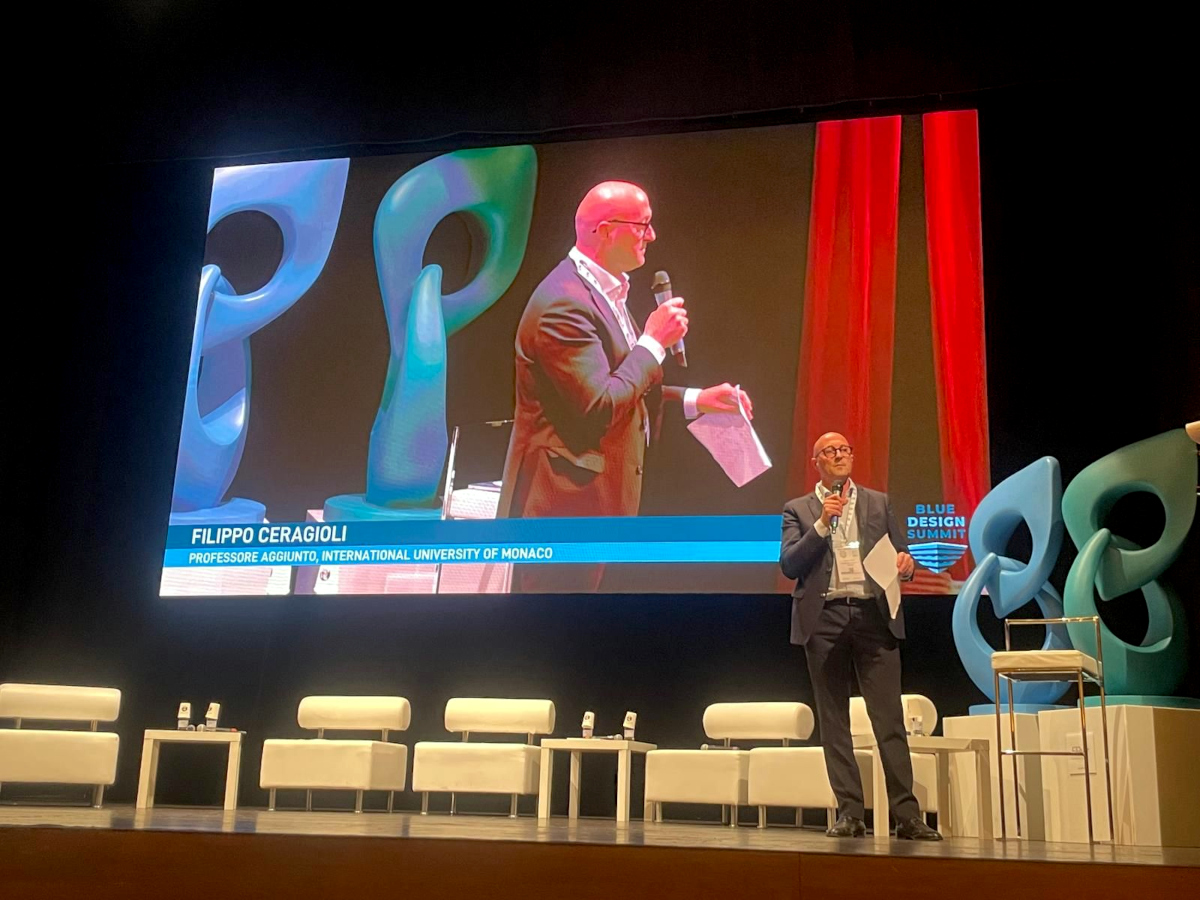
In today’s yachting industry, discussing sustainability means looking far beyond materials and propulsion systems. It requires rethinking the very concept of the onboard experience, the lifecycle of yachts and the cultural role of design in defining what the “new luxury” might be. It was from this perspective that Filippo Ceragioli, professor at the International University of Monaco and founder of Ceragioli-Storåkers, contributed to the panel moderated by Smart Interior Horizon during the Blue Design Summit in La Spezia on May 19. In this interview with PressMare, Ceragioli reflects on the evolution of yachting through the lenses of circularity, retrofit, user experience and regenerative models that are expected to influence the future of the marine industry.
PressMare - During the panel, you spoke about the real drivers of innovation in the yachting industry. Where does change come from today?
Filippo Ceragioli - Innovation rarely comes from a single factor. Historically, we have seen major accelerations driven by crises, such as the coronavirus pandemic, which transformed many behaviours and processes. Then there is innovation driven by personal vision, although that is much rarer. Finally, there are regulatory and financial drivers.
Today, one of the strongest drivers is undoubtedly green finance, supported by European and international regulators who are trying to create tools capable of making sustainability measurable. This is essential because it introduces benchmarks, criteria and assessment systems that allow us to determine when a yacht genuinely meets specific standards.
PM - So measurement is becoming a central issue?
FC - Absolutely. Tools such as the Sea Index and YETI are moving precisely in that direction. The goal is to create systems capable of evaluating the actual operational impact of a yacht. What is interesting is that the yachting sector is finally adopting approaches that have long been used in commercial shipping and maritime transport. Of course, a yacht operates under completely different dynamics than a cruise ship or a tanker, which is why specific metrics are required for this sector.
PM - Is it therefore correct to speak about a "sustainable yacht"?
FC - It is a complex definition. It is difficult to say that a yacht is completely sustainable, but a yacht can certainly adopt technical, design and operational solutions that significantly reduce its impact. In my view, the important concept is reputation. A yacht can become a high-reputation asset because it incorporates intelligent criteria in design, operation and management.
PM - During the panel, the issue of storytelling also emerged. Many companies already make sustainable choices but often fail to communicate them.
FC - Exactly, and that is a very interesting topic. There are countless materials, products and solutions that are selected because they are attractive, high-performing or high-quality, while at the same time being sustainable. The problem is that this aspect is often not communicated. I believe that an important part of the work today is explaining the different dimensions of a design choice, because sustainable value often already exists but remains largely invisible.
PM - You also pointed out that a compensatory approach is no longer enough.
FC - Yes, because there are environmental damages that cannot simply be offset. Think about plastic in the oceans: clean-up initiatives are important, but they do not eliminate the root cause of the problem. That is why there is increasing discussion around regenerative models. The objective is no longer simply to reduce damage but to create systems capable of contributing, even indirectly, to the regeneration of the marine environment.
PM - Which practical examples already demonstrate this evolution within the sector?
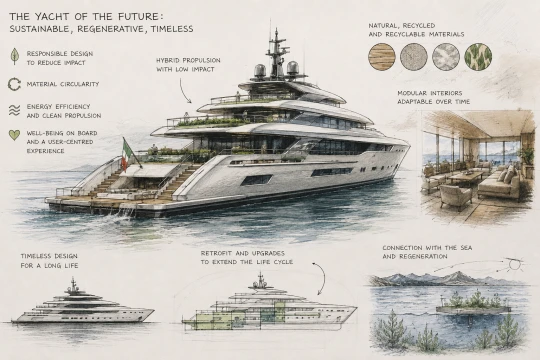
FC - One of the most interesting aspects concerns the lifespan of yachts. If we look at the history of yachting above 24 metres, we realise that very few yachts are actually scrapped. Hulls and structures tend to have extremely long service lives. For this reason, the future will be closely linked to retrofit and sustainable upgrading, particularly from a propulsion and technical standpoint. The challenge becomes more complex when it comes to interiors because customer preferences and aesthetic trends play a much greater role.
PM - How do you think yacht interiors will evolve?
FC - I believe the younger generations will place greater emphasis on durability and material circularity. For example, we will move away from the complete replacement of interiors and increasingly towards reuse through adaptation and transformation. In this sense, design will play a major cultural role, with designers helping the market understand what the “new beautiful” might become.
PM - So the concept of luxury is changing?
FC - Yes, profoundly. What is emerging is an aesthetic of permanence, linked to quality and longevity, much like the core values of historic luxury brands. The lifecycle of interiors could also change dramatically, with materials designed to last longer or to be recovered and reintegrated into new projects. This requires a new design mindset.
Ultimately, everything comes back to user experience. The real question is: what will the next one be?
Rebecca Gabbi
©PressMare - All rights reserved