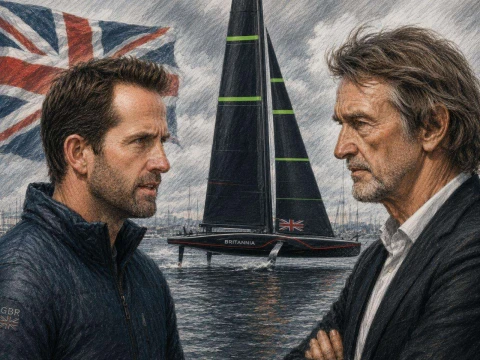
America’s Cup, the Ineos-Ainslie lawsuit hangs over the British challenge


PressMare had already reported on the dispute over ownership of the AC75 Britannia between former sponsor Ineos and Athena Racing, the team led by skipper Sir Ben Ainslie. The British AC75 that won the Louis Vuitton Cup in 2024 is currently in the hands of Ainslie’s team, which is reportedly updating it to comply with the regulations of the 38th America’s Cup (there is considerable speculation over where the yacht is physically located today, possibly in Italy), but Ineos claims ownership and has demanded its return through a civil lawsuit. The difference between physical possession and legal title is not a minor detail: less than a year before the final phase of the 38th America’s Cup, Team GB1 could be forced to reconsider its entire technical programme. Ineos argues that the AC75, together with the other assets financed during the previous campaign, should be transferred to Sir Jim Ratcliffe’s group under the agreements entered into with Athena Racing. The dispute has now reached the British Admiralty Court, and the latest submissions confirm how far apart the parties’ positions remain.
The Admiralty Court is a specialist section of the King’s Bench Division of the High Court of Justice, with jurisdiction over maritime disputes. It routinely deals with collisions, salvage, shipping, maritime mortgages and matters concerning vessel ownership. From a legal standpoint, an AC75 also falls within the category of vessels, and the dispute over Britannia’s ownership therefore falls within its jurisdiction. Many enthusiasts have wondered why a case that could directly affect preparations for the next America’s Cup is not being treated as urgent. The court is, however, examining a contractual dispute between two private parties and, in the documents currently known, there are no applications for the precautionary seizure of the yacht or other measures that would require an expedited procedure. As New Zealand journalist Richard Gladwell, who reviewed the Admiralty Court calendar, points out, there are no indications that the case will be given priority. The large number of proceedings already listed makes a particularly rapid process unlikely.
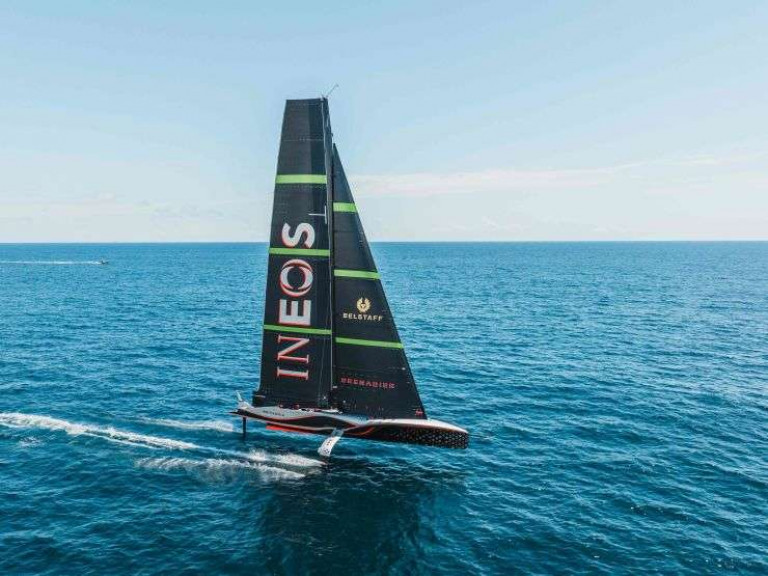
A yacht built with Ineos funding
Ratcliffe’s group bases its position on the scale of the investment: the group is said to have financed the design, construction and testing of Britannia, together with the assets connected to the British campaign for the 37th America’s Cup, with approximately £174 million. The court documents examined by Gladwell for Sail-World indicate that Ineos relies on the Partner Agreement signed on 31 May 2021. One clause is said to have provided, under certain circumstances, for all “Ineos-funded assets” still in Athena Racing’s possession to be transferred to Ineos free of charge. The formal request for delivery was reportedly sent on 13 January 2025, a few days after the public breakdown between Ainslie and the petrochemical group. According to Ineos, the AC75, its components and the other assets purchased or built with the funds provided by the partner must therefore be returned.
Athena Racing offers the opposite interpretation. According to Ainslie’s team, the transfer would only have been triggered if the organisation had effectively ceased operating and reduced its activities to a minimum. A condition that, according to Athena, never occurred: the team continued working, secured new investors and formally entered the 38th America’s Cup. The complete contract, however, is not public. Only the extracts and interpretations reported by the parties in their respective court filings are known, making it impossible from the outside to determine which of the two interpretations is likely to prevail. One point, however, is clear: GB1 physically possesses the yacht and is preparing it for Naples, while Ineos claims ownership and is demanding its delivery. Until a judgment or settlement is reached, the two circumstances are destined to coexist.
Why GB1 cannot simply build another AC75
The Protocol of the 38th America’s Cup does not allow the construction of a new AC75. More specifically, Article 24.2 states that teams that competed in the previous edition must use the hull raced in 2024, with the stated aim of controlling costs and avoiding a new design and construction race involving entirely new AC75s. The use of another hull is permitted only if the yacht from the previous edition is no longer available for reasons beyond the competitor’s control. In that case, the team may purchase an existing AC75 or reproduce the design of its 2024 yacht, introducing the modifications permitted under the new class rule. For GB1, therefore, Britannia is not only the most logical technical solution, but also the hull that the Protocol indicates must be used.
If the court were to award ownership to Ineos, building a replica would require Athena Racing to invest time and money and to have full access to the design and technical data. The lawsuit could also concern not only the hull, but components, equipment and other assets financed by Ratcliffe’s group. Access to the intellectual property and design data could therefore become as important as physical possession of the yacht. There do not appear to be any alternatives available on the market. The other existing hulls are already in use or have been purchased: the new American challenger acquired Patriot from American Magic, while Te Rehutai, Team New Zealand’s winning yacht from the 36th America’s Cup in Auckland, was purchased by the Australian challenge, the last to enter. The only realistically viable route would therefore appear to be an agreement between the parties, but time is clearly working in Sir Jim Ratcliffe’s favour and strengthens his negotiating position.
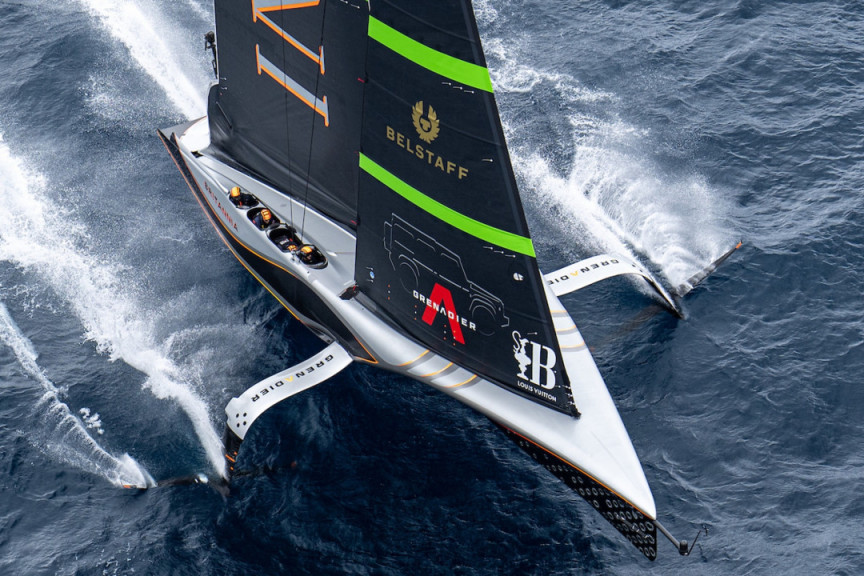
The Challenger of Record paradox
The situation carries particular weight because GB1 is not just any challenger. The team is represented by the Royal Yacht Squadron of Cowes, Challenger of Record for the 38th America’s Cup and counterpart to the Defender, the Royal New Zealand Yacht Squadron, in defining the Protocol. Athena Racing is also one of the founding shareholders of the America’s Cup Partnership, the company established by the teams to manage the competition, commercial rights and the development of future editions. This role, however, does not automatically give Athena ownership of the AC75. Entry in the Cup and recognition as Challenger of Record belong to the sporting sphere; ownership of the yacht and the other assets depends instead on the Partner Agreement entered into with Ineos and will be assessed under British law. The paradox is clear: the team that helped write the rules of the next America’s Cup, and officially represents all the challengers, could reach the decisive phase of its preparations without certainty that it will be able to use its own yacht.
Marzio Perrelli: “Continuity, stability and long-term growth”
The British dispute also represents a test for the new America’s Cup Partnership, led since April 2026 by Marzio Perrelli. At the time of his appointment as CEO, the former Sky Italia executive clearly outlined the objectives of the new governance structure: “Our responsibility, on behalf of all stakeholders, is to preserve the great historic heritage of the America’s Cup, while at the same time ensuring greater continuity, stability and long-term growth”. Perrelli also described the ACP as “an evolution in the way the event is managed”, designed to provide “a more consistent framework for teams, partners and host cities”, strengthening governance and multi-year planning. These statements referred to the Cup’s new organisational structure, not to the lawsuit between Ineos and Athena Racing. Read today, however, they show how difficult it is to translate those principles into reality.
One of the founding shareholders of the Partnership is in fact involved in a dispute that could directly affect its sporting preparation and the availability of the AC75 with which it is expected to compete in the next America’s Cup. Formally, the lawsuit concerns two private parties, but its consequences extend beyond the relationship between Athena Racing and Ineos: GB1 is the Challenger of Record, sits on the board of the Partnership and represents one of the most credible challengers for the 38th America’s Cup. Its possible withdrawal would have repercussions for the entire event.
The split between Ineos and Ainslie
The partnership between Sir Ben Ainslie and Ineos began after the 2017 campaign and led to the creation of Ineos Team UK, later renamed Ineos Britannia. Ratcliffe’s group provided financial resources and made available to the team the technical collaboration of the Mercedes Formula 1 team, of which it is a sponsor. The most important sporting result came in 2024, when Ineos Britannia won the Louis Vuitton Cup final against Luna Rossa and faced Team New Zealand in the America’s Cup Match, losing 7-2. For Britain, it nevertheless marked a return to the America’s Cup Match for the first time since 1964. The relationship between the two Sirs, however, had already deteriorated before the final match, as later emerged.
In January 2025, Ineos announced its intention to compete in the 38th America’s Cup without Ainslie, entrusting the new project to Dave Endean and stating that it had an organisation made up of around one hundred technicians and engineers. Athena Racing replied that it had been surprised by the announcement and immediately referred to the existence of unresolved legal and practical issues. For several months, the possibility therefore existed of two British projects: Ainslie’s, backed by the Royal Yacht Squadron, and Ineos’s. In April 2025, however, Ratcliffe announced his withdrawal, arguing that the prolonged negotiations with Athena no longer allowed enough time to prepare a competitive campaign.
Ineos is not entered in the 38th America’s Cup and could not enter, but the value of the lawsuit over ownership of the yacht remains high, both economically and strategically.
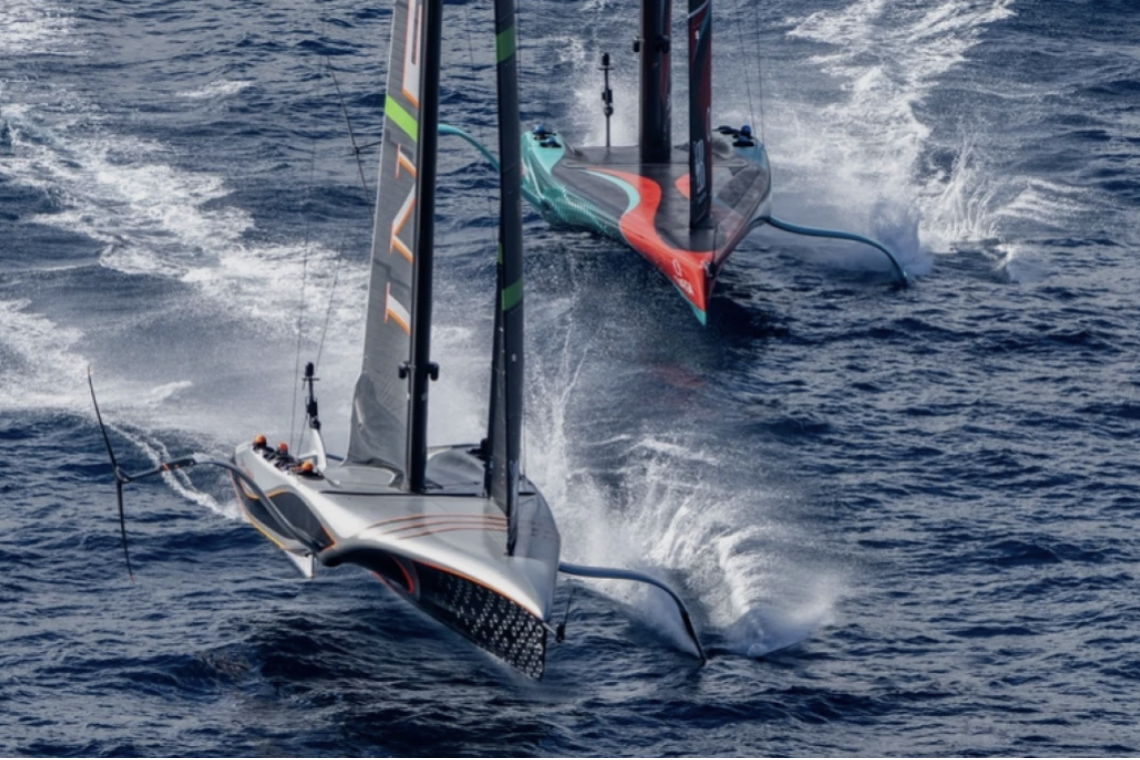
The competing allegations
In the submissions filed with the court, Athena Racing described an extremely tense atmosphere: among the incidents cited were the securing of certain entrances to the team’s base with chains and padlocks and the sudden shutdown of IT systems managed through Mercedes F1. Athena also reported the use of the expression “scorched earth”, interpreted as a threat to leave behind “scorched earth”.
Ineos has not completely denied the facts, but has disputed their interpretation. The group argues that the expression was used figuratively, to indicate its intention to defend its legal rights to the fullest extent. As for the locked doors, it claims that the purpose was to prevent entry from outside and that its representative was unaware that people were inside. The suspension of the IT systems, on the other hand, would have been the result of the expiry of the agreement with Mercedes.
These aspects could become relevant in relation to Athena Racing’s counterclaims, but they do not answer the central question in the lawsuit: what did the Partner Agreement actually provide regarding ownership of the assets at the end of the partnership?
Three possible scenarios remain. The first is an out-of-court settlement, with Athena Racing potentially purchasing Britannia or obtaining the right to use it until the conclusion of the 38th America’s Cup, while reaching a broader agreement with Ineos over the assets and intellectual property. This would be the least risky solution for both parties. The second is a judgment in favour of Athena Racing, which would allow GB1 to retain possession of the yacht and continue its programme without changing its preparations. The third scenario is an Ineos victory: Athena could be required to hand over Britannia and the other assets that the court might recognise as having been financed by Ratcliffe’s group, before having to negotiate the possibility of continuing to use the same AC75.
In the meantime, the lawsuit has taken a further step forward. As reconstructed by Richard Gladwell, following the Defence and Counterclaim filed by Athena Racing, Ineos submitted its Reply, the document with which it responds to the other party’s arguments and reasserts its claims. No substantial new elements emerge from the documents currently available: both parties confirm their interpretation of the Partner Agreement and maintain the validity of their respective claims. With the filing of the Reply, the initial phase of the exchange of submissions can be considered substantially complete. It will now be for the court and the parties to define the timetable for the next procedural steps. At present, no trial date has been set.
Giuliano Luzzatto
©PressMare - All rights reserved