Imperial fouling protection: carbon cut by 50%
Jotun: Imperial halves carbon footprint over 30 years


Jotun has published analysis showing that its Imperial Fouling Protection System delivers roughly a 50% lower carbon footprint across a 30-year service life than a conventional antifouling system.
The saving comes from fewer maintenance cycles, lower paint consumption and less waste over the life of the vessel. Measured against a business-as-usual specification developed with paint manufacturers and the Water Revolution Foundation, Imperial uses about half the paint volume while holding its long-term performance.
Hull fouling is one of the factors that weighs most on vessel efficiency. As marine organisms build up on the underwater hull, drag rises and fuel consumption, emissions and operating costs go up with it. A fouled hull can add more than 50% to a yacht's annual fuel bill.
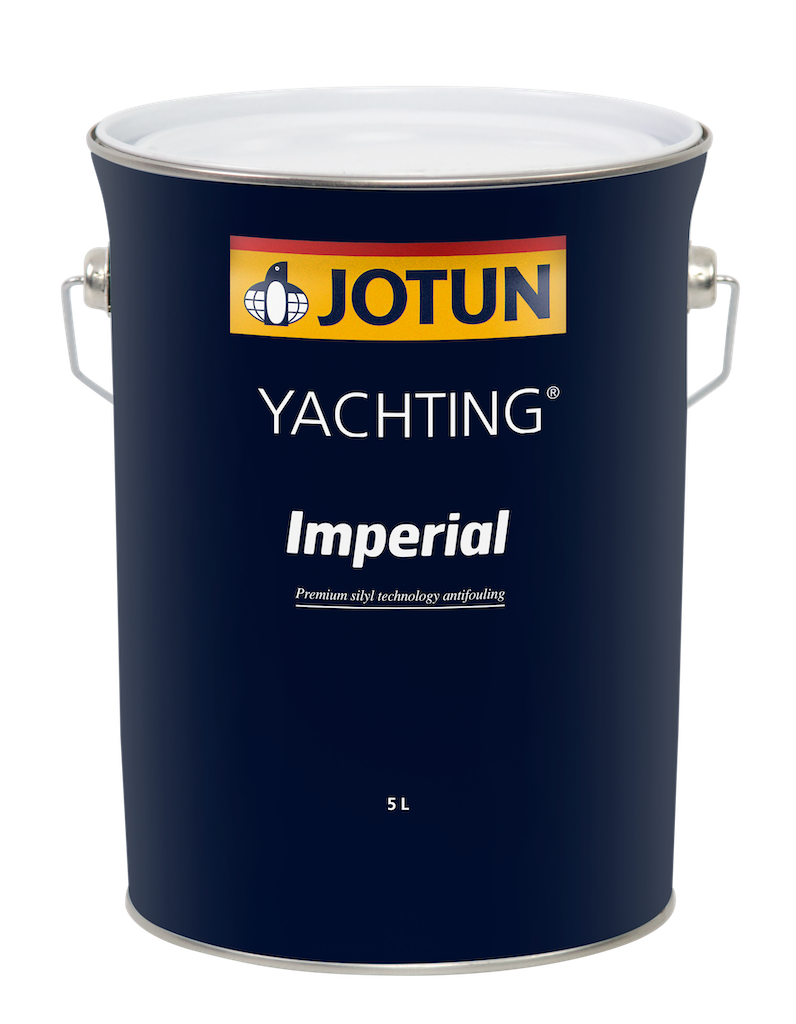
Imperial was developed for superyacht operating profiles and uses silyl acrylate self-polishing technology to keep the hull cleaner over long periods, including when a vessel spends extended time at anchor or runs at low speed. Coating specifications are matched to the vessel's sailing pattern, voyage factor and operating environment.
"This is ultimately about giving owners strong performance while reducing environmental footprint where possible," said Tracey Warner, Regional Category Manager Yachting, Europe and Central Asia, Jotun Performance Coatings.
Fouling protection also bears on marine biosecurity, limiting the transfer of invasive species between regions and cutting the need for underwater cleaning.
Leah Werner, Executive Director of the Water Revolution Foundation, added: "A robust lifecycle assessment considers the full range of impacts, from material production and maintenance cycles to waste generation and operational efficiency. Transparent lifecycle data enables the industry to make more informed sustainability decisions."
©PressMare - All rights reserved