
Sustainability in Yacht Interiors: Materials and the Supply Chain at the Heart of the Discussion
Sustainability in Yacht Interiors: Materials and the Supply Chain at the Heart of the Discussion
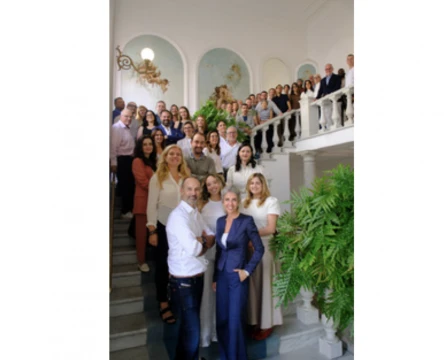
On September 21st, right before the Monaco Yacht Show 2026 opened its doors, more than 40 stakeholders from across the yachting industry gathered in Nice for a workshop that asked a deceptively simple question: what does it actually take to embed sustainability in yacht interiors?
The event was organized by Smart Interiors Horizon, a committee under the Water Revolution Foundation, and hosted by Zuretti Design at its atelier in Nice. In the room were shipyards, suppliers, interior contractors, designers, owner representatives and supply chain partners, with more than 40 names spanning the full breadth of the industry.
Walking in someone else’s shoes
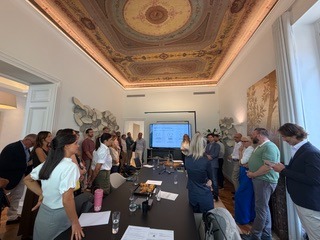
The day opened with a challenge designed to be uncomfortable. Participants were split into groups, each assigned a stakeholder role and asked to work through a real-life sustainability scenario from that stakeholder’s perspective, before reporting back on their course of action, their biggest barrier, and the one change that mattered most.
The exercise proved harder than it sounds. Stepping into another player’s shoes exposed just how differently sustainability conversations land depending on where you sit in the supply chain and how much a genuine 360-degree view of a project is needed to move those conversations forward.
One player, and the ripple effect
Mid-afternoon, Mariangela Oliveri took the floor with a personal account of how a single company can shift an industry’s trajectory. Her message was that isolated action is never truly isolated: every step one player takes ripples through the supply chain, and what starts as one company’s decision can end up moving the whole market.
It was a fitting bridge to what the room concluded next: that collaboration across the industry, and across every tier of the supply chain, is what actually works. Helping one another, coordinating, and having someone accountable for overseeing and teaching sustainability practice make a difference.
“I need / I can give”
The afternoon’s second exercise put that conclusion to the test. Each participant was asked to articulate, in turn, what they needed from others to make more sustainable choices possible, and what they themselves could offer in return. Multiplied across more than 40 professionals, the exercise mapped out a genuine network of interdependence. A reminder that everyone in the room can give something to someone, and needs something from someone else, to function and to succeed.
It was a direct challenge to the silo mentality that has long defined yachting, and a live illustration of why that mentality no longer serves the industry.
The Smart Materials Library, stress-tested
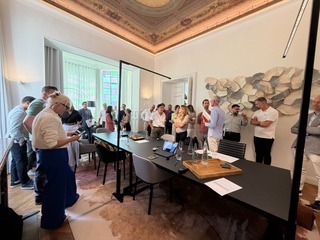
Threaded through the day was the Smart Materials Library, the tool Smart Interiors Horizon has been developing to give the industry a shared, searchable reference point for materials and suppliers. Participants explored the platform hands-on and stress-tested it against the real challenges surfacing in the room - itself a signal of the collaborative approach the day was built around. Rather than each company building its own siloed knowledge, a shared resource the whole industry can draw from.
The workshop closed with a clear line to the road ahead to refine the Smart Materials Library with the day’s feedback and expanding its base of materials and suppliers, carrying the first insights to The Superyacht Forum in Amsterdam, and returning in 2027 for the next Smart Interiors Horizon workshop.
Rebecca Gabbi
©PressMare - All rights reserved