Putting the Client at the Centre with an Increasingly Integrated Service: Alvise Tositti on the Evolution of Acquera Group
Putting the Client at the Centre with an Increasingly Integrated Service: Alvise Tositti on the Evolution of Acquera Group
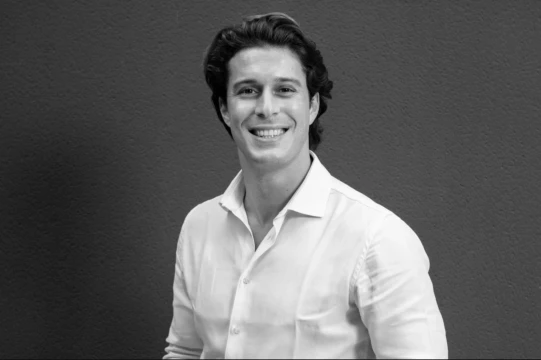
Alvise Tositti, Chief Strategy Officer of Acquera Group, talks to PressMare about the Group’s international growth, the strengthening of its local presence and the evolution of the Acquera model: from yacht agency to an increasingly integrated service platform, where technology and people work together.
There are moments in a company’s growth when increasing the number of offices, markets and services is no longer enough unless this expansion is accompanied by consistency. The real challenge then becomes ensuring that an international scale does not come at the expense of a direct relationship with the client, while the ultimate objective is to create a solid ecosystem in which different areas of expertise can work together in harmony.
This is the path taken by Acquera Group, founded in 2018 drawing on Stefano Tositti’s experience and now operating in 25 countries, with an international network that continues to expand. In 2026, the Group strengthened its presence in Malta through a joint venture with Mariner Shipping and opened a new office in Istanbul, close to the Pendik shipyards and Viaport Marina, consolidating its position in the Eastern Mediterranean and marking another step in its international development.
Geographical growth, however, is only one part of the project. Acquera has also acquired a majority stake in Wilsonhalligan, the British company founded in 2007 and specialising in the recruitment and selection of professionals for the superyacht, maritime shoreside and private household sectors. With Wilsonhalligan, Acquera enters a new phase in the development of its maritime services, connecting recruitment with the other areas of expertise it has developed within the yachting industry.
It is precisely this concept of integration that defines Acquera’s new phase. Alvise Tositti, Chief Strategy Officer of the Group, spoke to PressMare about the evolution of Acquera Group and its new approach to service.
PressMare – In recent months, Acquera has grown significantly, progressively expanding the range of services offered to clients. What is the Acquera model you envisage for the coming years?
Alvise Tositti – The acquisition of a majority stake in Wilsonhalligan clearly reflects the direction we have chosen: putting the client at the centre and expanding the support we can provide. Today, for us, the client is first and foremost the crew: the captain, purser, first officer, chief engineer, chef and all the other heads of department. These are key professionals on board, whom we already support through our agency network, local offices and the know-how we have developed across different markets.
With Wilsonhalligan, however, we wanted to add another dimension to our service: not only looking after the crew’s needs during a cruise, but also supporting them throughout their professional careers. We can therefore assist a captain who needs to recruit a new crew member, while also supporting a professional who wants to change position or take the next step in their career.
The decision to invest in Wilsonhalligan stems precisely from this complementarity.
PM – The Group now employs more than 140 people and operates in around 25 countries. How do you maintain a common corporate culture when international growth reaches this scale?
AT – The starting point is the transmission of our values. Our country managers and office managers work within a common framework defined by the central corporate organisation, where we share the principles that must guide our service: attention to the client, attention to detail and quality of assistance. These values are then passed on within each individual organisation.
We operate in an industry where the service is intangible and, ultimately, what makes the difference is the person and the way they interact with the client. This is why attention to detail and to the client’s interests forms the basis of our work.
PM – As you grow across multiple countries and with different brands, is there not a risk that clients will perceive Acquera as a large organisation rather than as a bespoke service provider?
AT – I don’t think so, because the service continues to be managed locally. When a yacht arrives at a particular destination, we are physically present through our local operation.
The Group’s growth therefore does not mean losing the direct relationship with the client. This is also why we do not expand simply by adding new countries: we open a new location when we believe we are ready, when we have found the right people and when we can guarantee the standards we have set ourselves. People joining the Group are trained and, wherever possible, already have experience in the industry. Before opening a new operation, we need to be certain that we have the necessary expertise, processes and tools.
Geographical expansion is a consequence of our desire to support our clients across an increasing number of destinations, but it has to happen at the right time.
PM – If, on the other hand, you were to stop geographical expansion tomorrow, where would you invest to further increase the value of the brand?
AT – In continuous improvement and internal training. Geographical expansion is only one of the possibilities. For us, it makes sense to continue investing in countries where there is yacht traffic, while more remote locations may potentially come at a later stage.
There is, however, one area of work that never stops: training people, improving processes and looking for tools that allow us to make our service increasingly structured and responsive.
Technology is also part of this. We do not see it as something that will replace people, at least not in our industry, but rather as a complementary tool that can optimise work and make it more effective, both for those providing the service and for those receiving it.
PM – So you are not afraid of adopting new technologies?
AT – No, quite the opposite. Clients expect more and more, and we need to be able to respond to these requirements, ideally anticipating them. Technology can help us along this path.
I believe this openness is also an important differentiating factor for Acquera compared with more traditional agencies. People remain fundamental, but we want to complement their work with technological tools that provide real value.
PM – And what about artificial intelligence? What do you believe your clients expect from it?
AT – The first issue is certainly data security. I see AI primarily as a tool for optimising our business. For this reason, it would make no sense to adopt it simply because it is available: it must deliver tangible value to the client. I believe clients primarily expect continuity of service and information that is constantly available, accessible and easy to obtain. Technology can contribute precisely to this.
It is an area in which we are at the forefront and on which we are actively working.
PM – Which services are still considered extras in the yachting world today, but could become part of a more standard offering for Acquera as well?
AT – The requests received by a yacht agency are already extremely broad. They range from more technical and administrative matters to organising experiences and services tailored to the client’s requirements.
With Wilsonhalligan, we have started moving beyond the traditional scope of a yacht agency, integrating an activity that was already present in the market but which, when incorporated into our model, can create significant complementarity.
For us, this is a first building block. There are others, and we are studying them while defining the best strategy for integrating them into our model.
Nicole Cescutti
©PressMare - All rights reserved