More billionaires, fewer converts? The superyacht industry’s growth challenge
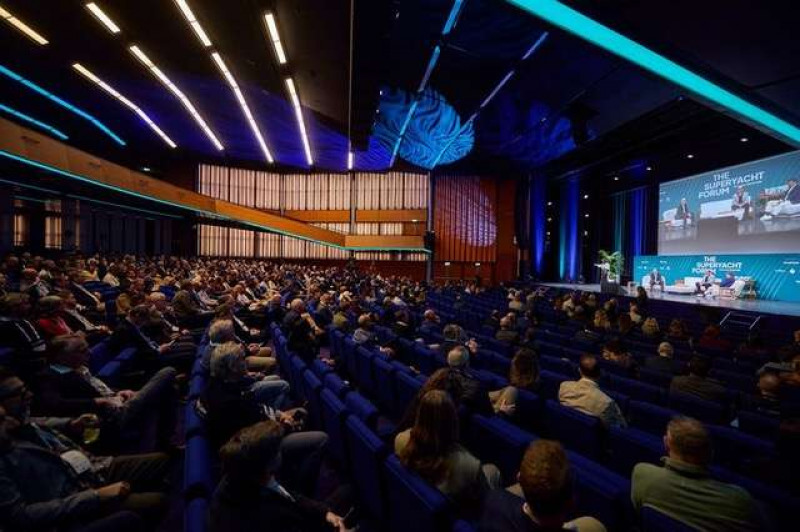
At The Superyacht Forum in Amsterdam, the SYBAss Economic Study highlighted a widening gap between the growth of global wealth and the uptake of superyachts. The discussion that followed examined what prevents potential clients from entering the market, from construction times and ownership complexity to the way the industry presents itself.
The population wealthy enough to afford a superyacht is expanding faster than the fleet. For builders and brokers, that suggests considerable room for growth. It also raises a question. What would persuade more of those potential clients to become owners?
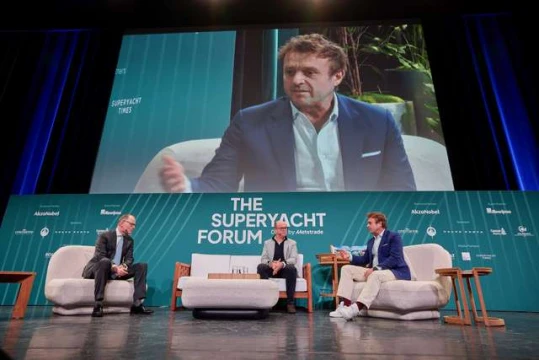
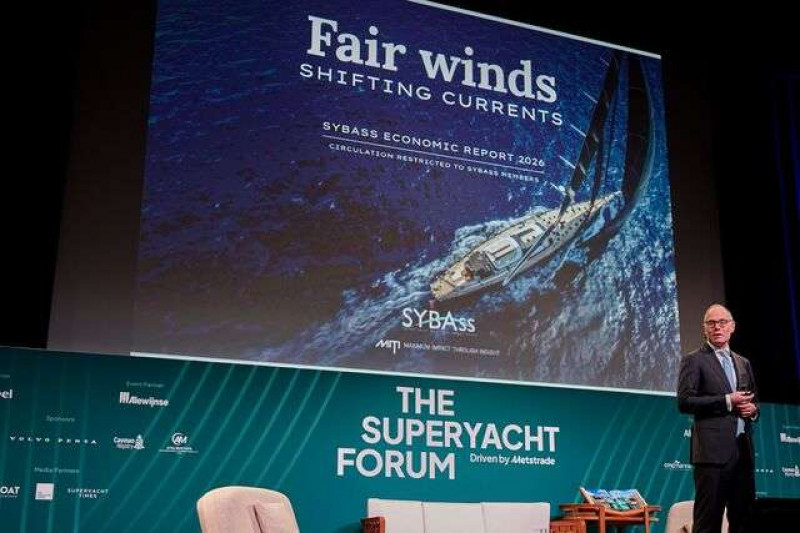
The session Industry update – SYBAss Economic Study: Fair Winds, changing currents, held on 17 November at The Superyacht Forum in Amsterdam, brought together Erik Floor, author of the SYBAss Annual Economic Report, as keynote presenter, Jan-Bart Verkuyl, Feadship Director, CEO of Royal Van Lent Shipyard and President of SYBAss, and Charlie Birkett, CEO of Y.CO and President of LYBRA. Floor presented the study’s findings before joining Verkuyl and Birkett to discuss their implications for yacht builders, brokers and future owners.
Their conversation moved from the distribution of wealth to the practical realities of attracting clients, building yachts and making ownership enjoyable.
Wealth is growing faster than yacht uptake
According to the figures presented by Floor, the global billionaire population has increased approximately sixfold over 25 years, equivalent to average annual growth of around 8%. The latest annual increase in the dataset was approximately 13%.
Floor uses billionaires as a proxy for the potential customer base because detailed information about their wealth is available. He acknowledged that yacht buyers also include people below that threshold. His analysis focused on the trend over time.
Comparing billionaire numbers with the fleet of yachts under 15 years old showed that the potential customer base has grown faster than the fleet. Floor said the declining ratio remained evident after adjusting for inflation.
The geographical picture adds another dimension. Asia-Pacific has the largest regional billionaire population, yet its wealth translates into relatively limited superyacht uptake. North America remains the largest buying market by gross tonnage in the analysis, including in the largest yacht categories. Latin America, though a smaller market, stood out for increasing uptake relative to its billionaire population.
For companies planning where to invest commercially, those differences matter. Growing wealth establishes purchasing power. Turning that purchasing power into yacht ownership requires understanding how people want to spend their time.
Younger clients and the problem of waiting
Birkett argued that the industry needs a clearer understanding of clients’ ages and expectations. He described charter clients in their twenties and early thirties spending more than €1 million a week, illustrating the purchasing power already present among younger customers.
Some have grown up cruising with their parents and now want different experiences with their own families. Their interests may include more distant destinations, watersports and itineraries beyond the established Mediterranean and Caribbean circuits.
Those expectations meet a difficult industrial timetable. Verkuyl pointed to construction periods of at least three to four years for large yachts. Birkett noted that the process can reach five years or longer once design is included.
Expanding production also depends on skilled people throughout the supply chain. Verkuyl stressed investment in training and craftsmanship, while recognising that shipyards rely on suppliers to develop their own capacity. Increasing output means expanding the workforce and expertise required to deliver complex projects.
Charter and refit offer routes into ownership
Charter emerged as an important opportunity to introduce clients to yachting and understand what they value before they buy.
Birkett highlighted the potential beyond peak holiday periods. He described growing interest in September and clients enjoying Greece and Turkey during the October school break. More flexible pricing and better guidance about destinations could help owners improve utilisation while bringing additional customers into the market.
Refit and rebuild offer another route. An existing yacht with sound underlying quality can provide a platform for a client who wants to get on the water sooner than a new construction programme allows.
The panel discussed projects lasting around a year to 18 months, depending on their scope. Birkett also challenged the assumption that updating an older yacht always requires removing the entire interior.
The financial proposition needs careful explanation. Verkuyl observed that money spent on a rebuild may not be reflected proportionately in the yacht’s market value. Clients need to understand the relationship between expenditure, improvements and their intended use.
Making ownership easier to enjoy
The discussion repeatedly returned to the complexity of ownership. Crew, maintenance, management and the decisions surrounding construction or refit can become barriers for someone approaching the sector for the first time.
Birkett placed considerable responsibility on captains, crew and the support structure around them. Their work shapes the experience an owner actually receives. He also argued that the build itself should remain enjoyable throughout a relationship that can last several years.
Closer cooperation between builders, brokers, managers and owner representatives could help. A client may charter for years before purchasing an existing yacht or commissioning a new one. Knowledge of that client’s family, preferences and expectations can inform each stage.
The same thinking applies to attracting new customers. Verkuyl questioned whether conventional boat shows fully communicate the experience of yachting. Birkett suggested smaller, qualified gatherings closer to prospective clients, including on the US West Coast.
Sailing also deserves a place in the growth discussion
A question from Pressmare brought sailing yachts into a conversation dominated by motor yachts. Could sailing contribute to the industry’s next phase of growth?
Both Verkuyl and Birkett recognised the opportunity, while acknowledging the segment’s difficulties. Birkett pointed to the cost of building a large sailing yacht, including its rig, relative to the volume available on board. Such projects require strongly committed clients.
The wider discussion suggested that market research could now extend further into charter activity, refit and client demographics. Understanding who can afford a yacht is a starting point. Understanding what would make them choose one could help the industry turn its expanding audience into lasting customers.
Filippo Ceragioli
©PressMare - All rights reserved