La Roche-Posay Racing Team capsize in Lorient
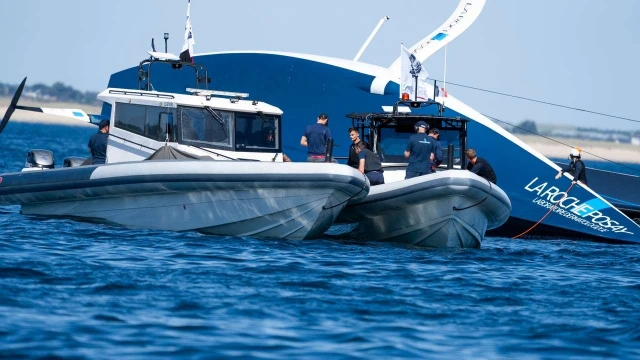
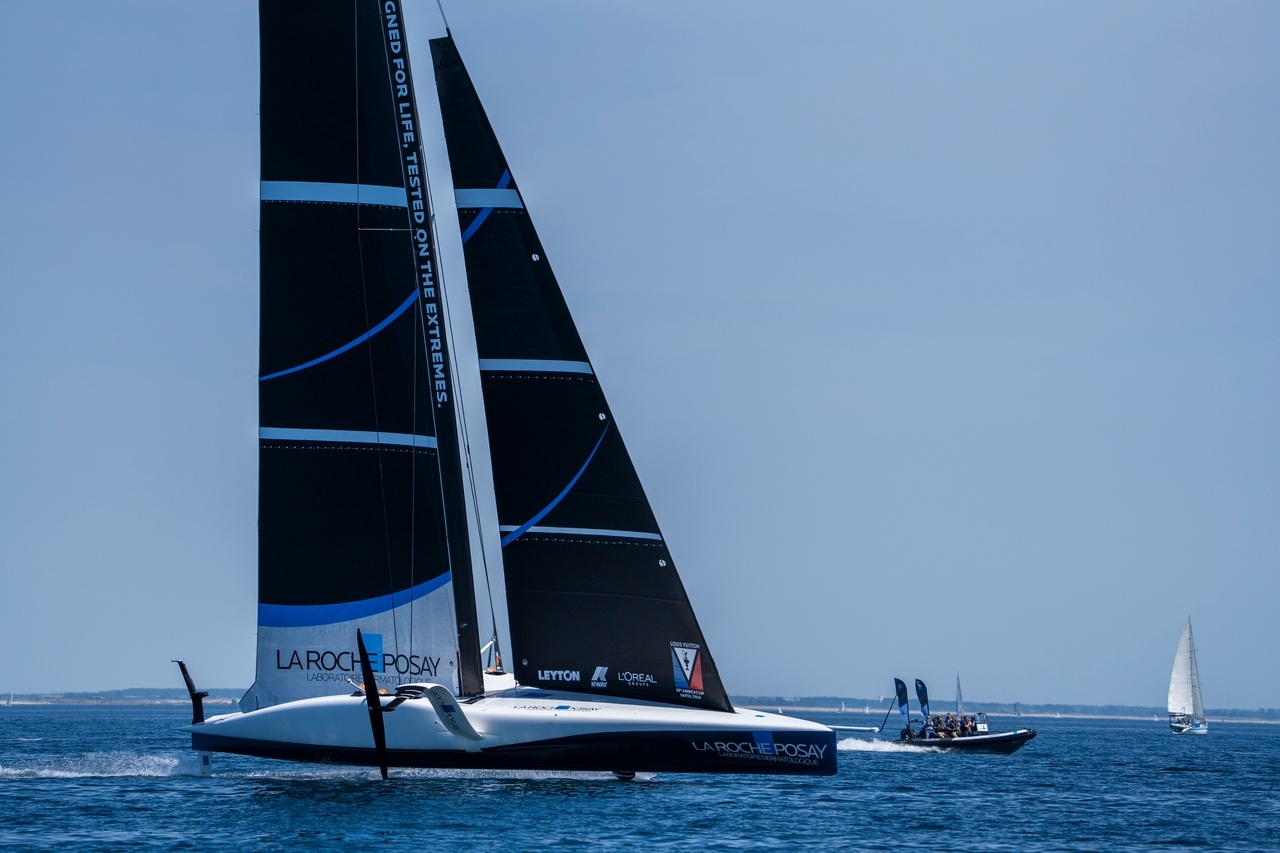
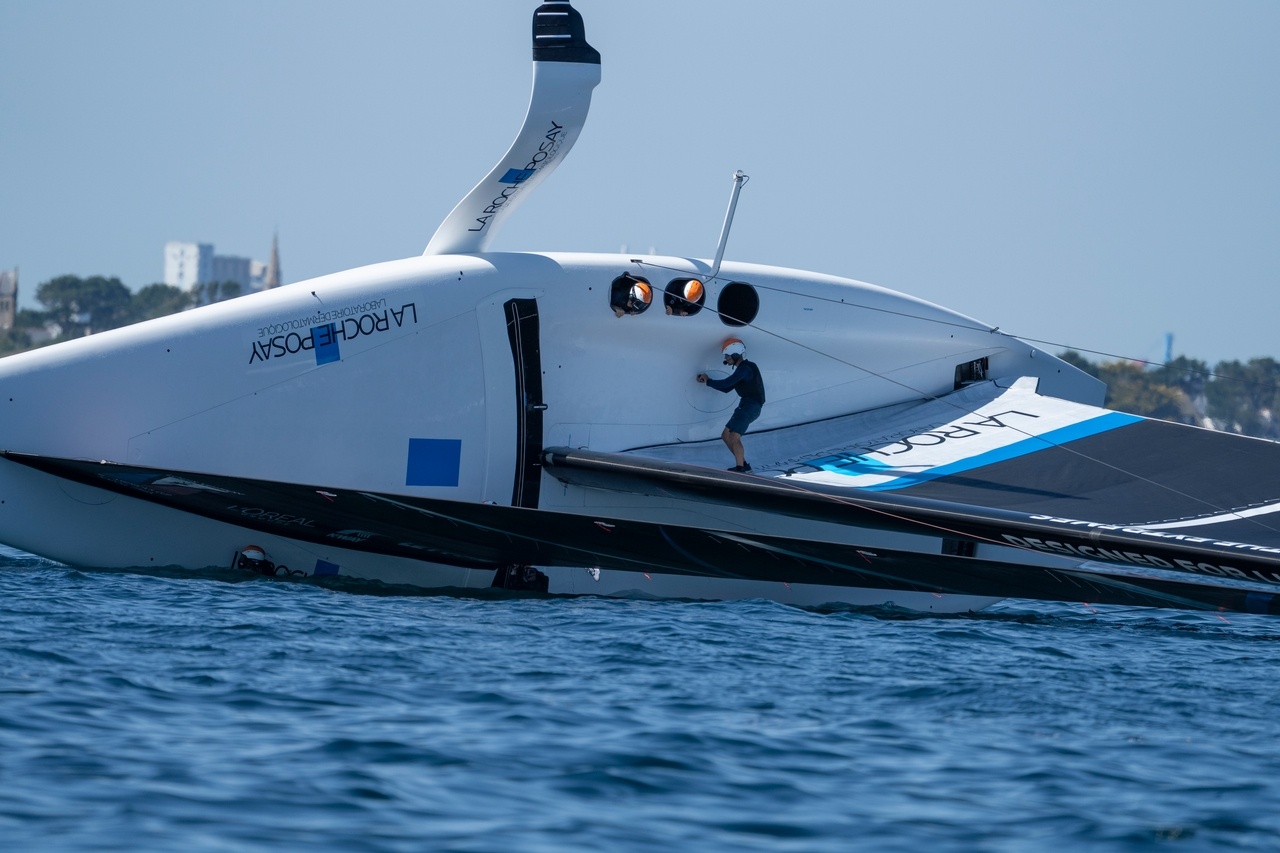
Tough day in Lorient, France for La Roche-Posay Racing Team as an unconfirmed “systems issue” caused the team’s stunning AC75 to capsize whilst at 35 knots downwind. It was an issue that the team had identified both on the dock and whilst sailing, but the result was a long time at 90 degrees, water ingress into the hull and when righted, white smoke trailing out aft.
Speaking shoreside, Bruno Dubois, the co-CEO of La Roche-Posay Racing Team, confirmed that everyone was safe onboard and accounted for, and played down the incident: “Everybody is okay. I would say the one who didn’t capsize didn’t sail a lot, honestly. This happens quite a lot. We have no keel on the boat. There’s a few system issues on the boat, and the boat went slowly on the side, and everybody is fine, and it took some time to get the boat back together. But, yeah, it’s fine.”
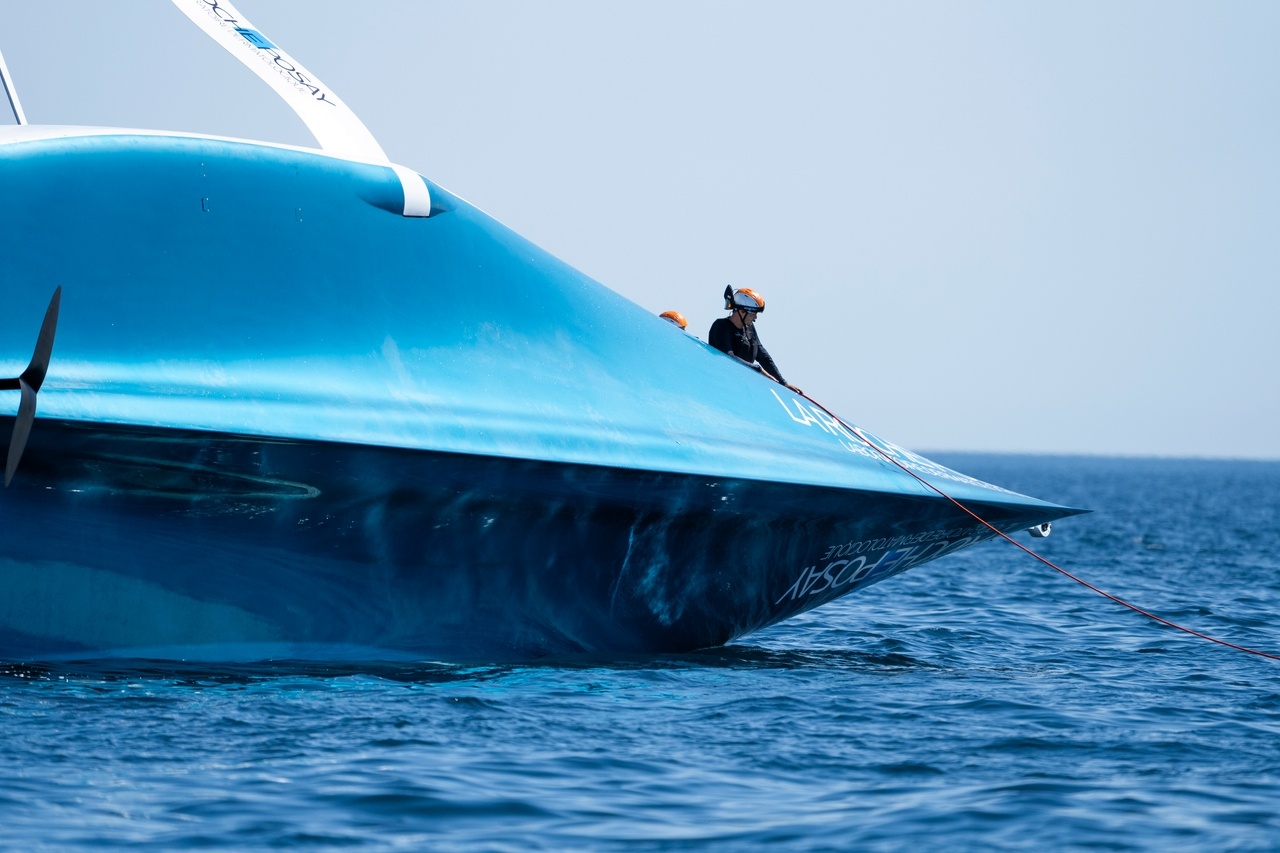
The recon team on the water captured the footage and observed that: “Little appeared to move on the boat through the capsize, which would be consistent with a loss of onboard systems... Several attempts were needed to right the boat, after which it sat low on its waterline, bow down, with water aboard. Smoke then came from several deck hatches and pods; no flames were seen from the water, though the smoke, a burnt smell and the attendance of SNSM crews with firefighting equipment were consistent with a fire on board. The team and SNSM worked to make the boat safe and pump it out before B1 was side-towed towards harbour, the water taken off found to be contaminated once ashore.”
Much credit to the safety teams of SNSM (Société Nationale de Sauvetage en Mer) who were quickly on the scene assisting the shore team and managing the onboard situation with firefighting apparatus. Bruno Dubois remarked on the calmness and professionalism of the team, saying: “I think everybody stayed quiet, and it has happened quite a lot for most of them, so it’s all fine. I would say that the AC40 capsizes easier than this one, so I hope we’re not going to do that too many times. But the ‘Road to Naples’ is quite long, so it’s part of the process, and I think we’ve done a good job with the team to get everything back on and put the boat back right and get the sails down and bring back to the dock. The boat’s in the shed.”
Bruno was meant to be the sixth man onboard today, but having identified the system issue, he swapped out and stayed on the Chase Boat so that Antoine Recard, the Boat Captain, could be onboard, and said: “It was lucky he was there in my place. He’s way more qualified than me to take care of that!”
The spirit of La Roche-Posay Racing Team was perfectly encapsulated though by Bruno who simply said: “We have some water inside, a little bit. So we’ll dry the boat, take the boat out of the water, do a general check and go back.”
For the French, it’s a bump in the road on a fast-track to Naples and the Louis Vuitton 38th America’s Cup in 2027. They will be back.
On-Water Recon Report: La Roche-Posay Racing Team completed a long sailing day with B1 at Lorient that ended in a capsize on the third run, with water ingress and signs of a fire on board once upright. No injuries were apparent, and the sailing and shore teams recovered the boat together through the evening.
The mast was rolled out first at 10:06 and B1 came out of the shed at 10:22, the foil and rudder configuration appearing consistent with prior days. The shore routine looked more practised than on earlier days, the mast stepped and the boat lifted in and launched at 11:10. Once afloat, technicians boarded to install the cunningham ram and cabling and to run the usual dockside control-system checks, followed by the sailors' own systems check.
B1 docked out at 13:01 under tow and was taken towards the north-western end of Île de Groix, where the tow was released and the boat stopped to hoist sails in very light air. With almost no wind, the team stood by before hoisting the jib (J2-1) first and then the mainsail (MN2-1), the reverse of the order seen previously; both again appeared to carry luff-area reinforcement, which on J2-1 appeared to extend to the head. As the breeze filled from the WNW to sailable strength, the chase boat began preparing a bow tow, but this was interrupted when technicians went back aboard B1, marking the start of an apparent technical issue that held the boat on the water for over two hours before sailing.
The first run began at 15:34, the chase boat towing B1 onto the foils before releasing. The boat worked upwind and downwind on both boards through a series of tacks and gybes, several fully foiling and others with touch-and-go or touchdown transitions, ride height and trim appearing unstable at times and steadier at others, before heading up and stopping. Antoine Rucard occupied the aft starboard pod through the session in place of the intended guest, which with the preceding hold would be consistent with a systems-validation emphasis. A short second run followed at around 16:11, on which B1 came up onto the foils without a bow tow, for the first time in the observed campaign, sailed a brief upwind and stopped. After a change from J2-1 to J3-2, a third run began, again self-starting onto the foils, working upwind on port before bearing away into a fast downwind.
The final run ended in a capsize at 16:50, the boat going over onto its port side to around 90 degrees, the masthead resting on the water. Little appeared to move on the boat through the capsize, which would be consistent with a loss of onboard systems. In the post-session interview Dubois characterised it as a system issue, saying an initial issue early on had been worked on and the boat had resumed sailing, but the system then failed again while sailing downwind at around 35 kt, when the boat went over. Several attempts were needed to right the boat, after which it sat low on its waterline, bow down, with water aboard. Smoke then came from several deck hatches and pods; no flames were seen from the water, though the smoke, a burnt smell and the attendance of SNSM crews with firefighting equipment were consistent with a fire on board. The team and SNSM worked to make the boat safe and pumped it out before B1 was side-towed towards harbour, the water taken off found to be contaminated once ashore.
B1 docked in at around 20:30, was lifted out at 22:15 and returned to the shed at 23:14, the shore and sailing teams working together throughout the recovery. Dubois, briefed as guest for the aft starboard pod, said he had not boarded because Philippe Presti stood him down over the system issue, its cause not yet known, and that Antoine Rucard took his place; he credited Rucard with doing an excellent job to help put the boat back together and being better qualified for the role. The team subsequently issued a public statement describing a systems issue that caused the capsize, confirming the crew were unharmed and B1 had returned to base, with the technical team working to identify the cause and repair the boat.
Conditions were sunny and hot with light air building through the afternoon from the WNW, from near-calm to around 12 to 14 kt by the final run. The sea state was slight, glassy early and building to a slight chop, with the tide near slack around low water.