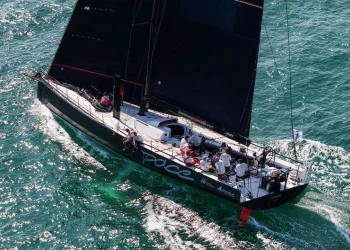
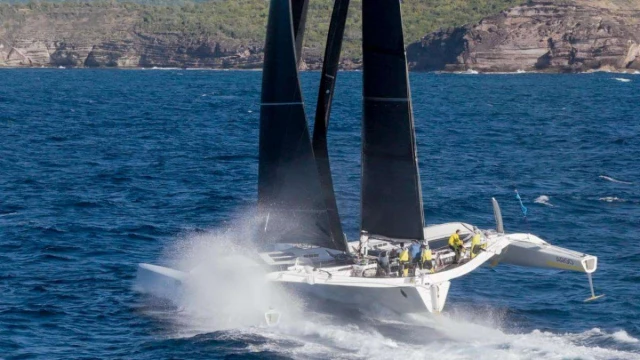
Jason Carroll’s MOD70 Argo sets a new race record in the 2026 RORC Transatlantic Race in Antigua © @roddyacqua
RORC Transatlantic Race: Argo’s Record Triumph After Five Days of Atlantic Warfare


Jason Carroll’s MOD70 Argo (USA) has claimed Multihull Line Honours in the 2026 RORC Transatlantic Race, crossing the finish line off English Harbour, Antigua, on Friday 16 January at 12:31:15 UTC. In doing so, Argo set a new Multihull Race Record for the Lanzarote–Antigua course of 4 days, 23 hours, 51 minutes and 15 seconds, setting the multihull benchmark for this iconic Atlantic route.
Hot on Argo’s heels was Erik Maris’ MOD70 Zoulou (FRA), finishing just 2 hours and 32 minutes later after five days of relentless, high-speed combat across the Atlantic. The result was the culmination of one of the closest and most intense multihull battles ever seen in the RORC Transatlantic Race.
From the moment the fleet cleared Lanzarote, the two MOD70s were locked in a private duel at the very front of the race, separated by mere miles, matching each other stride for stride at sustained speeds well above 30 knots.
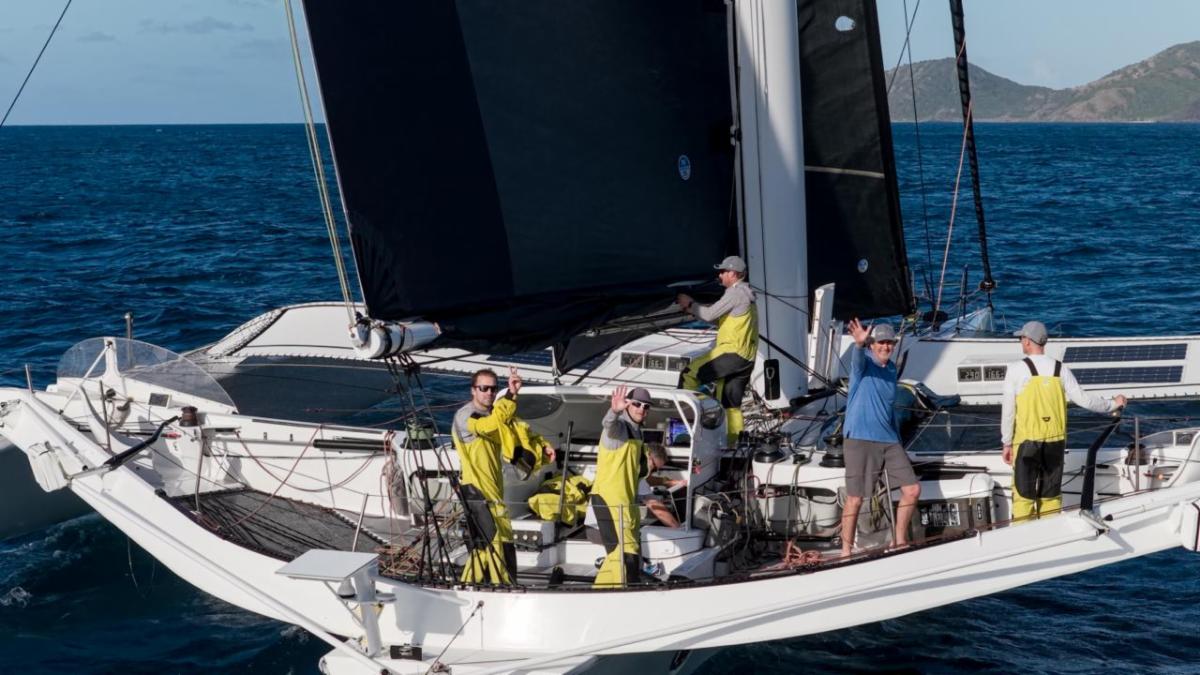
Every Mile Was Earned
For Chad Corning, skipper of Argo and a long-time architect of the project, the race delivered exactly what the team had hoped for and feared.
“We knew it was going to be a close match race with our friends on Zoulou, and it was every bit of that,” said Corning. “We managed to get a small lead early on and just very slowly built it. They were hanging very tough the whole way and pushing incredibly hard behind us. It made for a frenetic pace from start to finish.”
The intensity was such that even after docking in Antigua, Corning admitted the team was still coming down from the effort.
“You get off the boat and you’re still buzzing. It takes time to decompress from something that intense.”
Preparation Pays Off
Argo’s victory was forged months before the start gun fired. The team based the boat in Lanzarote from September, undertaking a comprehensive refit and inspection period at Marina Lanzarote.
“Everything mechanical came off the boat,” explained Corning. “We did all the NDT scans, serviced or replaced anything that needed it. It was very thorough, and it absolutely paid off. Out there, you have to trust your gear completely.”
That trust was tested mid-race when Argo developed a worrying issue with the port rudder, discovered just as daylight faded.
“We felt vibration and play in the rudder while sailing on port,” Corning recalled. “Alister Richardson immediately knew something wasn’t right. He got into his safety gear and went over the stern with maybe 20 minutes of daylight left. If that hadn’t been fixed, the race was over.”
Richardson’s intervention proved decisive. “That was heroic. If the rudder had failed, we couldn’t have pushed on safely.” Admitted Corning.
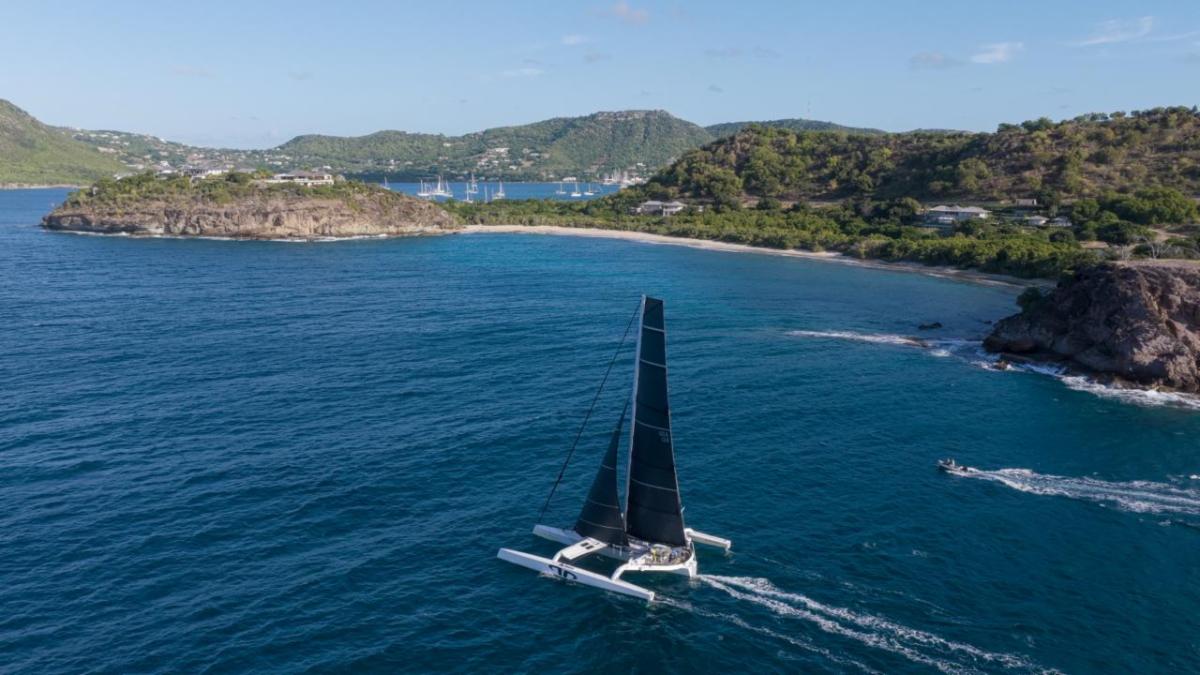
© @roddyacqua
Skiing Blind at 30 Knots
Once into the trades, the race shifted into another gear entirely. Daytime speeds were extreme. Night sailing was something else.
“By Day Two, we were doing 30 to 32 knots in big seas,” said Corning. “The nights were long; 13 hours, very dark, very little moon. It felt like skiing a black diamond run with a blindfold on.”
Helming rotations were reduced to 45-minute stints, with drivers stepping off soaked, exhausted and eyes stinging from constant spray.
“You’re locked into true wind angle, feeling the power, the heel, the waves trying to throw the boat sideways. You’re trying to keep the boat surfing, not letting the wave take control,” continued Corning. “There were moments when guys said, ‘I’m not up for the helm right now.’ And that’s respected. Knowing when to step back is part of surviving a race like this.”
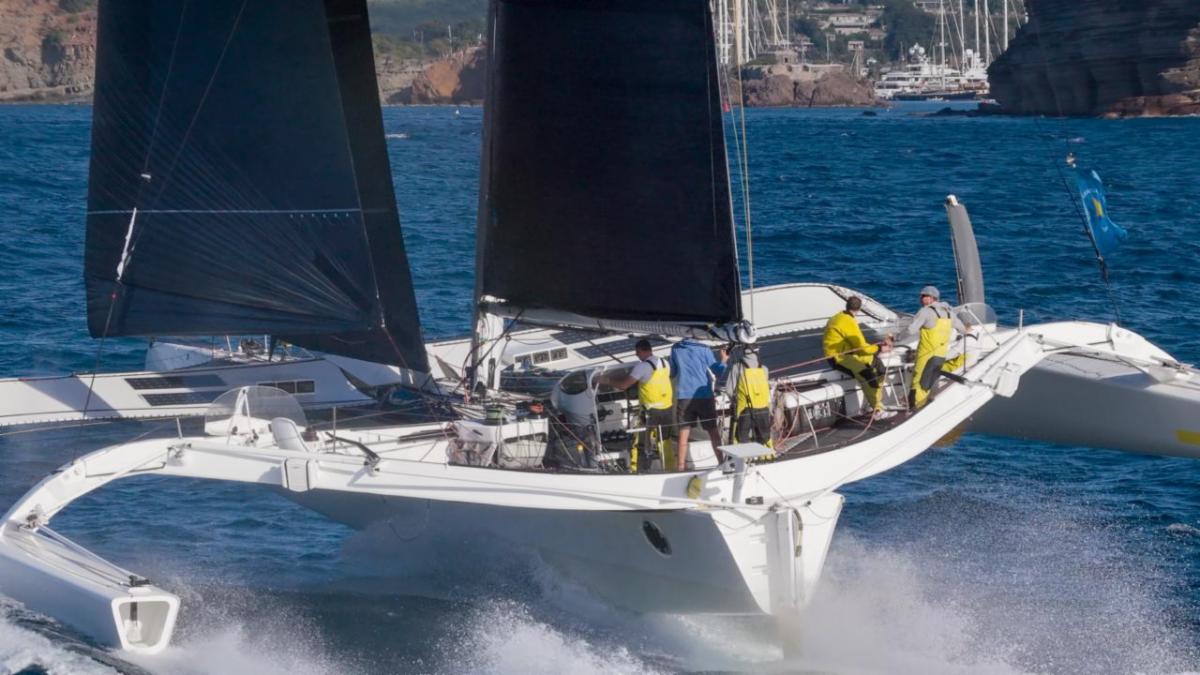
MOD70 Versus Ultim
For Sam Goodchild, Argo offered a very different experience to the larger Ultim trimarans he has raced recently.
“The MOD70 is like a go-kart,” Goodchild said. “With six people, you can throw it around. Manoeuvres take 20 seconds, not six minutes as in an Ultim. It’s simple, fast, and incredibly fun.” He highlighted the key difference in how the boats generate speed.
“An Ultim is a multihull and flies flat at 45 knots but it is a big boat that you cannot take as close to the edge as a MOD70. Just flying the centre hull on Argo reduces drag, but it also brings you closer to the edge. It’s all about trust in the people around you.”
A Record That Resonates
Veteran offshore sailor Brian Thompson, who has been part of numerous record-breaking campaigns, placed the achievement firmly in historical context.
“Think about how many boats have sailed from the Canaries to the Caribbean since Columbus in 1492,” Thompson said. “To be the fastest ever to cross such a well-travelled route is pretty special.”
Finishing in Antigua carried extra meaning for Thompson and the Argo team. “This island has been home to us for years. I have been coming for over 40 years, finishing here feels like coming home.”
Zoulou: Pushed to the Limit
For Erik Maris and the Zoulou team, defeat did little to dull the sense of achievement.
“It was brutal,” Maris said simply. “We were within 50 miles of Argo for most of the race. Sometimes we gained, sometimes we lost, but nothing really changed after Day Two.”
For Erik Maris, there was no frustration, only respect. “That’s why we do this. Some days you win, some days you lose. These are incredible competitors. Without them, the race wouldn’t be worth doing.” Sleep and nutrition were constant challenges. “It was hard to eat, let alone sleep,” Maris admitted. “But it was fantastic racing.”
Attention for the RORC Transatlantic Race now turns to the monohull fleet, where the Baltic 111 Raven is the next boat expected to finish the race. Raven is forecast to arrive in Antigua on Sunday 18 January, after an exceptional high-speed crossing that has seen her consistently deliver outstanding daily mileage. On arrival, Raven is expected to secure the IMA Transatlantic Trophy as the first maxi monohull to finish, while also setting the monohull benchmark for the overall win under IRC corrected time.