ph.Luna Rossa Challenge
Luna Rossa leave it late in the day for First Commissioning in Cagliari


Long days are commonplace in the America’s Cup and for Luna Rossa, Wednesday 10th June 2026 will go down in the history books as the day their challenge for the Louis Vuitton 38th America’s Cup well and truly got underway.
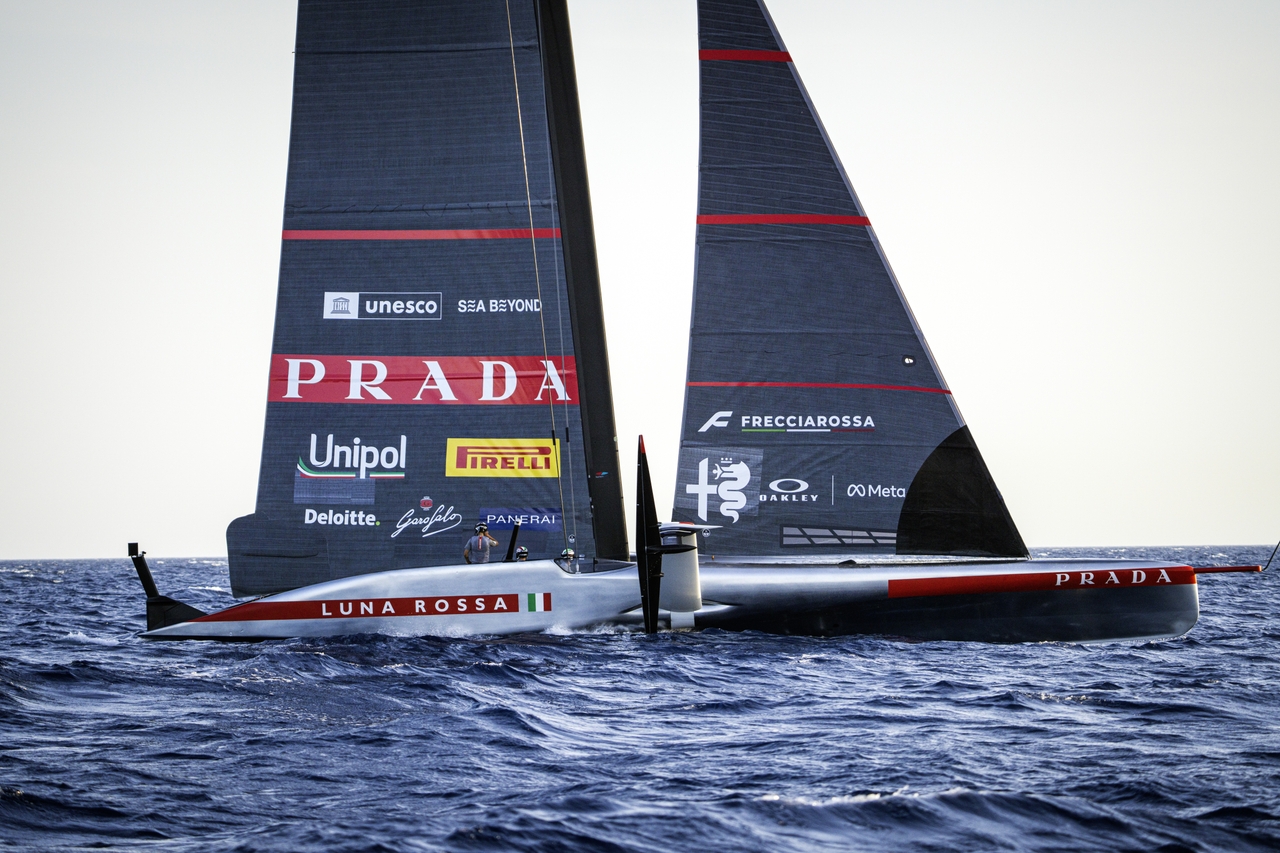
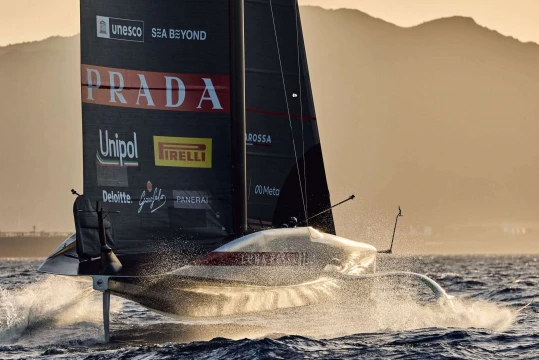
The Italian team who were so magnificent in the Preliminary Regatta in Sardinia just a few weeks’ ago, took their time as they shook-down the boat late in the Cagliari sunset with a 7pm first take-off time of the boat known as the ‘Silver Bullet.’
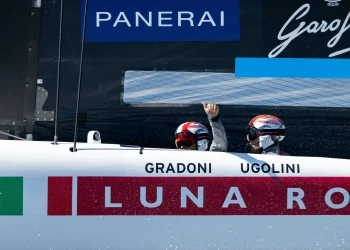
Peter Burling and Ruggero Tita were the nominated helms and quite rightly took their time to bed into a whole new way of working onboard the AC75 which is a considerable step-up from the one-design AC40s. Gybes were tentative with two boards down for stability and it was stop-start throughout the session as technicians came onboard to check everything was working as it should.
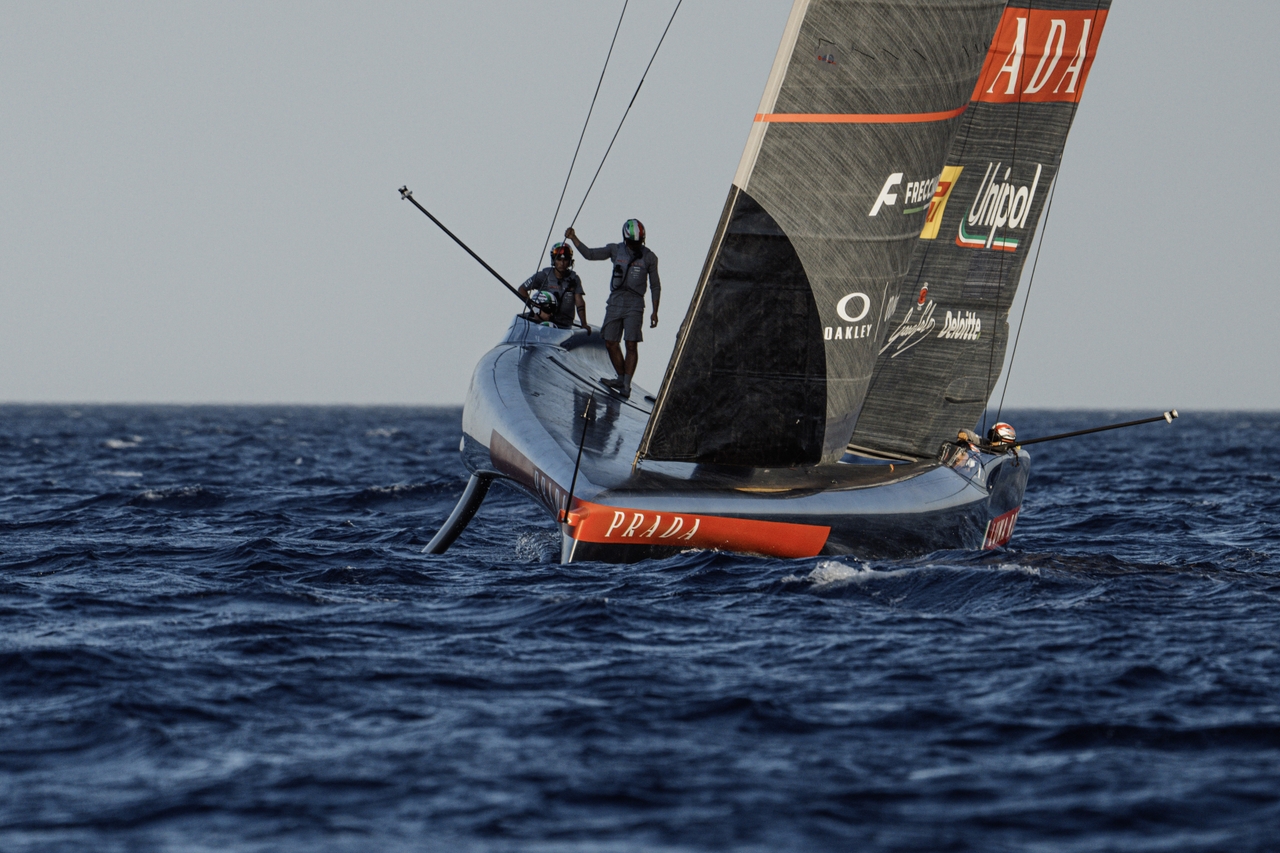
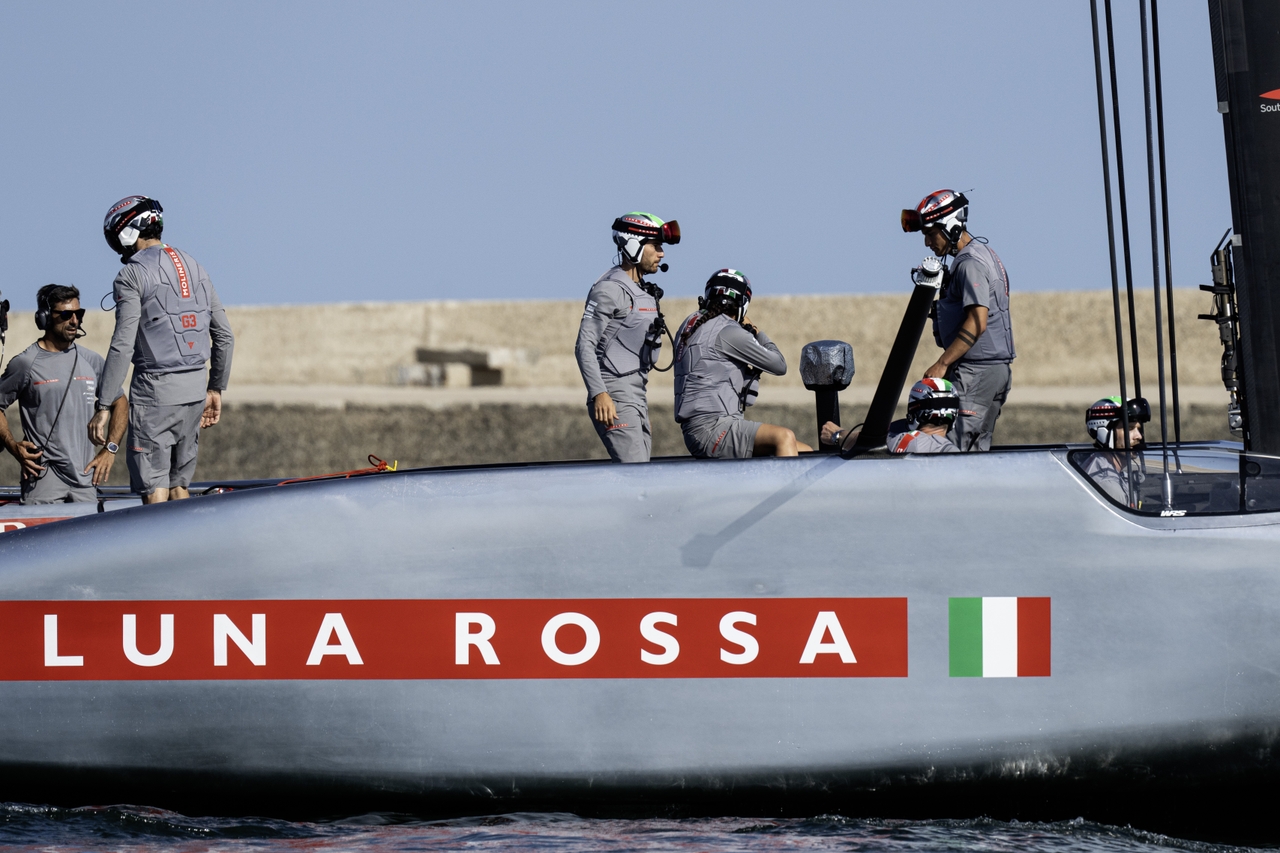
The speed was certainly there, as the awesome craft hit an estimated 40-42 knots on the first real run, and the team will certainly have come away with optimism around the work that has been completed to adapt to the new rules. It was a full crew onboard today with Burling and Tita joined by trimmers Umberto Molineris and Vittorio Bissaro with Maria Giubilei in the 5th person pod (to port) and Marco Gradoni in the starboard pod, making a total of six-up through the session.
Speaking afterwards, Max Sirena CEO of Luna Rossa spoke about the Day: “It is always a pleasure, no? Every time when you put this lady in the water, there is quite a lot of emotion from the team, and it’s probably part of the deal we have with this place. Every time when we splash this boat for the first time, it’s blowing over 20 knots for day one, but it’s good! I think we are quite happy of the day, and what we achieved, and we nailed everything that was on the book to tick off. So it’s good.”
“Obviously, we all know it’s not the same boat of Barcelona, no? And I think every team, once they’re going to splash the boat, like the Kiwi, I’m pretty sure they have a new stuff to check and to test. And it’s always an important day, the day one, no? Because you got immediately feedback and answer. So, I think it’s enough to see the faces of the people around the base tonight, and so it’s good.”
Asked what the big developments will be in this cycle, Max said: “It’s hard to tell. Obviously, it’s going to be the third cycle of this type of boat, so like always in the past, after many campaigns with the same class, the gap between boats is getting closer and closer. Which is great because it means everyone is pushing pretty hard, both on the technical side and also on the sailing team and playbook. So, I think it’s going to be an interesting Cup, the next one in Naples, and I think we’re going to see really good match racing pre-start manoeuvres, and I’m pretty confident everyone is going to play on that field.”
Next sailing day is scheduled for Friday 12th June 2026.
RECON REPORT – 10th JUNE 2026: After several postponements, Luna Rossa rolled out the mast at 15:55, followed by the boat at 16:15 for further debugging and decommissioning. The usual cameras were mounted on the foils. Antennas were observed on the media post along with a forward-facing recording device. Identical devices were mounted on the spreaders, while anti-vibration hardware was installed on the shrouds. While stepping the mast, a minor issue appeared to occur, delaying the process further.
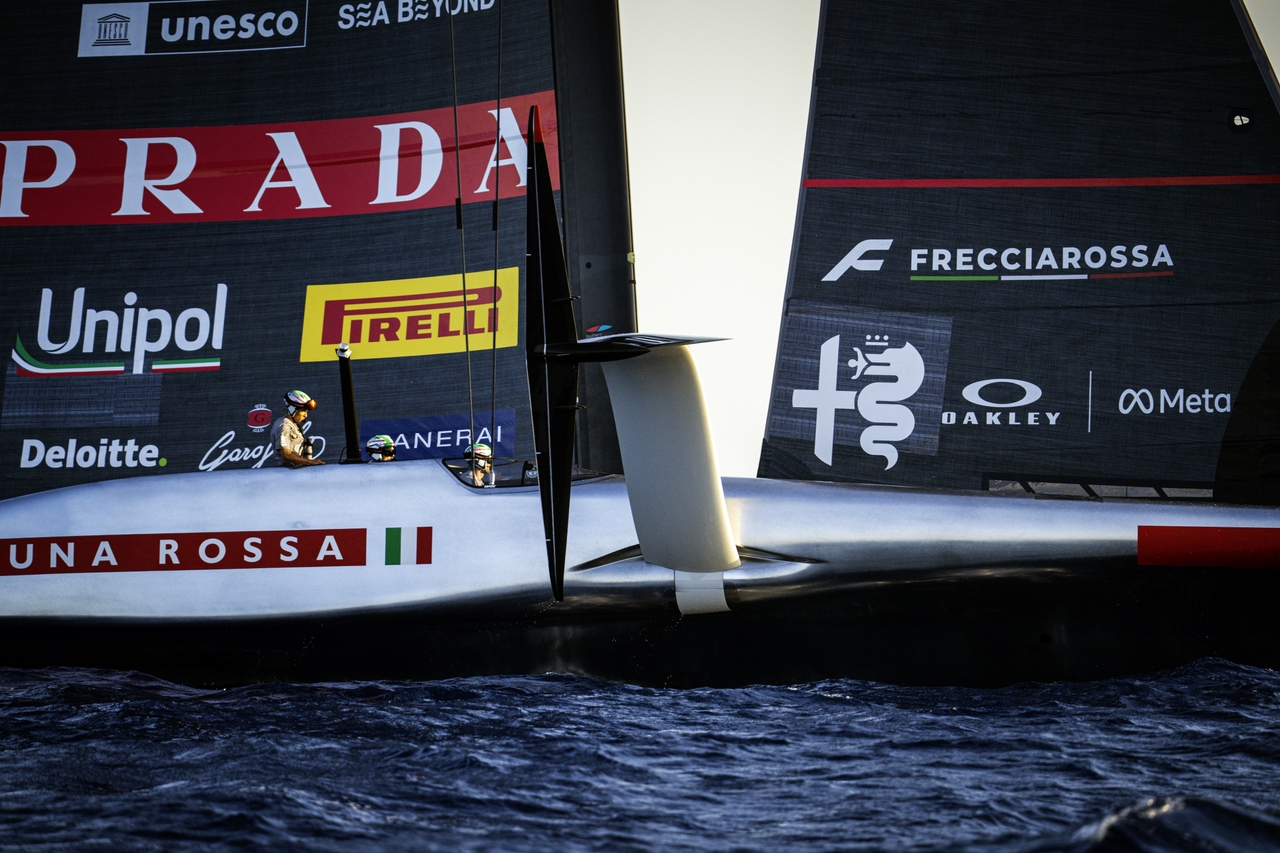
Once rigged, the boat was craned into the water at 17:00 and the team rushed through the remaining procedures. No cant tests were observed at the dock, suggesting the team had tested the FCS beforehand, possibly explained by the modified ‘dome’ boat tend.
Dock-out was scheduled for 17:30 with, on port: Ruggero Tita (helm), Umberto Molineris (trim), and Maria Giubilei (5th); and on starboard: Peter Burling (helm), Vittorio Bissaro (trim), and Marco Gradoni (6th).
As the team exited the harbour, the sea breeze died completely. Cameras on the starboard wing were turned on, LiDar poles were installed, and the boat was towed offshore toward Sella del Diavolo. Sail designers had boarded the chase boats, focusing on the new mainsail, which was hoisted at 18:00.
When installing the mainsheet system, a broken component delayed the team. Personnel returned to base to retrieve a spare, although it remains unclear which item had failed. Footage was taken inside the mainsail skins from aft while the sheeting system was being rigged.
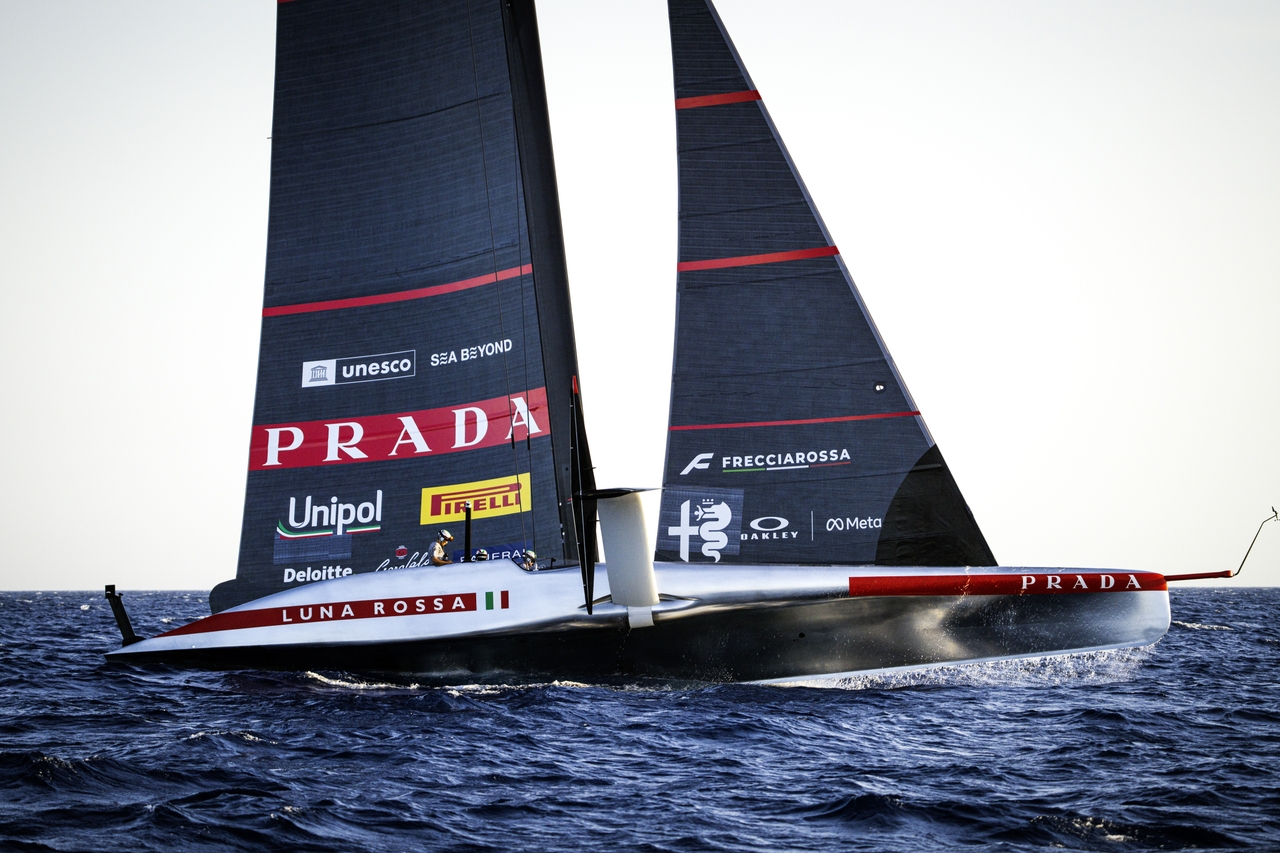
The offshore Maestrale had filled in from 330° at 14–16 knots when the J4-5 was passed onboard and hoisted. Around 19:00, the team began accelerating on two boards. During the first upwind starboard tack, the boat appeared quite unstable in both pitch and ride height, with the windward board piercing heavily. A conservative two-board bear-away followed, leading to the team's first one-board straight-line downwind run at approximately 40–42 knots.
The first and only gybe of the day appeared slow but steady, with an extended period on two boards, leading to a two-board round-up and a stop after 14 minutes foilborne. The breeze had increased and chop had built somewhat given the offshore location. A lengthy inspection followed over the next 20 minutes, involving personnel working below deck.
The second session began with another self-take-off on two boards on starboard tack. During the following 12 minutes, the boat sailed a long straight-line upwind leg on two boards, alternating between high-and-slow and VMG modes, suggesting foil testing given the mounted cameras. Once again, the boat appeared to lack pitch and height stability hitting the chop.
At 20:05, the team stopped and the jib was dropped, followed by the mainsail. Overall, it was a productive day for the team, with sailing scheduled to resume on Friday the 12th.