MMG, from yacht models to 1:1 components: the diversification plan and the new headquarters


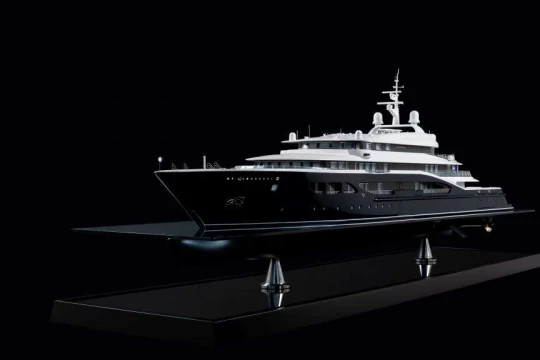
From a specialist supplier of high-fidelity yacht models – increasingly similar to “small boats” in terms of detail – MMG is expanding its operational scope towards industrial moulds and full-scale aesthetic components for the marine sector.
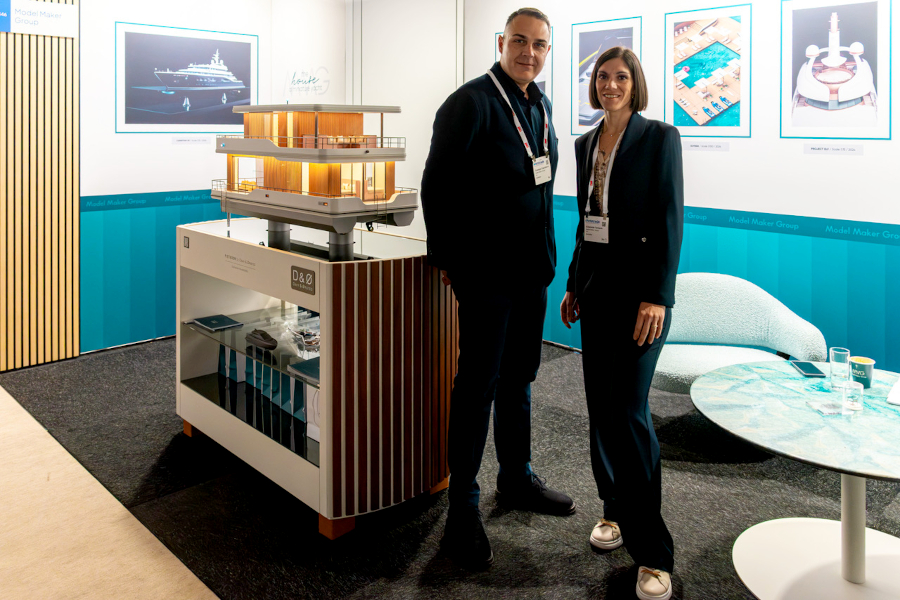
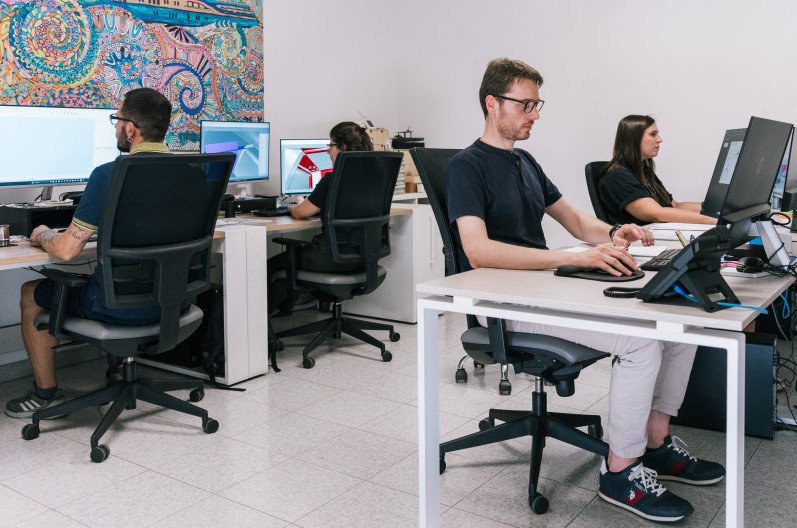
In this interview, Giuseppe Capobianco (Founder) and Elisabetta Fantasia (CEO) (PHOTO 1) explain to PressMare how the company is preparing to unify its facilities by the end of 2026, through new modular paint booths, process optimisation and a dedicated logistics service supporting models at international boat shows and events.
PressMare – Giuseppe, compared to two years ago, what are the most relevant industrial developments?
Giuseppe Capobianco – If I had to summarise, the real novelty is that we are closing a circle that started some time ago: moving from a company split across two sites to a single structure designed to allow machines, departments, workflows and people to coexist more efficiently.
The goal is to achieve unification by the end of 2026. The new facility is only ten minutes away from the current one, but in completely different terms of scale. It is not just “bigger”: it is a space that allows you to reason in terms of handling, long processes, outdoor areas, logistics and – a trivial but real aspect – parking and access.
At the same time, compared to two years ago, we have consolidated the idea that MMG cannot live only on the traditional “model” concept. That remains our core, but around it we are developing moulds, services and a line of aesthetic components for the marine industry that require different spaces and equipment. The new headquarters project was conceived precisely to support this evolution more effectively.
PM – How far along are you with the relocation?
GC – We started pragmatically. You cannot wait for the “perfect move”; you have to proceed step by step. The first step was to take over part of the building and make it operational. We refurbished about 300–400 m², because the immediate priority was relocating the milling machines and ensuring production continuity.
This need was also driven by external factors: the previous logistical setup was no longer sustainable, so we took the opportunity to design something more rational.
The next phase is the most demanding: complete refurbishment, final layout, installation of systems and new machines. It is a long process, because doing everything at once would mean stopping production. Our approach is precisely to avoid any interruption.
PM – What is the most evident operational limitation of the current site?
GC – The limitation is physical: we simply lack space. When you work on objects three to four metres long, it is not just a matter of whether they fit or not. It is about manoeuvring space, safety, the ability to prepare, move, rotate, inspect, finish and then paint the parts.
With our current booths, we cannot fully close the cycle on certain components. Many pieces so far have been delivered “raw”: well machined, but without the complete finishing required for a product truly ready for onboard installation.
There are also practical aspects: in a small workshop, one demanding job blocks everything else. This is why the new headquarters is not a luxury, but a condition for continued, orderly growth.
PM – When you talk about painting, do you refer to the same cycles used in shipyards?
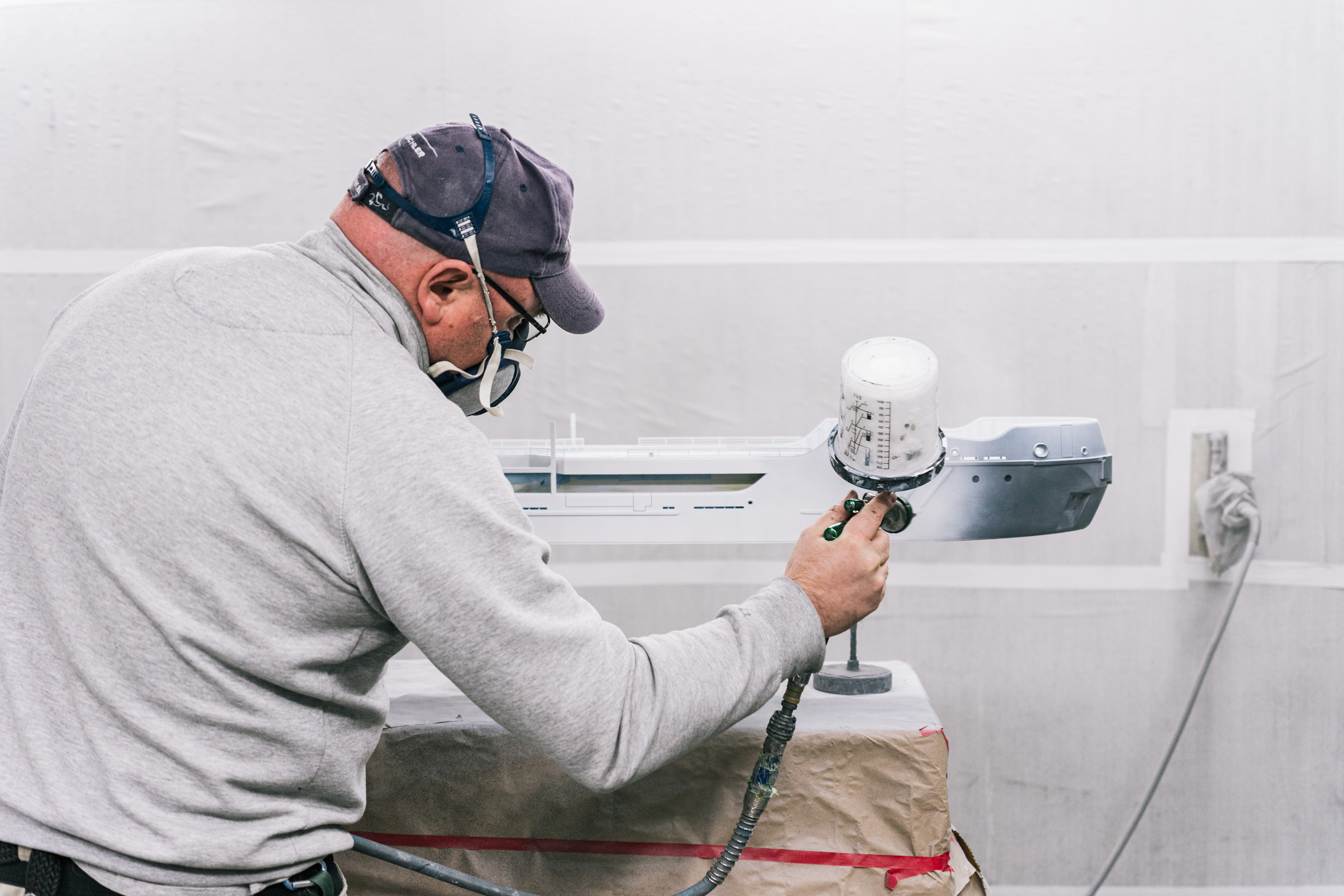
GC – Yes, because that is what the client recognises and evaluates. When you produce an aesthetic component for a yacht, or a hyper-realistic model, “any paint” is not enough. You must reason like a shipyard: cycles, thicknesses, primers, finishes, procedures.
Clients – especially shipyards and design studios – require consistency with the coating systems they use, referring to brands and technical data sheets such as Oltremare, Jotun and others.
For components destined to be installed onboard, the goal is to achieve a product that does not look like a “similar part”, but is perceived as an integral part of the project. This requires proper booths, controlled environments and repeatable processes. The difference between a piece that “looks nice” and one that is credible for a yacht outfitter lies precisely there.
PM – Is this what led you to full-scale aesthetic components for yachts?
GC – Exactly. This area opened almost naturally. We come from a world where precision and finish matter, and we realised that in modern yacht construction – with increasingly advanced design – there are often areas that are difficult to complete with coherent aesthetic components.
I am referring to grilles, inserts, frames, decorative plates: non-structural elements, but essential for visual impact and perceived quality.
There are also design constraints: when you work within certain parameters, you end up with volumes, recesses and openings that must be resolved. And there you need someone able to combine design, materials, processing, finishing and, above all, repeatability. With the new facility we will be able to complete the entire cycle, including “certifiable” painting, in full compliance with procedures.
PM – Have you already received concrete market feedback?
GC – Yes, and the clearest example is with The Italian Sea Group. For the launch of a yacht, they involved us in four components: two stern grilles and two fashion-plate type elements in the central area. They were looking for a solution and told us: “try it”.
For them it was a prototype, for us as well. We worked together, understood constraints, verified the result. The piece was appreciated, installed, and led to a second request.
The interesting aspect is that these opportunities do not remain isolated: once a shipyard sees that you can solve a complex issue, word spreads and similar requests arrive from other yards. This is exactly why we want to be ready with adequate spaces and systems.
PM – Beyond yachting, which markets are you serving with moulds?
GC – Moulds are becoming increasingly important. We have long worked with aerospace, and ceramics is now opening up. These sectors demand precision, finishing quality and reliable lead times.
For example, a local company contacted us because it had excess workload and could not find suppliers able to guarantee delivery in 4–6 months with suitable standards. We started evaluating this precisely with the idea that the new headquarters will allow us to grow this segment without reducing our nautical core capacity.
PM – Elisabetta, this growth also requires stronger internal structure. What have you done on processes and organisation?
Elisabetta Fantasia – You cannot manage growth by instinct, especially when manual work is such a significant component. In recent years we have implemented real organisational work: defining responsibilities, coordination, flows between departments.
It is not about imposing rules, but about making it clear how a project enters the company, how it is planned, how it moves through each phase and who decides what.
The second step was turning perception into data: time, materials, actual costs. With high levels of finishing and customisation, variability is high. If you do not measure it, you discover too late where you are losing time or margins.
PM – What kind of tools?
EF – We implemented a system that supports both scheduling and tracking. The most concrete aspect is time monitoring: operators record tasks with a start/stop logic, in a simple and fairly automatic way.
We can then analyse actual time per phase, per job, per department, and cross-reference it with materials used. The value is not in “controlling people”, but in understanding the product: how much manual work weighs, where bottlenecks concentrate, how much a finish requested by one studio weighs compared to another.
This also allows us to produce more reliable quotations and to avoid relying on intuition when estimating new work such as moulds.
PM – Why is cost control so important?
EF – Because manual work, in our case, is comparable to that of a shipyard: countless small details, unforgiving finishes, increasingly demanding requests. Materials are known: resins, supports, paints, components.
But the difference between a profitable job and one that absorbs resources often lies in man-hours and in the number of finishing steps.
Moreover, when you enter a new market – moulds, full-scale components – you lack historical data. Data allows you to calibrate and understand where you are heading, without sacrificing margins just to “gain experience”.
PM – Is the unification of sites only logistical or also cultural?
EF – It is definitely cultural as well. Having separate departments means people see only part of the flow and struggle to perceive the whole picture: the reasons behind certain choices, delivery urgency, client logic.
Over time this affects sense of belonging and cooperation quality. With a single headquarters we want everyone to experience the company at 360 degrees. Not rhetorically, but because in our business – where detail is a signature – cohesion and internal communication become part of the product.
PM – Strategically, are you still targeting double-digit growth?
EF – We focus more on stability and control than exponential growth. It is true that in recent years we saw significant growth, often between 15 and 20%. In 2025 growth is more contained, but in a complex market context it is still a positive signal.
Diversification is a natural evolution: it reduces risk, smooths peaks, provides a safety net. But it is only one part of the puzzle. We do not want to become “everything for everyone”. We want to do well what we know how to do, and build coherent lines around it without distorting MMG.
PM – Giuseppe, from a technological standpoint: where will you invest?
GC – We will invest mainly in coherence with relocation and process evolution. We have always been aggressive in adopting technology. Often there are no machines designed specifically for yacht models, so you take machines developed for other purposes and adapt, test and push them.
There are also disappointments: some suppliers promise things that do not work in our context.
Today we can say we are at a high level for what we do. The point is not to buy “the newest machine”, but to find what saves time in post-production, improves finishing and ensures repeatability. Sometimes it is technology, sometimes a material.
PM – Has 3D printing quality improved?
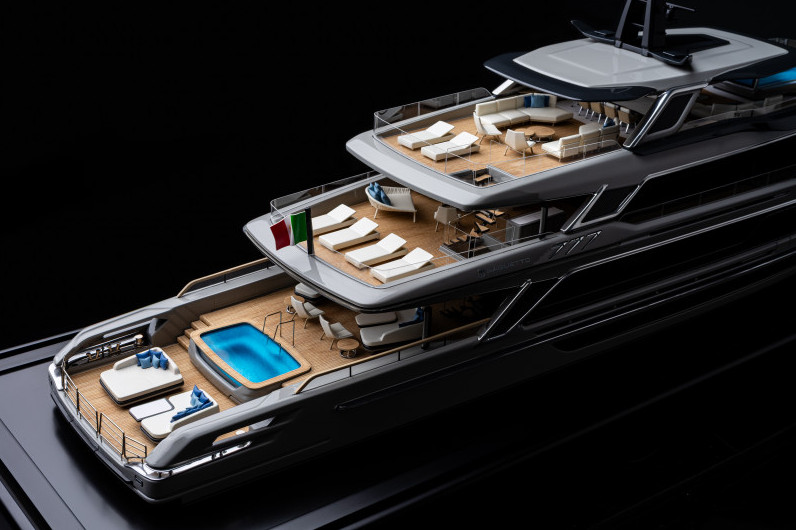
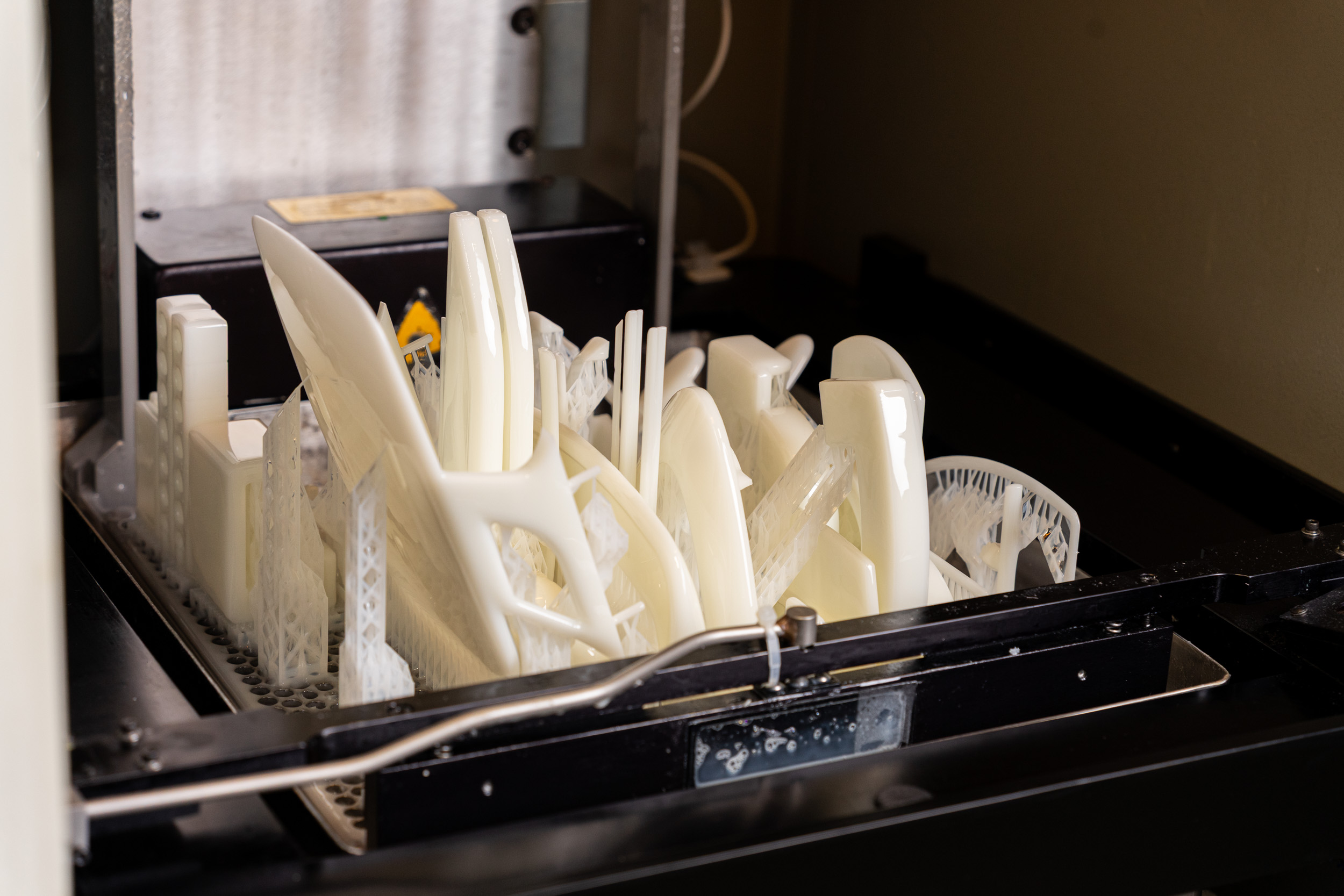
GC – Yes, it has improved, but there is still a misunderstanding: there is no perfect part straight out of the printer, at least not for the standards required. The challenge is reducing post-production effort: finishing, preparation, paintability, long-term stability.
We do a lot of research on materials and parameters. By changing composition or material ratios, you can reduce sun degradation, improve surface finish and ease of painting. It is continuous work with suppliers: “let me test this material”, we insert it into the process, measure and decide whether it makes sense.
PM – You also tested recycled materials. What results did you see?
GC – We did a real test: at METS we displayed a model made about 70% from recycled material. It works, the result is good, but it is more difficult to process and not necessarily cheaper – often it costs more.
So the real question is: is the client willing to pay that difference for a benefit that is more value-based than visually evident?
In the meantime we test because we want to be ready. If the market moves in that direction, you cannot arrive unprepared.
PM – Which investment most changed aesthetic results?
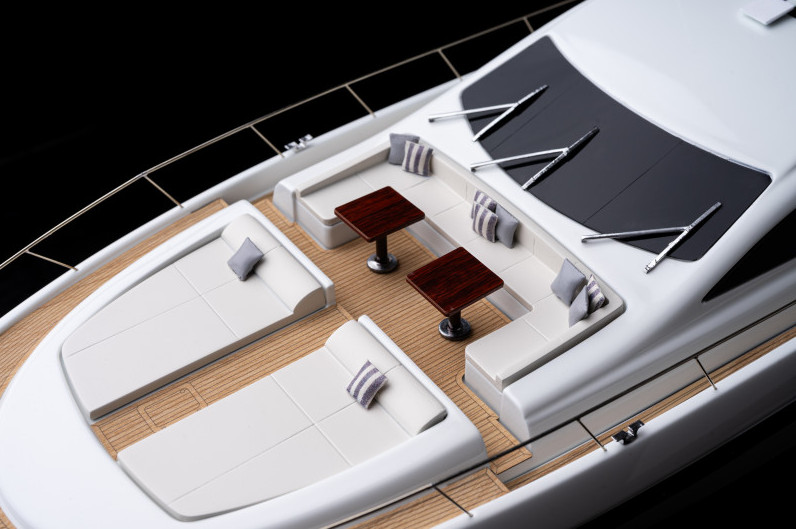
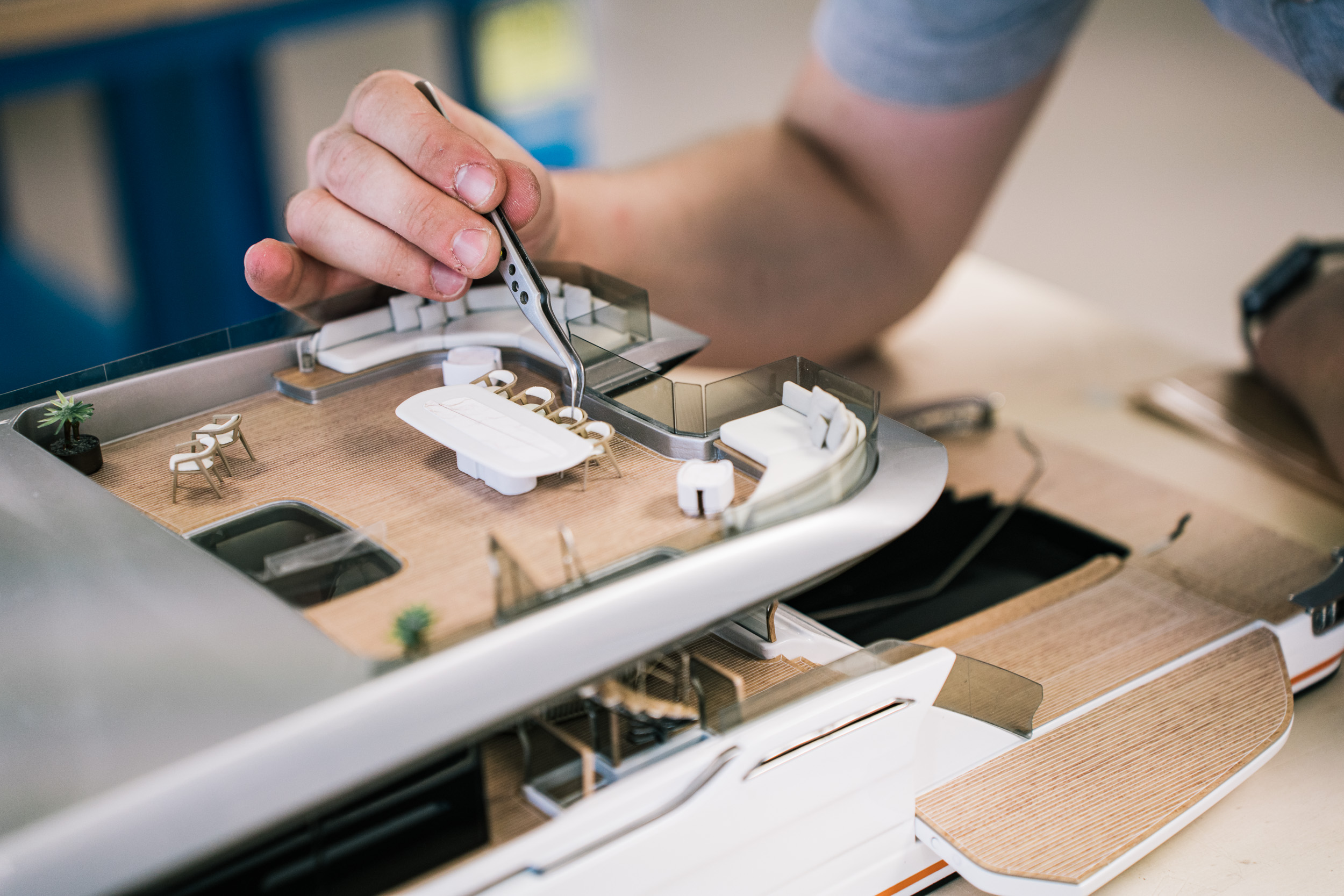
GC – The industrial decoration machine. Because today a model must not only “look similar”: it must replicate materials, textures, combinations and finishes.
You talk about Calacatta marble, wengé with precise orientation, handles, micro-details on parts that may be two centimetres long. It is madness, but it is the market.
That machine allows gradients and effects that manually would require huge time and still be less stable. It is an enabler: it opens requests that before you would have rejected or faced with too much risk.
PM – Is this level of detail what differentiates you from competitors?
GC – Yes, because it is not only aesthetic detail: it is engineering. Shipyards ask for “wow”: moving rooftops, opening parts, electronics in 20 centimetres.
You must design mechanisms, find space, understand diameters, materials, tolerances. Many simply say “it can’t be done”. By nature, we try first.
Then there is expectation management: sometimes desire exceeds physics. So you filter: out of ten requests you complete six or seven, but done properly, and the client is happier than expected. That is how you grow with your clients.
PM – Beyond product, how important is service?
GC – Extremely important and often underestimated. Today you do not only have trade shows: you have private events, presentations, roadshows, yacht residencies worldwide. And the model becomes an asset that travels, is assembled, disassembled and moved.
In Monaco, for example, we had over 100 models: some static, others rotating between parallel events. Moving a four-metre model is not just “pick it up and go”: it is logistics, crates, trained teams, tight schedules. And we are talking about significant weights: model plus furniture can reach about 300 kg, often in separate modules.
PM – Elisabetta, what does your service include?
EF – It includes delivery, installation, on-site support and maintenance. We often arrive the day before to carry out repairs, adjustments and final deliveries.
Sometimes we also intervene on models not produced by us, if we can. Not because we must, but because we want to be perceived as reliable and present.
Service is also protection for the client: during an event something can happen – a bump, minor damage – and having a team ready to intervene avoids displaying a model in imperfect condition.
PM – If you had to summarise your strengths?
EF – Assistance, delivery speed, punctuality and confidentiality. Confidentiality matters in our business: we often work on projects that must not be disclosed.
GC – And I would add reliability as a personal mindset. If I say delivery is on the 31st, for me the 31st is a moral commitment. Because I know what it means for a shipyard: a delay can impact a presentation, a show, an event. If something is not feasible, I say it immediately and propose a Plan B. But I never promise what I cannot deliver.
PM – What is the size range of your products?
GC – The small end is no longer just “models”: we also produce keyrings of 4–5 cm and stylised objects, almost design objects for modern interiors. There is a trend: the model as an art object, not necessarily hyper-realistic. And that opens important volume orders: 200, 300, even 1,000 pieces.
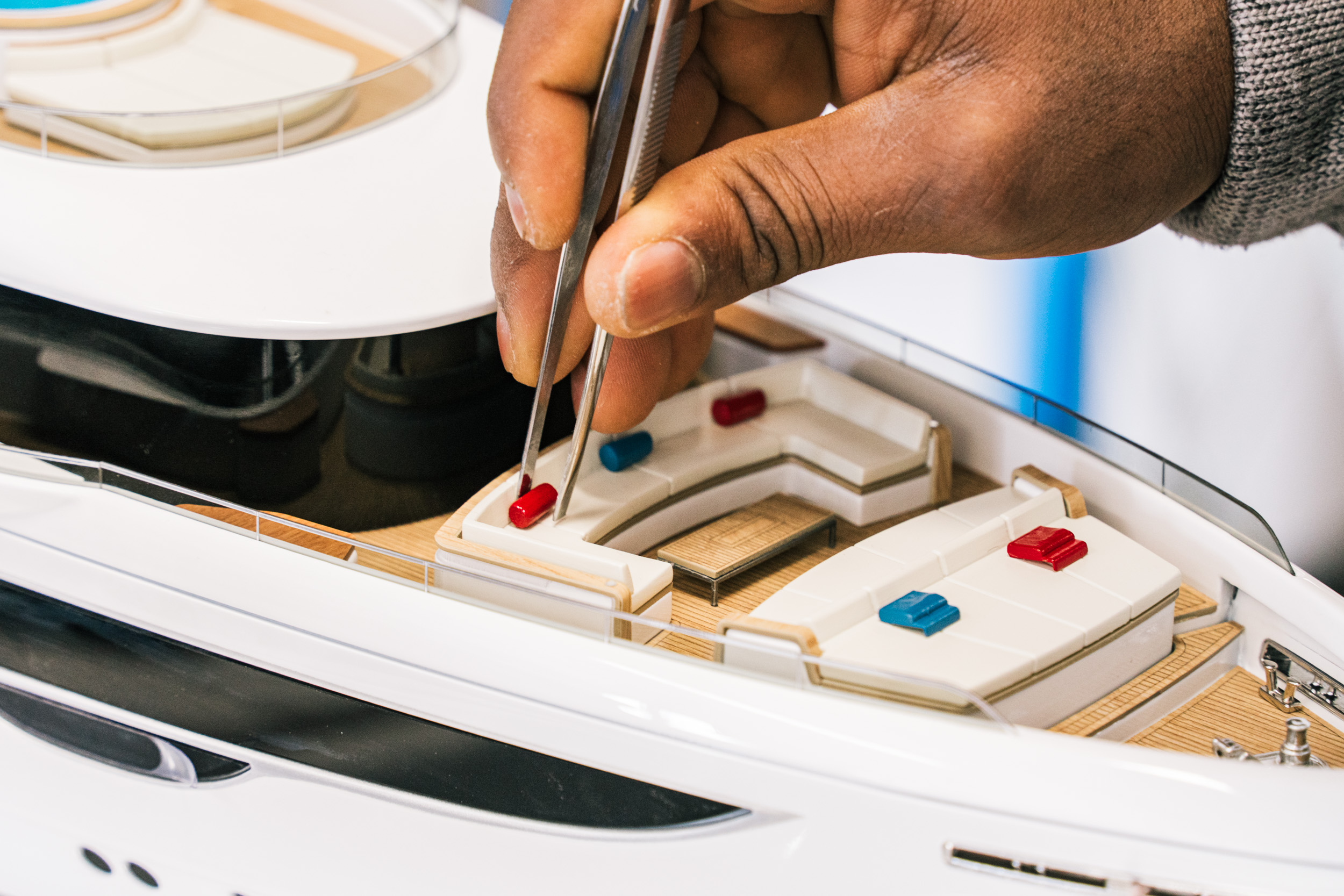
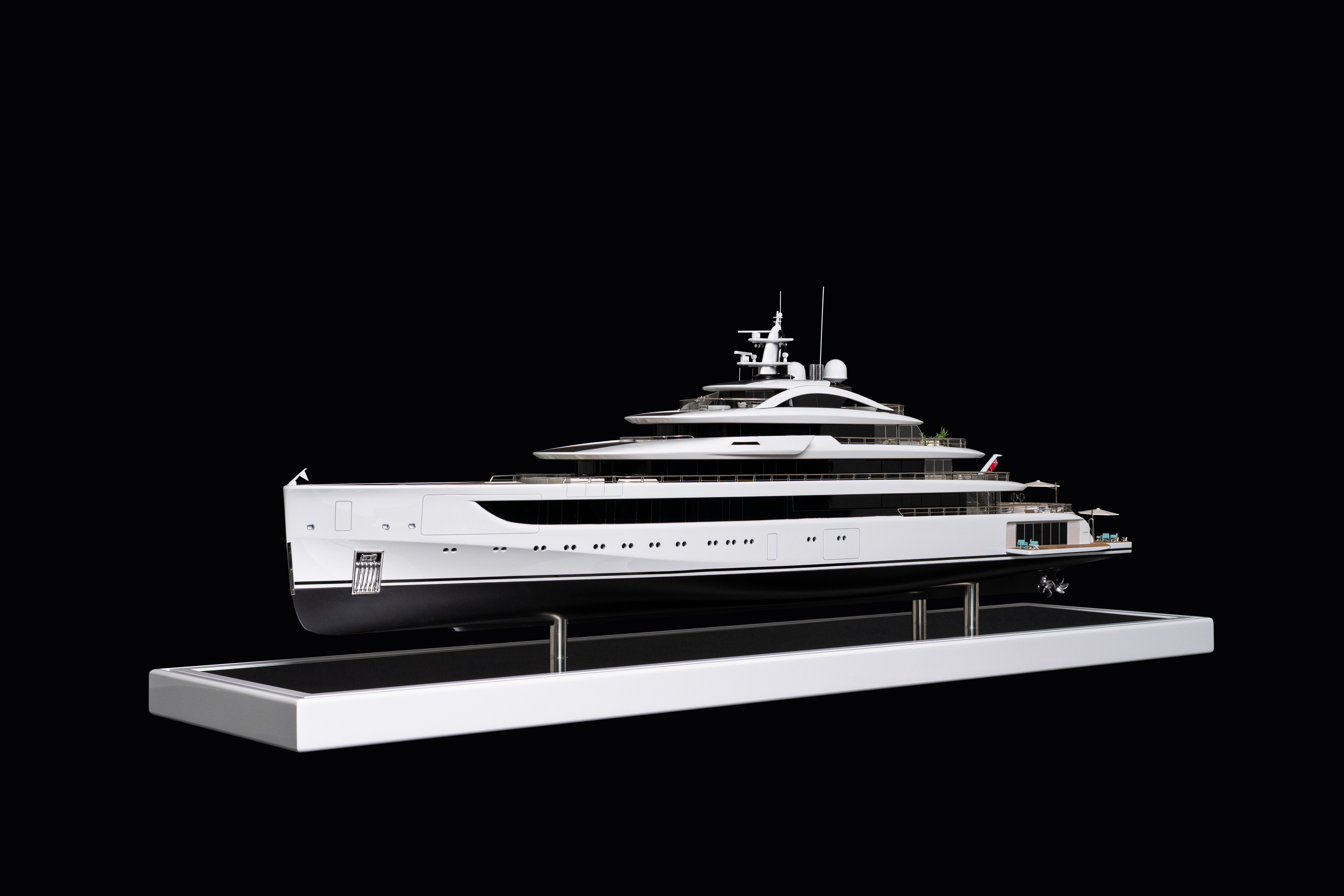
At the large end, the reference is Feadship Ulysses, about four metres. Scale 1:100 on a huge project, designed to transmit its imposing presence at first glance.
PM – Does the support furniture also matter?
GC – Very much, because it is part of the narrative. You cannot place a model worth tens of thousands of euros on just any stand. It devalues it.
For the houseboat model at METS, the furniture was integrated into the project: colours, QR codes, drawers, functions. We designed it internally, with renderings, proposals, revisions: one month of “I like / I don’t like” until it made sense. It is an extra service, but often makes the difference in final perception.
PM – Back to the new headquarters: timeline?
EF – The goal is to complete everything by the end of 2026. We already completed a major phase in September 2025 with the relocation of the milling machines, planned during a less critical production period.
We staggered the transfers: first one machine, make it productive, then move the next. Then two weeks of company shutdown to complete operations. It was surgical management, because every machine stop means lost production capacity.
PM – How will you handle painting large parts?
GC – Modular booths: three units that can become a single large booth when needed. Painting 4–5 metre parts requires volume and environment control, but you cannot tie all production to one huge booth permanently active.
Modularity allows flexibility: when you need to paint large parts, you join them; when working on smaller components, you use a single unit.
PM – Final topic: training. You started an ITS collaboration.
EF – With the Caboto Foundation in Gaeta we launched the Yacht Design Operator course in January 2025, now in its second year. We and our collaborators cover about 40% of the teaching hours.
This allows real knowledge of students. This year we took four trainees: two stayed with us. And the interesting aspect is that you can orient them towards useful supply-chain skills: technical offices, modelling, information management with shipyards.
PM – Giuseppe, why is training today almost an industrial choice?
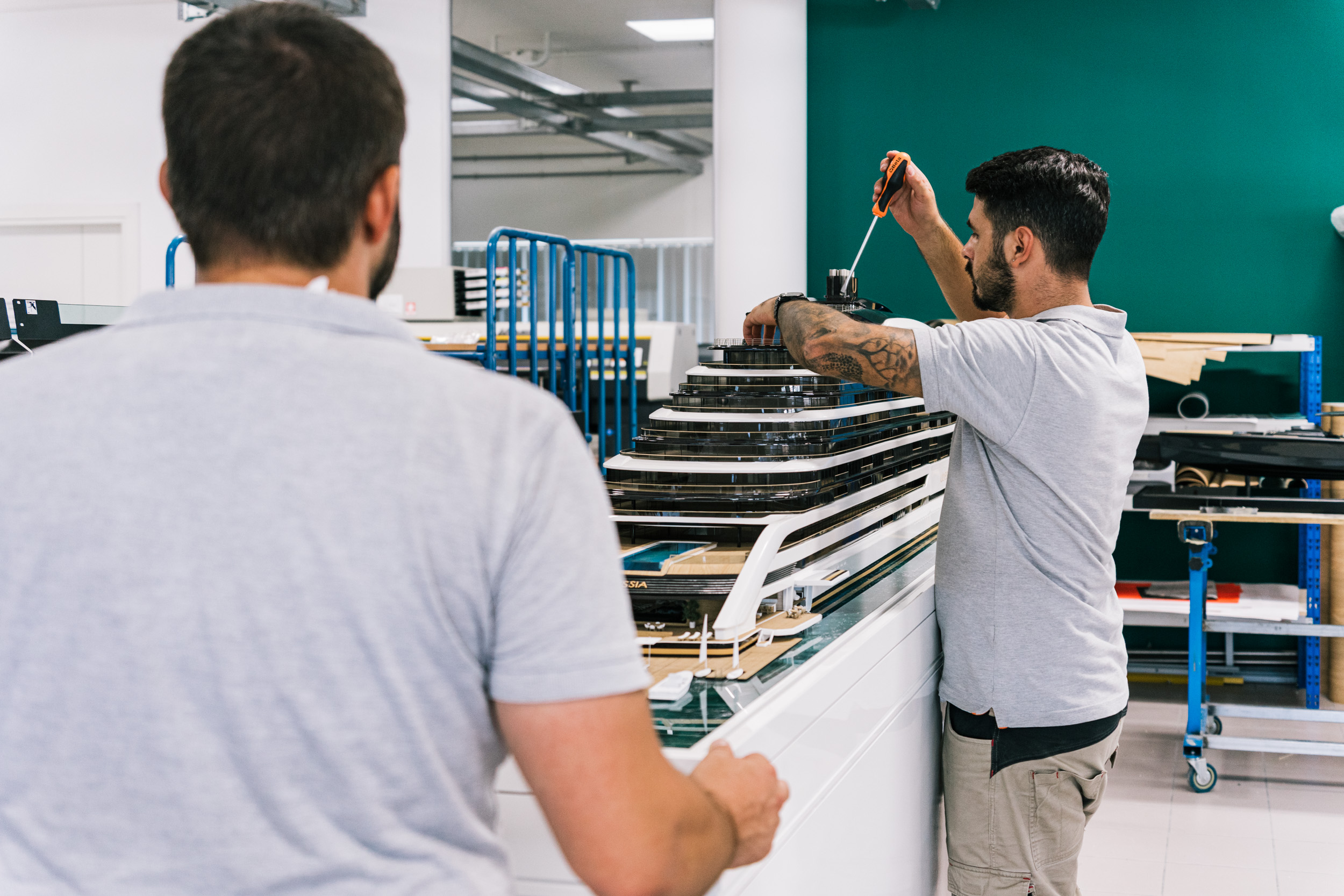
GC – Because you can buy all the technology you want, but you need people to operate it. We talk about 3D printing, additive, robots, milling machines – but who is the operator? Who understands materials, parameters, post-production, supply chain?
With ITS you have a real channel: you train them, observe them in the field, understand who has method and passion. And you expose them to real companies: visits to Cranchi, or companies printing furniture with robotic arms. There theory meets practice.
And when a shipyard later tells you “we hired a young person and he is good”, you understand the process works. The problem is territorial: there are not many shipyards nearby, so you must also work on connections to avoid losing talent.
©PressMare - All rights reserved