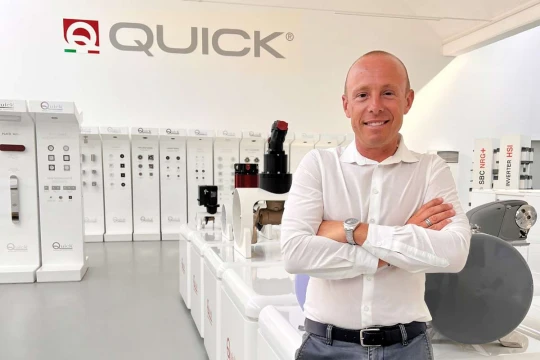
Stefano Tinti
Stefano Tinti, Quick Group: We want to be partners to shipyards, not simply suppliers


In the yachting industry, innovation is often discussed, but much less attention is paid to how the relationship between shipyards and suppliers is changing. Yet this is precisely where an important part of the industrial evolution of modern boating is taking place: not only in product specifications, but in the way manufacturers and installers decide to work together.
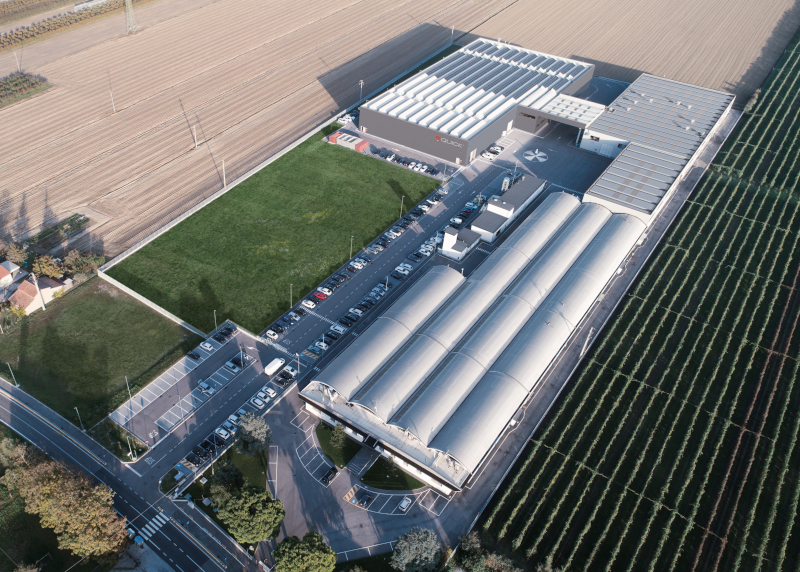
Quick Group is one of the companies that has experienced this transformation from the inside and turned it into a strategic direction. Today it is a multinational group with offices in the USA and UK and a portfolio of brands — Quick Nautical Equipment, Xenta, Nemo, Sanguineti, MC², Quick Marine Lighting — covering an increasingly wide range of onboard systems. We discussed this with Stefano Tinti, OEM Sales Director of the Group, the figure responsible for managing direct relationships with boatbuilders for the supply and development of systems intended for production installation.
PressMare - In recent years Quick Group seems to have changed its approach towards shipyards. No longer just a component supplier, but something closer to a technology partner. Is that correct?
Stefano Tinti - Yes, absolutely. And it is probably the most important change we are experiencing as a group. Historically, Quick worked largely through agents and distributors. Some shipyards had direct relationships with us, but in most cases the contact was mediated. Today, however, we have created company roles dedicated exclusively to OEM activities, working directly with shipyards from the earliest project stages.
The idea is to enter “phase one”, when the yacht is still being conceived. Not arriving later with a catalogue in hand, but participating in the development of solutions together with the shipyard. This approach comes very much from the culture of companies such as Xenta and Sanguineti, where the added value has always been co-design and close proximity to the customer.
PM - So today your job is no longer just about selling a product?
ST - Exactly. Today shipyards expect you to contribute to solving design and production challenges as well.
Let me give you a practical example: in a recent project, a critical issue emerged regarding the wiring of lighting systems installed along the bulwarks. The original configuration required a significant amount of cabling, many installation hours and rather complex management of the work process. Our technical department developed a plug-and-play solution that significantly reduced installation time, required materials, wiring quantity and the overall complexity of the system.
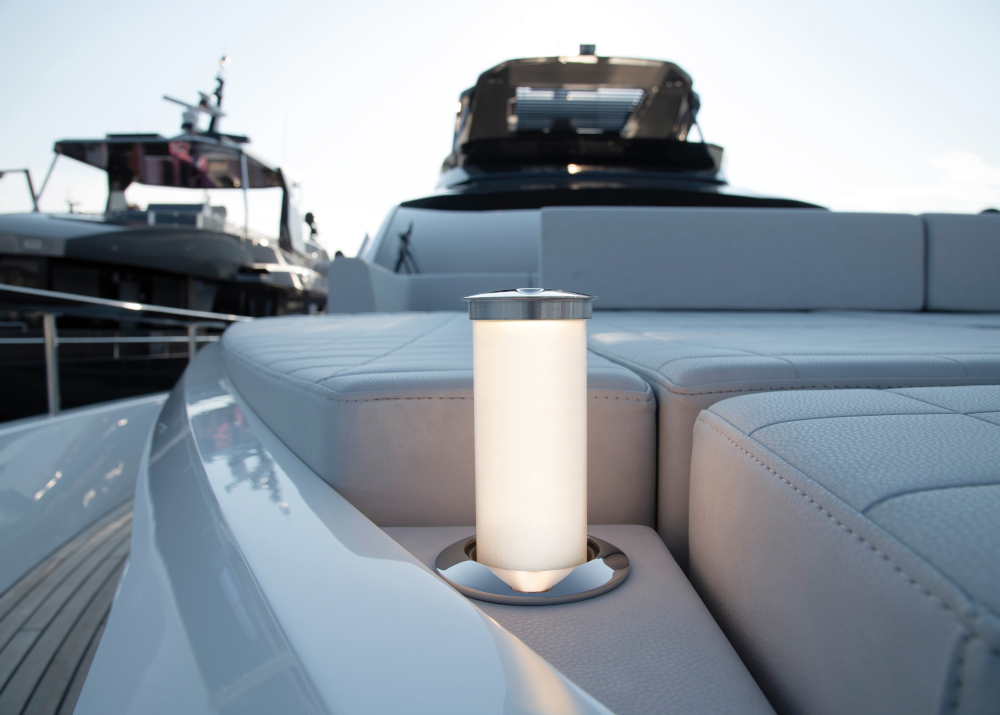
In another project, we worked closely with the technical team involved in the yacht’s development to optimise several onboard components, from lighting systems to auxiliary manoeuvring equipment. On that occasion we also developed custom flanges specifically designed for the vessel’s requirements, with the aim of simplifying installation and improving integration between the various systems.
That is where the relationship truly changes: you are no longer the supplier delivering a component, but the partner helping the shipyard create added value for the project.
PM - We imagine there must be a very significant technical structure behind all this…
ST - Yes, and it has been greatly strengthened over the last few years. The integration of Xenta, Nemo and Sanguineti into the Group brought not only new products, but above all know-how and expertise. Today we have specialised technical departments dedicated to different areas: lighting, mechanics, stabilisation, electronics, hydraulics, steering systems and handling systems.
Xenta in particular enabled us to internalise a whole range of control-system expertise that previously depended on external suppliers. This now gives us far greater freedom in software development and, above all, a much higher degree of customisation capability.
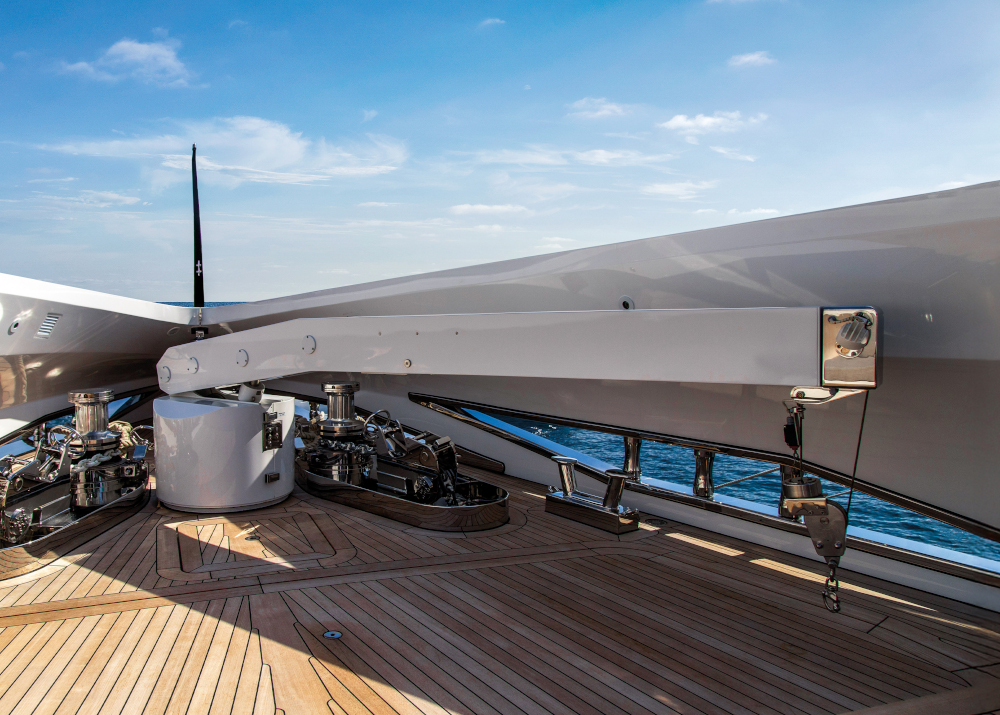
PM – Quick Gyro stabilisers continue to evolve rapidly. How important is operational feedback — the kind that comes from captains and owners using these systems in real conditions?
ST - Extremely important. The Quick Gyro stabiliser may appear to be a simple machine, but in reality it is very complex because of the dynamics it generates onboard. And its behaviour changes completely depending on the application, the type of yacht and the sea conditions.
The most valuable experience comes from the most demanding applications. We have many installations on sportfishermen, boats that probably operate more frequently in challenging sea conditions. Thanks to feedback from intensive users, we have reinforced braking systems and other critical components.
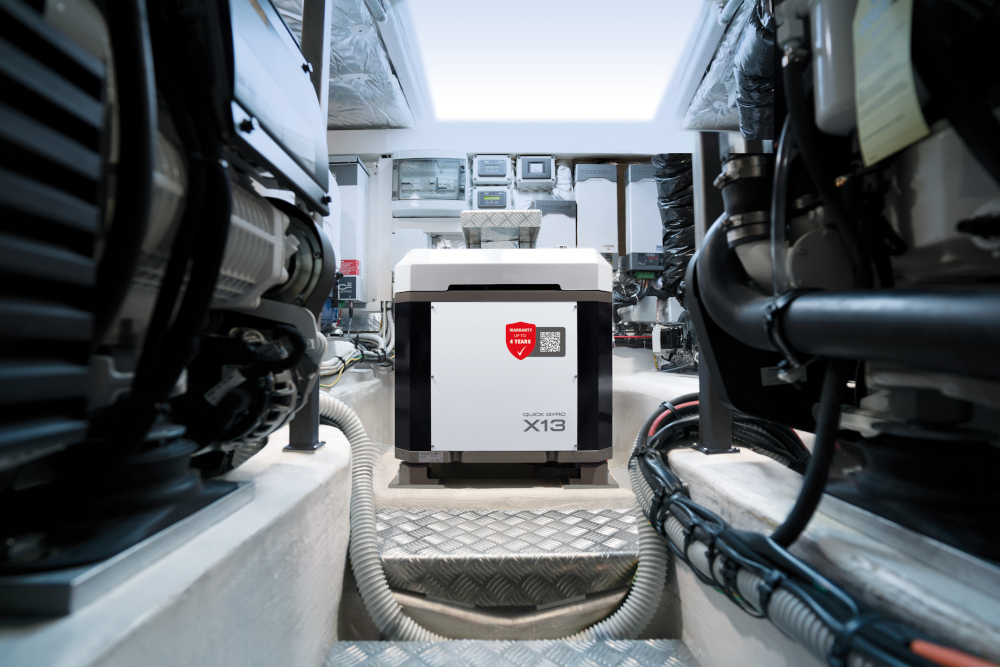
Then there was an even more demanding experience: we installed our gyroscopic systems on Italian Coast Guard patrol boats developed together with FP Design. In those applications the engines are always running, engine rooms become extremely hot, operations continue even in rough seas and operating hours become almost endless. For us it was an exceptional test bench. And honestly, when a machine is selected by the Coast Guard and proves reliable in that environment, it becomes difficult to argue that it cannot perform equally well on a “normal” pleasure yacht.
PM - From a technical perspective, your philosophy seems rather different from other gyroscopic stabiliser manufacturers.
ST - Our machines are designed around a very simple concept. Air cooling, no seawater intakes, no heat exchangers, no pumps. Less complexity also means less maintenance and fewer potential issues. The “less is more” approach is a philosophical choice before it is even a technical one.
PM - One of the most interesting aspects of your business model is that today you can cover a huge portion of the yacht with Group products. How much does that change your relationship with shipyards?
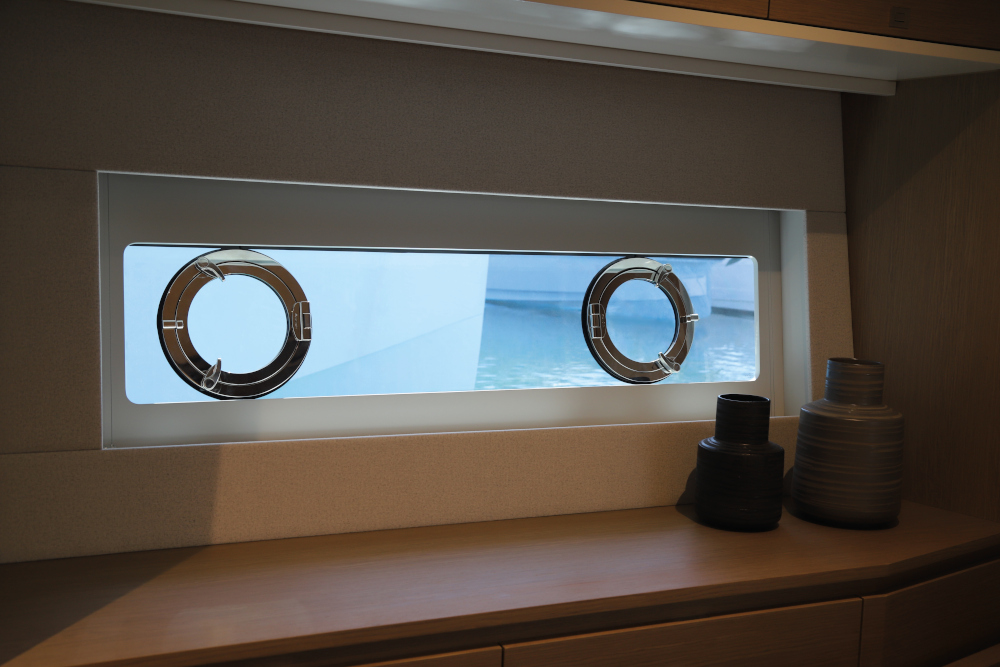
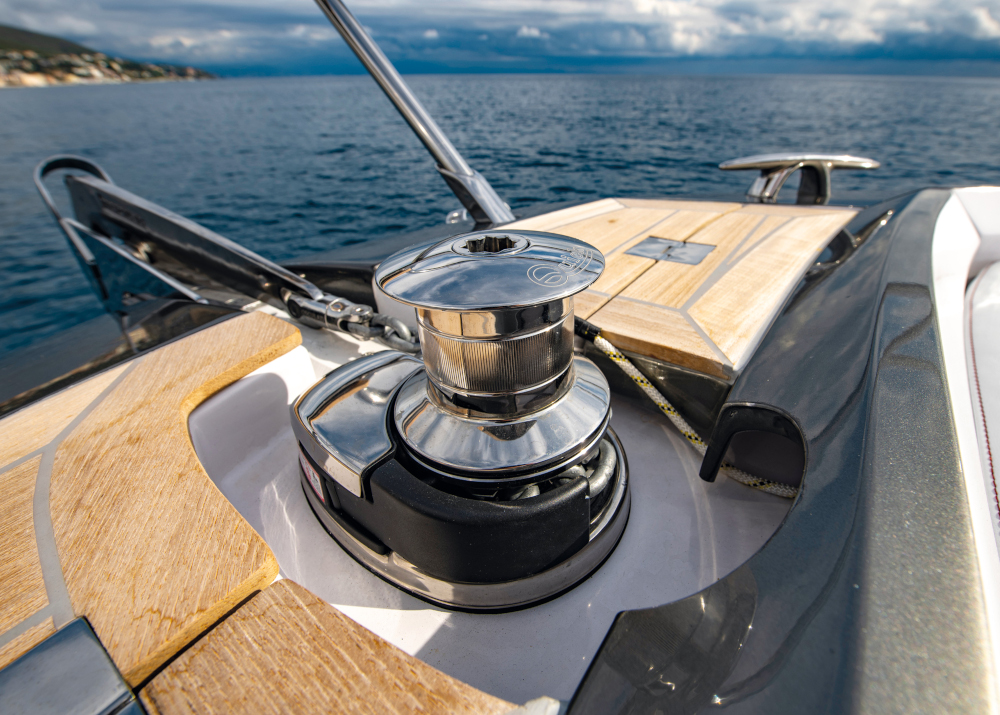
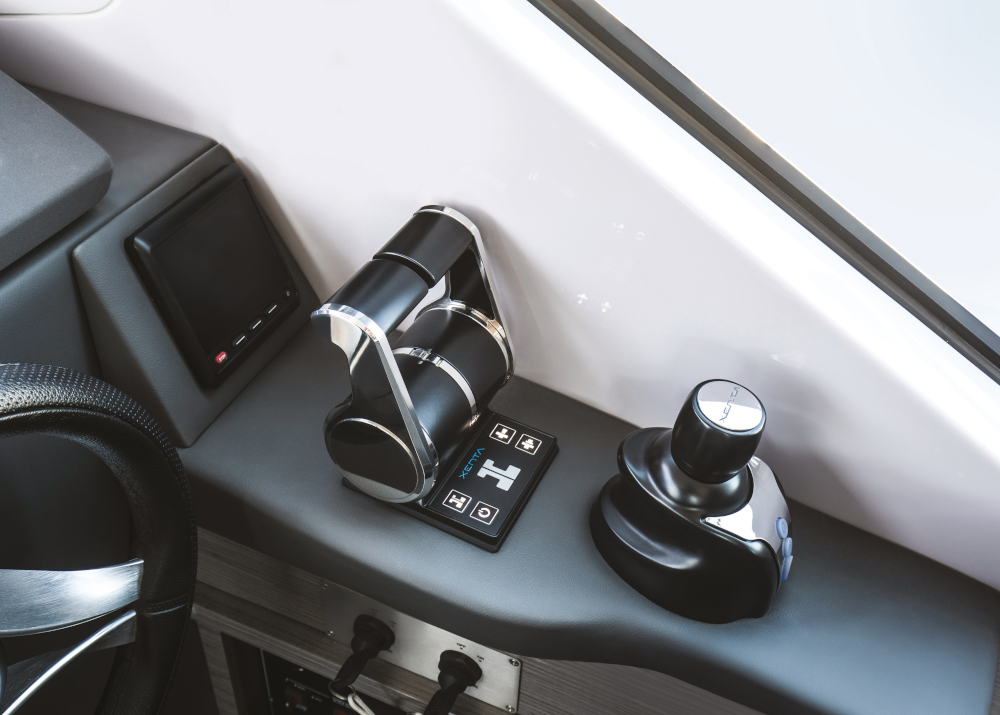
ST - It is one of our main competitive advantages. Today we can sit down with a shipyard and comfortably cover 50% of a bill of materials: Xenta control systems, stabilisation, thrusters, windlasses, lighting, handling systems, hatches, doors, portholes, Nemo systems. For the shipyard, this means having a single point of contact, simplifying the commercial side, speeding up technical decisions and improving coordination of supplies.
PM - I imagine commissioning changes significantly as well…
ST - Very significantly. Field technicians often handle several cross-functional activities, meaning the shipyard can complete commissioning with fewer people onboard and in less time.
And then there is service, which in my opinion is one of the most important and least discussed aspects. Yachts travel worldwide and you need to be able to support them everywhere. Quick Group has a very strong global network, including direct structures such as Quick USA in Fort Lauderdale, capable of intervening across all Group products. This is not a detail: for an owner facing a problem in Miami at eleven o’clock at night, it can mean the difference between solving the issue immediately or dealing with a week of stress.
PM - We imagine you are also building increasingly close relationships with designers, since they often decide what enters the project specifications.
ST - It is one of the areas we are trying to develop the most, and here we are honest: today we still have limited relationships with design studios, and it is something we want to improve. Increasingly, it is the designer who decides what enters the project specifications. If you establish a direct relationship and can quickly present effective solutions, you then find those products already included in the yacht project. It is a virtuous circle worth building.
PM - You are very focused on shipyards, but are there also products that originate directly from market feedback and owners’ requests?
ST - In the OEM world, contact often stops at the shipyard, but the entire aftermarket and refit sector puts us in daily contact with owners. And many developments come precisely from there. A practical example is the integration between DockMate and Xenta: the market had long been asking for a certified remote-control solution perfectly integrated with our docking systems. We developed a plug-and-play interface that today allows the system to be installed in a very short time. It did not come from an internal meeting, but from what the market was telling us every day.
PM - Commercially you are continuing to grow even during a market phase that is less buoyant than the post-pandemic years?
ST - Yes, and in my opinion this is the most significant figure. Even with shipyards going through a stabilisation phase and many reducing production volumes, we continue to grow. This means we are increasing our presence onboard yachts and gaining market share. If the market simply returns to a stable and healthy condition — without even reaching the exceptional levels of two or three years ago — I believe there are still significant growth opportunities ahead of us.
A Group, therefore, that has progressively chosen to move towards a system integrator model, investing in structure, expertise and relationships to support this direction. In today’s yachting industry, this transformation is not merely a commercial choice: it is almost a necessity. In a sector where technological complexity is increasing, where software integration matters as much as hardware and where after-sales service can make or break a supplier’s reputation, being the partner who understands the entire yacht is far more valuable than being the best in a single component category.
©PressMare - All rights reserved