
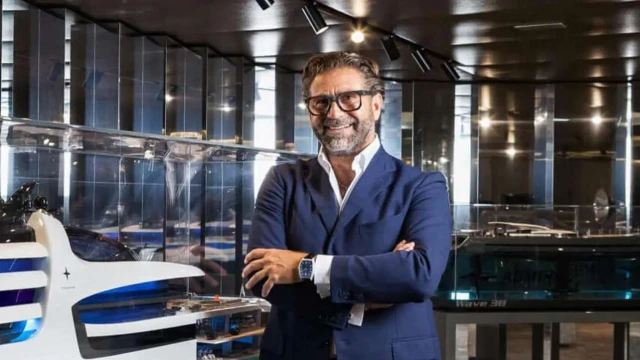
Giovanni Costantino: I step aside, but The Italian Sea Group is not for sale
Less than twenty-four hours after announcing his resignation as Chairman and Chief Executive Officer of The Italian Sea Group, Giovanni Costantino chose PressMare to explain the reasons behind a decision that marks one of the most delicate moments in the history of the group he founded seventeen years ago. In this interview, Costantino reconstructs the events that led to the company’s crisis, outlines the recovery strategy launched over the past few months and describes the new phase awaiting TISG. In his view, this represents a break in governance, but not in ownership or in the company’s industrial project.
PressMare – Yesterday you stepped down as Chairman and Chief Executive Officer, but you retained control of the company. What really changes for The Italian Sea Group, and what changes for Giovanni Costantino?
Giovanni Costantino – It was a necessary act of responsibility. Since February 4, when a very serious situation emerged of which I was completely unaware, I have worked non-stop for almost six months alongside a team of consultants to understand what had actually happened, define a strategy and personally support the company with a €25 million capital injection.
Now that the independent investigation entrusted to KPMG has been completed, I felt it was the right time to send a strong signal of discontinuity. I will remain in office on a prorogatio basis until the shareholders’ meeting expected around September 10, when the new governance structure will be defined. Everything we do will be focused on protecting our stakeholders: first and foremost our employees, then suppliers, banks and the yacht owners who currently have around seventeen yachts under construction at our shipyards.
PM – You nevertheless remain the controlling shareholder with approximately 53% of the company’s share capital. What is your relationship today with the market and with the other shareholders?
GC – Since February, I have been focused exclusively on managing the crisis. Relations with the market have been handled by the management team responsible for investor relations. Today the free float is widely distributed, and our objective is to implement the industrial plan so that it restores balance to the company and, consequently, an appropriate market valuation.
PM – Over the years you have built important partnerships, from Lamborghini to Giorgio Armani. What is the current status of these projects?
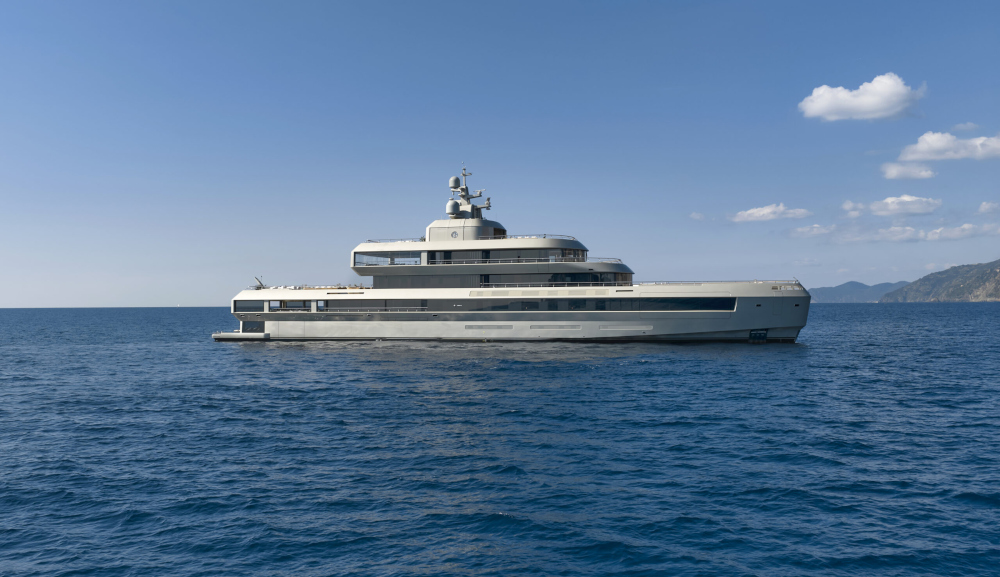
GC – As far as Armani is concerned, the project has been completed according to the original plan. Therefore, that operation has reached its conclusion. As for Lamborghini, our partnership continues as planned and we are currently developing the new 101-foot Tecnomar for Lamborghini. We recently announced the thirty-third Tecnomar 63, a project that I consider a great success.
PM – You came from a completely different industrial sector. How difficult was it to earn credibility in the yachting industry?
GC – Extremely difficult. This is an industry where relationships and reputation carry enormous weight. Entering it as an outsider required tremendous effort and sacrifice. Determination allowed me to build a group that has become an international benchmark for innovation, design and technical quality.
What pains me most is that the people in whom I had placed my trust destroyed an extraordinary project. They hurt me, my family and, above all, a company built together with around 650 employees.
PM – Many people in the industry have always said that your yachts were sold at particularly competitive prices. Did you never suspect that something was wrong?
GC – I always believed that our pricing reflected superior industrial efficiency. The problem arose because the documentation reaching my desk, after passing through every level of internal control, had been systematically falsified. I approved sales based on reports showing excellent project performance, while those figures did not reflect reality. That is what ultimately led to contracts being signed at unsustainable prices.
PM – So you believe the crisis was caused by an organised action carried out by a group of senior executives, almost like a criminal conspiracy?
GC – Absolutely. Based on everything we have reconstructed, six top managers acted in a coordinated manner. They effectively created a parallel company, devoting almost more time to it than to the real one. When the attack comes from the very people who are supposed to protect the company, defending yourself becomes virtually impossible.
PM – Looking back, is there any strategic decision you would make differently today?
GC – No. I believe our industrial decisions were fundamentally correct. Naturally, some things could have been handled differently, but the problem was never our industrial model. It was the conduct of those who controlled the company’s operations and betrayed the trust placed in them.
PM – You have often been described as a very hands-on, centralising entrepreneur. After this experience, do you think that management style was ultimately the right one?
GC – For fourteen years I personally oversaw every detail of the company. During the last three years, as the group expanded, I began delegating responsibilities while maintaining every control system required of a listed company. Ironically, that is precisely when all this happened.
Perhaps I should never have changed my way of managing the business. But I am convinced that if I built this company once, I can help rebuild it again, even from a different role.
PM – Where do you see The Italian Sea Group in five years’ time?
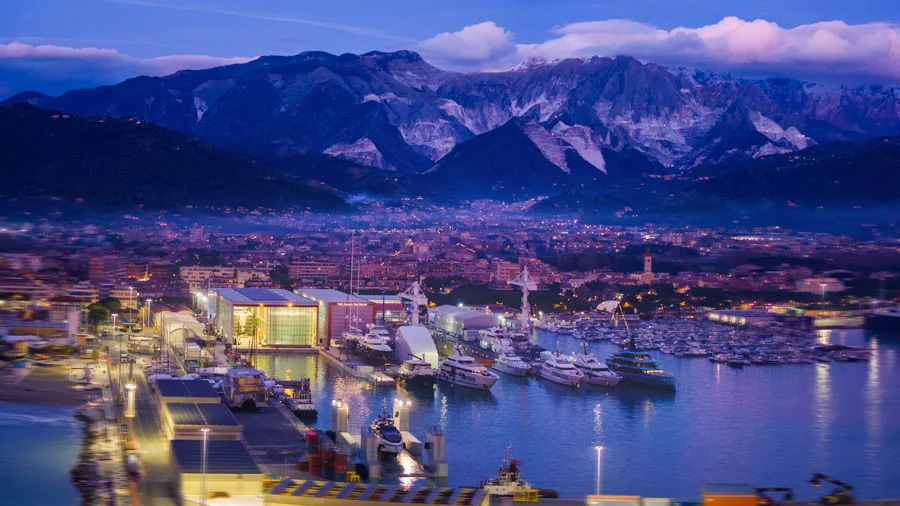
GC – The company must evolve. It has to become an even more industrial, more diversified organisation that is less dependent on its founder. That evolution is essential to ensure continuity and further growth.
PM – Do you intend to sell The Italian Sea Group?
GC – No. I have absolutely no intention of selling the company.
PM – In recent months there has also been speculation about the possible sale of the Picchiotti shipyard in La Spezia. Is that a concrete possibility?
GC – Yes. The sale of the Picchiotti shipyard is part of the industrial plan. It is an asset that we no longer consider strategic for the group’s future development. The decision had already been officially announced and, in the coming days, the operational phase of the sale process will begin.
©PressMare - All rights reserved