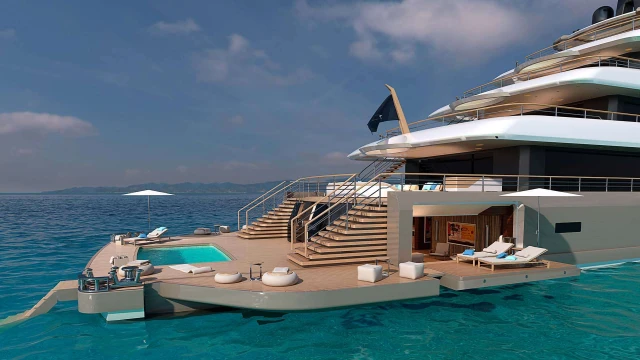
AMS develops custom systems for yachts and superyachts
AMS: from structural engineering to custom systems for superyachts
There is a common thread running through every project developed by Advanced Mechanical Solutions, from structural engineering for sailing yachts to bespoke handling systems for the latest generation of superyachts. It is an engineering-led approach in which every project starts with a technical challenge rather than a product, whether the final outcome is a consultancy service or a fully integrated system installed on board.
This is the strongest impression left after visiting the company's headquarters in Ancona, where PressMare had the opportunity to meet founder and CEO Francesco Pelizza and follow first-hand the various stages through which an engineering concept evolves into a finished product ready for installation aboard a yacht.
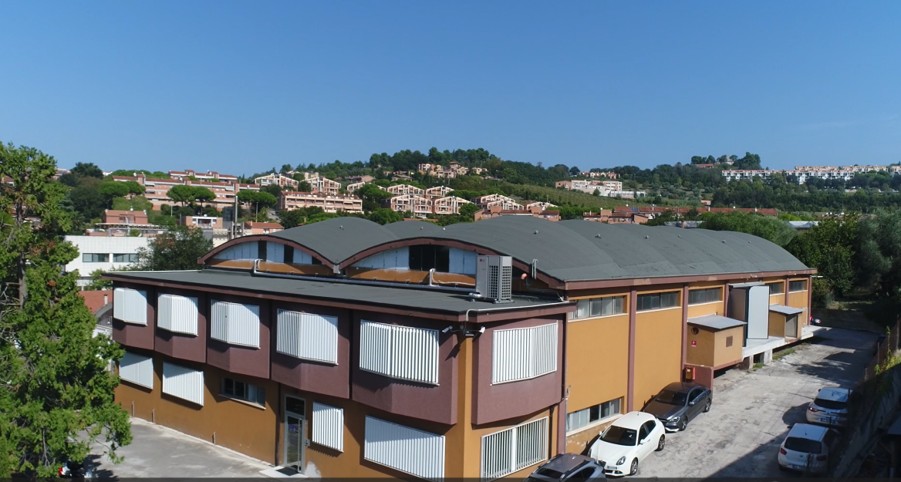
Opened in 2022, the facility brings together design offices, the composites department, mechanical machining, assembly and testing under one roof. It reflects the evolution of a company established in 2005 as an engineering consultancy and today capable of designing, manufacturing and installing highly customised systems for yachts and superyachts.
Despite this transformation, AMS has remained true to the philosophy that has guided the company since its inception. Every new project still begins with the analysis of a technical problem. Engineers study loads, available space, mechanism kinematics, weight, installation constraints and operational requirements before defining the most appropriate mechanical solution. Manufacturing was introduced later as a natural extension of the engineering process, not as its starting point.
This approach closely reflects the professional background of the company's founder.
After graduating in Mechanical Engineering from the Marche Polytechnic University, Francesco Pelizza spent several years working in the aerospace sector before establishing AMS. That experience shaped the company's engineering culture, bringing an aerospace mindset to the yachting industry through rigorous structural design, weight optimisation, meticulous attention to detail and uncompromising quality control.
Alongside his professional career, another passion has played a defining role in shaping the company's identity: sailing.
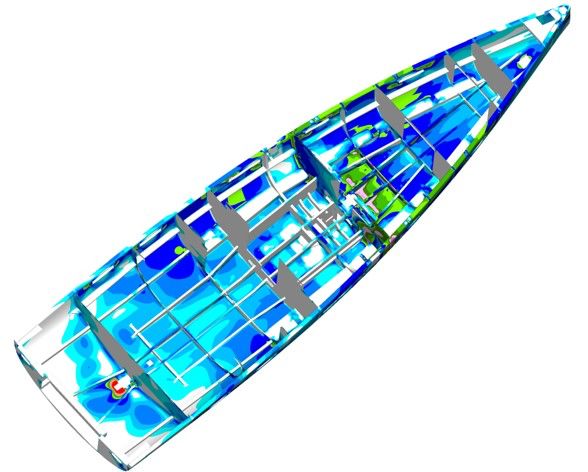
Pelizza has extensive experience in offshore racing and yacht design, fields in which he remains actively involved through structural engineering and finite element analysis (FEA) carried out in collaboration with naval architects and shipyards. During our conversation he returned repeatedly to one concept: understanding how a yacht behaves at sea fundamentally changes the way it should be engineered.
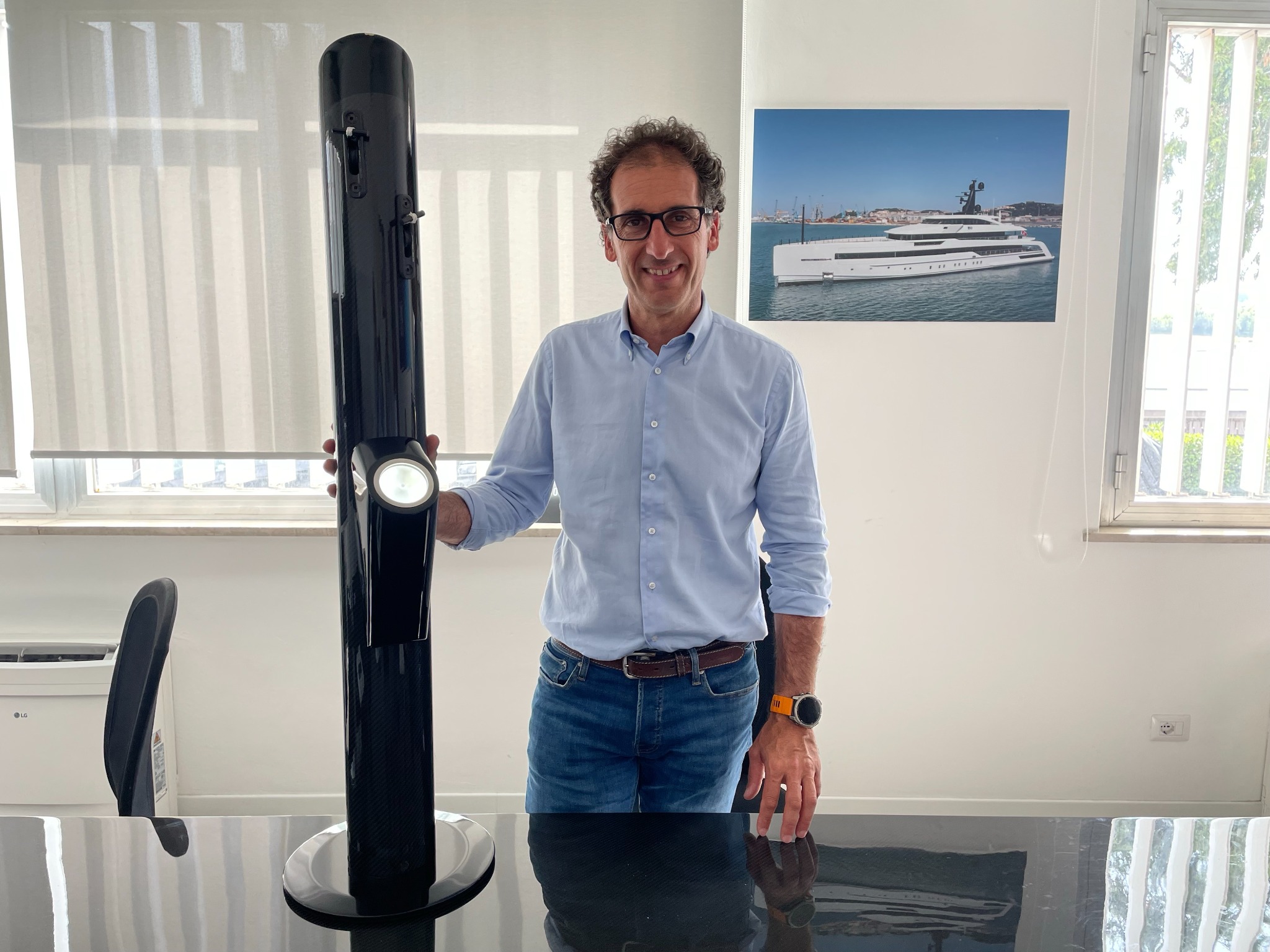
"You cannot design a sailing yacht without understanding what actually happens when she is at sea. Classification society rules are essential, but they are only part of the equation. You also need to understand the real loads acting on the structure and how the yacht behaves under sail; otherwise, sooner or later, something will fail," he says, neatly summarising one of the principles that has guided AMS throughout its development.
This dual identity — combining engineering expertise with practical sailing experience — continues to define the company today. While AMS develops sophisticated systems for large motor yachts, it has maintained strong links with the sailing world through structural engineering, finite element analysis and consultancy for naval architects and boatbuilders. These activities remain an important part of the work carried out by the company's engineering department.
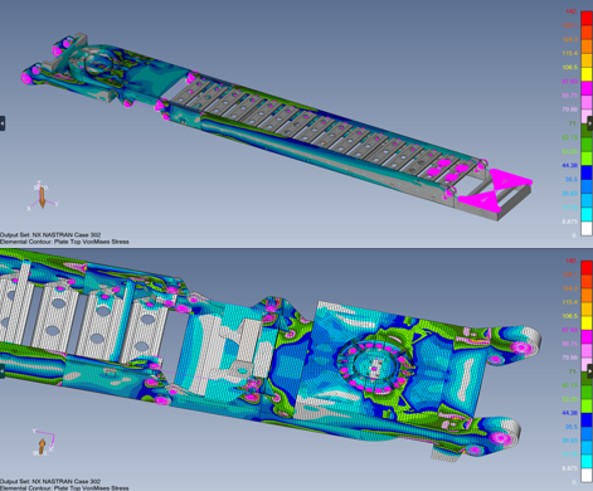
Engineering, in fact, remains at the heart of AMS. During its early years, the company focused almost exclusively on structural analysis, scantling calculations, feasibility studies, mechanism design and finite element analysis. Those capabilities have never been set aside and continue to form the foundation of every new project.
The turning point came in late 2008, when CRN commissioned AMS to develop a carbon fibre awning system before subsequently asking the company to manufacture it as well. That contract marked the beginning of in-house production and fundamentally changed the company's growth trajectory. It was soon followed by the development of a major transom door actuation system for ISA Yachts and, over the following years, by an increasing number of projects for some of Italy's leading yacht builders.
What stands out when looking at the company's history is that most of the products now included in the AMS portfolio originated from a highly specific request made by either a shipyard or an owner: a lack of space, a weight constraint, or a particular aesthetic or functional requirement. Each solution is initially engineered for a single yacht and, if it proves successful, may later become part of the company's product range. As Pelizza puts it: "First we solve the problem, then the product follows. Even then, it remains a custom product."
As the tour continues, it becomes clear that AMS has grown not by increasing production volumes but by taking on increasingly complex engineering challenges. Pelizza returns to this point several times because it helps explain the company's position within the market. In an industry where many systems can simply be sourced from specialist suppliers, AMS is typically called in when off-the-shelf solutions are no longer adequate or when design constraints demand an entirely new approach.
Several landmark projects illustrate this philosophy.
Among the first to establish the company's reputation was the large retractable carbon fibre awning system developed for CRN, a project that also played a decisive role in launching AMS's manufacturing activities. It was followed by increasingly sophisticated handling systems, including the company's first major transom door mechanism for ISA Yachts, now part of Palumbo Superyachts. Since then, AMS has steadily expanded its capabilities, developing shell doors, fold-out balconies, lifting systems, davits, composite structures and a wide range of bespoke solutions for yachts and superyachts.
One particularly significant example is an A-frame crane designed to lift loads of up to four tonnes aboard an explorer yacht intended for worldwide cruising, including polar regions. In this case, the engineering challenge extended well beyond the lifting system itself, involving the structural design of the support craft carried by the crane. The shipyard selected an aluminium hull to provide greater resistance to contact with ice, while specifying a carbon fibre deck and superstructure to minimise weight.
The main challenge lay in creating an effective structural connection between two dissimilar materials without allowing direct contact between aluminium and carbon fibre, which could lead to galvanic corrosion. AMS developed a solution based on intermediate fibreglass components that completely isolate the two materials while maintaining the structural continuity required by the design. It is projects like this that explain why the company continues to regard itself first and foremost as an engineering firm.
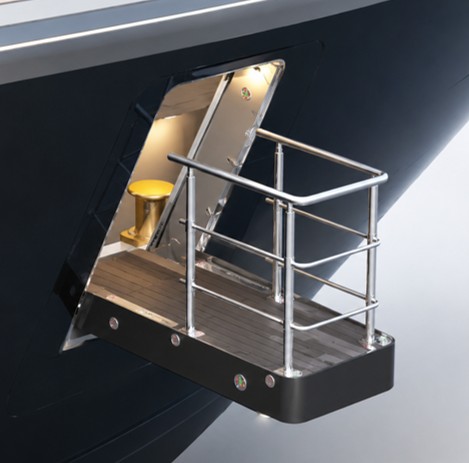
The same philosophy underpins the many handling and actuation systems developed over the years. Side shell doors, beach clubs, bathing stairways, gangways, platforms, fold-out balconies and custom mechanical linkages almost always originate from close collaboration with the shipyard during the earliest stages of a project. In many cases, AMS becomes involved when all that exists is an available volume inside the yacht and the challenge is to integrate a new function without compromising aesthetics, weight targets or technical spaces.
This is where one of the company's most distinctive strengths becomes apparent. Pelizza explains that discussions with shipyards often begin long before a contract is formally awarded. Designers share three-dimensional models of the yacht, analyse available space, simulate the movement of mechanical systems and evaluate multiple engineering options until the most effective solution is identified. Only once the concept has reached a sufficiently mature stage does the project move on to costing and detailed engineering.
Over the years, this collaborative approach has enabled AMS to establish long-term relationships with many of Italy's leading shipyards. Its client portfolio includes names such as CRN, Benetti, ISA Yachts, Palumbo Superyachts, Sanlorenzo and Amico & Co., all of which have entrusted the company with the development of particularly complex or innovative engineering solutions at various stages of their respective projects.
Another aspect that becomes immediately apparent during the visit to the Ancona facility is the increasingly strategic role of composite materials. For many years, AMS designed carbon fibre components while outsourcing their production. As projects became more numerous and technically demanding, however, the company progressively brought composite manufacturing in-house.
The decision was driven by several factors: tighter quality control, shorter development times, reduced dependence on external suppliers and, above all, the opportunity to strengthen its own manufacturing know-how.
Today, around half of the company's 1,800-square-metre headquarters is dedicated to composite production, a business area that AMS considers central to its future growth. Structural components, deck equipment, lightweight mechanical parts and bespoke systems for both new builds and major refit projects are all manufactured here.
The expansion of these capabilities illustrates how AMS has steadily broadened its expertise while remaining faithful to the philosophy that has shaped the company from the beginning: identify a technical challenge, engineer the most effective solution and, whenever appropriate, transform it into a new product.
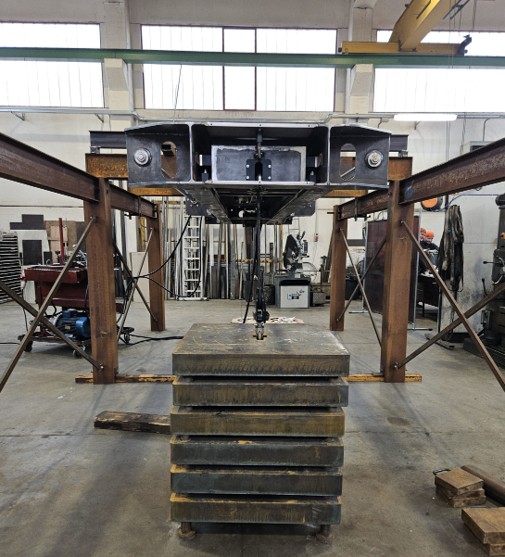
The company's evolution is equally evident in the way it is organised. From a small engineering consultancy established in 2005, AMS has grown into a business operating from an 1,800-square-metre facility that houses design offices, a composites division, mechanical workshops, CNC machining centres, assembly lines and testing facilities. The company now employs almost thirty people, including five operating partners, and generates annual revenues of approximately €4.8 million.
Growth has also been reflected in the management structure. Alongside Francesco Pelizza are Chief Operating Officer Francesco Staffolani, Chief Financial Officer Francesca Formichini and a multidisciplinary team of engineers, designers, project managers and specialist technicians who oversee every stage of a project, from the initial concept through to installation on board.
As the company has expanded, one of its greatest challenges has been preserving the balance between growth and flexibility. Scaling up requires more structured procedures, stronger project management, increasingly rigorous quality control and ever more efficient internal processes. At the same time, AMS is determined to retain the responsiveness and bespoke approach that have distinguished the company since its foundation, treating every commission as a unique engineering project rather than another production order.
The visit also highlights the growing importance of the refit sector. While AMS is often involved from the earliest design stages of new-build projects, work on existing yachts typically focuses on integrating new functions, replacing obsolete systems or introducing equipment that must fit within already established spaces. Once again, the starting point is never the product itself, but the engineering challenge that needs to be solved.
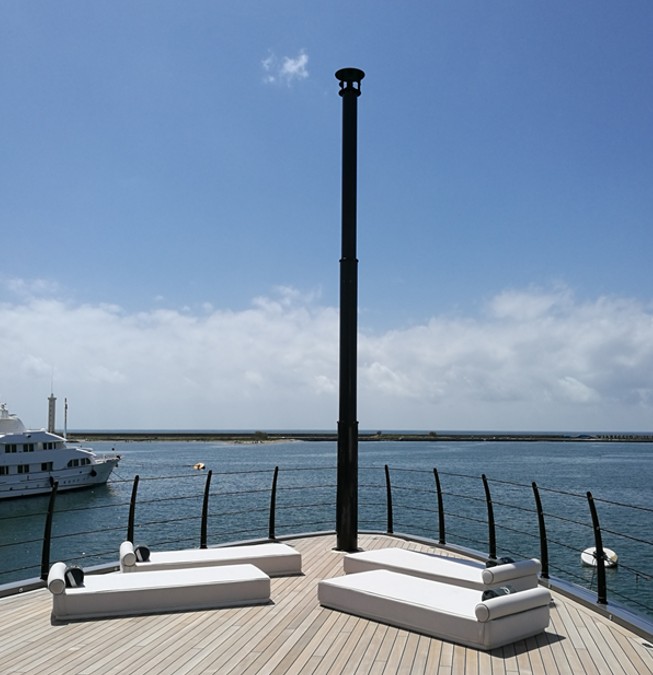
That philosophy continues to generate new ideas. The latest example is the pneumatic telescopic mast unveiled by AMS only a few weeks ago and already featured by PressMare. For the first time, the mast is actuated by compressed air rather than a conventional hydraulic cylinder while retaining all the key features of traditional hydraulic telescopic masts, including an automatic fresh-water flushing system that removes salt deposits and contaminants from inside the mechanism, improving reliability and reducing maintenance requirements.
It is an innovation that appears deceptively simple, yet one that originated from observing a practical issue encountered during the everyday operation of telescopic masts aboard modern yachts.
Leaving the company's headquarters, the strongest impression is not of a manufacturer focused on serial production, but of an engineering business that has built its reputation by solving highly diverse technical challenges. Whether developing a composite structure, a beach club handling system, a boarding stairway or a mechanical linkage that will remain completely hidden from the owner's view, the process always follows the same sequence: understand the problem, engineer the solution and deliver a reliable, fully integrated system.
That is probably why, in little more than twenty years, AMS has evolved from a specialist structural engineering consultancy into a trusted technical partner for some of Italy's leading yacht builders. It is a journey built project by project, founded on the belief that, particularly in the world of high-end yachting, innovation rarely begins with a catalogue. More often, it starts by finding an answer to a problem that no one has solved before.
Giuliano Luzzatto
©PressMare - All rights reserved