Yachting in China, from potential to a real market: what is changing
Yachting in China, from potential to a real market: what is changing


For years, China has been regarded as one of the markets with the greatest potential for the international yachting industry. Expectations, however, have not always translated into the figures anticipated by the Western industry. Today, something may be changing.
A new generation of Chinese entrepreneurs is emerging in sectors such as artificial intelligence, new energy, electric mobility, advanced materials and aerospace. These companies and entrepreneurs are increasingly international in outlook, accustomed to travelling and increasingly familiar with the Western lifestyle.
At the same time, China's relationship with the international yachting industry is becoming broader: domestic shipyards are evolving, regional connectivity is improving and Chinese capital is becoming increasingly involved in the global yachting ecosystem.
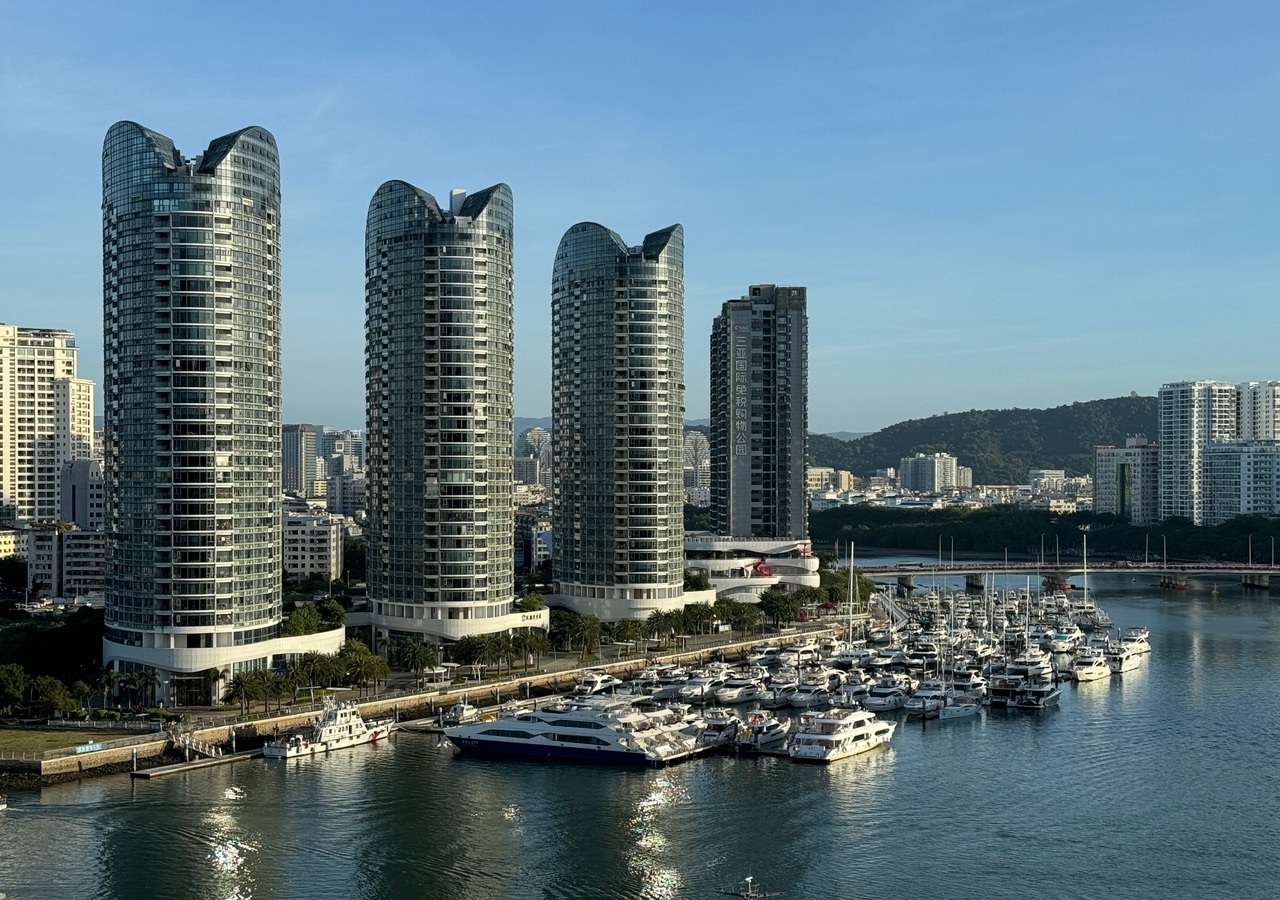
PressMare discussed this at the Cannes Yachting Festival with Ronnie Wang, Senior Consultant & Director of International Business at Hainan Yaqing International Clear Water Bay Marina and Deputy Secretary of the Sanya Cruises and Yachts Association.
The starting point is a simple question: could this new generation finally transform China into one of the world's major yachting markets?
PM- For many years, the yachting industry has looked at China as the next major market. Is this still a realistic prospect today and, more importantly, is the profile of the potential Chinese yacht owner changing?
RW- I believe the conditions today are different from those of the past. In China, we are seeing the rise of a new generation of entrepreneurs and companies, particularly in technology-related sectors: artificial intelligence, new energy, advanced materials, electric vehicles and aerospace. Many of these entrepreneurs have an international outlook and travel frequently outside China.
In the past, many very wealthy clients had built their fortunes in more traditional industries. Today, we are seeing younger entrepreneurs coming from technology and innovation-driven sectors. They have international experience and are more familiar with European and American lifestyles. This can also change their relationship with yachting.
PM- Financial resources alone, however, are not enough to create a market. What is still missing, and what role can charter play in introducing new clients to yachting?
RW: We cannot think of yachting simply in terms of selling yachts. We need to build an ecosystem. We need marinas, services, maintenance, charter, destinations, training and, above all, a culture of actually using boats.
Charter is very important because it allows people to experience yachting before purchasing a yacht. For many new clients, it represents their first contact with this lifestyle. They can understand what type of yacht they prefer, how they want to use it and which destinations they would like to visit. There are clients interested in chartering yachts in the 30-to-50-metre range as well. It is a way of experiencing the product and the lifestyle directly before making a purchase decision.
PM- Does a Chinese client use a yacht in the same way as a European client? And can these cultural differences also influence yacht design and layout?
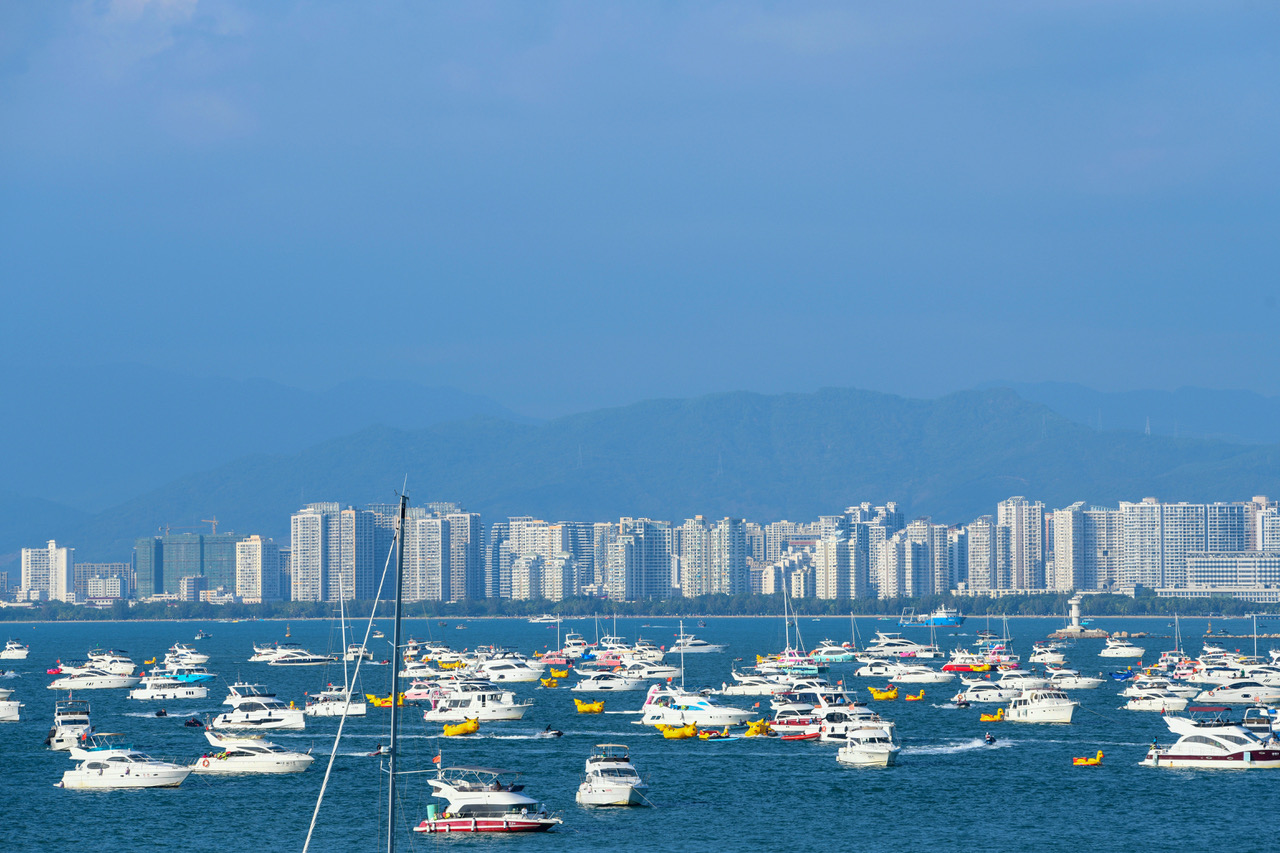
RW: Not necessarily. There are important cultural differences. In Asia, for example, day boating is very common. Many clients use their boats during the day and return in the evening. This also influences how onboard spaces are perceived.
Large social areas are particularly important. Asian clients enjoy spending time together with family, friends or business partners. This means that large, protected cockpits, lounge areas and spacious flybridges can be particularly important.
The product therefore needs to adapt to the way it is actually used. One interesting example involved a yacht where the forward cabin was converted into a large dining area capable of accommodating around ten people. For that particular client, this space was more valuable than having an additional cabin.
This does not necessarily mean designing completely different yachts, but understanding local requirements is essential. We cannot simply take a product developed for Europe and expect it to work in exactly the same way in Asia.
PM- How important is technology to this new generation of clients? And could China eventually become not only a market for Western yachts, but also a technology and manufacturing player in the international yachting industry?
RW: Technology is extremely important. China is now highly advanced in a number of technological sectors, and new clients are accustomed to using very sophisticated digital systems in their everyday lives.
Smart onboard systems, navigation, autopilot, energy management and electric propulsion are some examples. Increasingly, clients expect a yacht to be easy to use and highly integrated from a technological perspective.
China also has an extremely developed supply chain in many sectors, including batteries, electronics, electric vehicles, digital systems and advanced materials. Some of these capabilities can be transferred to yachting.
Chinese shipyards are also evolving rapidly, with improvements in quality, design and overall value helping Chinese-built yachts gain greater recognition internationally. At Cannes, brands such as Heysea, NYX, OceanWalker, GranOcean, Kingship, Lannika and the newly established Trueline received encouraging feedback from the international market.
Many Chinese builders are now working with sophisticated European designers and naval architects, while attracting increasing interest from international dealers looking for competitive new products.
This also creates opportunities for greater collaboration between Western shipyards and Chinese companies. Europe has extraordinary expertise in yacht building, design, branding and craftsmanship, while China can offer strong capabilities in technology and industrial production. Collaboration between these two worlds could create new opportunities.
PM- What role can Hainan play in this scenario, and how important is Hong Kong in creating greater regional connectivity?
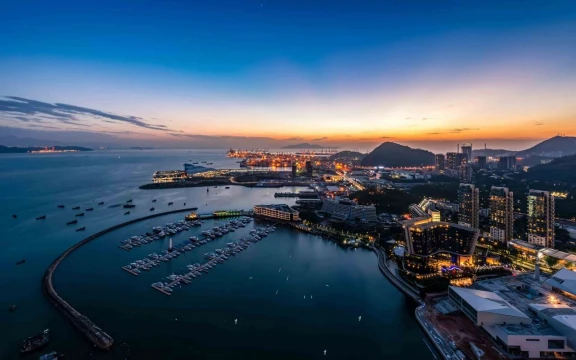
RW: Hainan can become an important platform. The objective is not simply to create a local destination, but to connect it with other markets and destinations across the Asia-Pacific region.
Hong Kong continues to play an important role in the Greater China yachting market. Many Chinese yacht owners choose to keep their vessels in Hong Kong, which remains one of Asia's most established and attractive yachting destinations.
With the development of the Guangdong–Hong Kong–Macao yacht travel programme, greater cross-border yacht mobility could further connect Hong Kong with the Greater Bay Area and, eventually, with Hainan Free Trade Port, creating a much more integrated cruising region in southern China.
Vietnam, Indonesia, Thailand, Singapore and Japan are also markets and destinations with which we can build connections. A yacht needs to be able to travel, and its owner needs to have reasons to use it.
PM- Would it therefore be too restrictive to consider mainland China alone as the yachting market?
RW: Exactly. We need to think regionally. Asia-Pacific can become a network of destinations. If we create itineraries, services and cooperation between different countries, the yachting experience becomes much more attractive.
Developing the market is therefore not simply a matter of increasing the number of yachts. We need to create the conditions that allow those yachts to be genuinely used and to move between different destinations.
PM- China's relationship with the international yachting industry also seems to be expanding beyond yacht ownership. How important are Chinese capital and strategic investment in this evolution?
RW: Chinese and Hong Kong capital is becoming increasingly involved in the international yachting ecosystem.
Richard Liu, founder of JD.com, recently acquired an 80% stake in Camper & Nicholsons, while Chinese investment continues to play an important role in Ferretti Group.
These developments demonstrate that China's relationship with the global yachting industry is expanding beyond yacht ownership and consumption into manufacturing, services, distribution and strategic investment.
PM- What are the main obstacles to growth today, and what should a European company understand before entering the Chinese market?
RW: Regulation remains one of the most important factors. We need to make yacht use, charter operations, travel between different destinations and access to services easier. Without a favourable regulatory framework, in line with international standards, it is difficult for the market to develop to its full potential.
At the same time, a European company should not focus solely on selling a yacht. It needs to understand the market, the client, how the yacht is used and the ecosystem developing around that client. It is a process that requires time and presence.
PM- Can we therefore say that the conditions finally exist for China to become one of the world's major yachting markets?
RW: The potential exists, but we need to create the conditions for it to develop. Today, we have a new generation of entrepreneurs, new technologies and growing international openness. If we can simultaneously develop infrastructure, services, a yachting culture and an appropriate regulatory framework, I believe the opportunities will be very significant.
The question, therefore, may no longer simply be how great China's economic potential is, but how quickly the yachting ecosystem can turn that potential into a real market.
What could make the difference compared with previous attempts is precisely this: a new generation of potential yacht owners entering the yachting world not only with greater spending power, but also with international experience, familiarity with technology and different expectations of the product.
At the same time, China is no longer approaching yachting exclusively as a potential consumer market. Chinese shipyards are seeking greater international recognition, technologies developed in other industrial sectors can increasingly find applications in yachting, regional cruising connections are expanding, and Chinese capital is becoming more involved in the international yachting industry.
For the European industry, China could therefore represent more than simply a market in which to sell yachts. It could become a technology and manufacturing partner, a source of international clients and investment, and one of the key nodes in a broader Asia-Pacific yachting ecosystem.
But, as Ronnie Wang points out, wealth alone does not create a yachting market. That requires destinations, infrastructure, services, a boating culture and regulations that allow yachts to be genuinely and easily used.
And it is probably on this ground that the real future of China's yachting industry will be determined over the coming years.
Filippo Ceragioli
©PressMare - All rights reserved