Baglietto: the T60 evolves into the T62
Baglietto: the T60 evolves into the T62, designed for the BZero green hydrogen system. Deprati: the next step is a 75-metre yacht
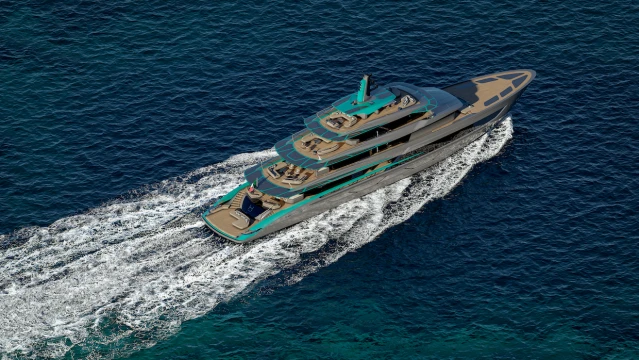
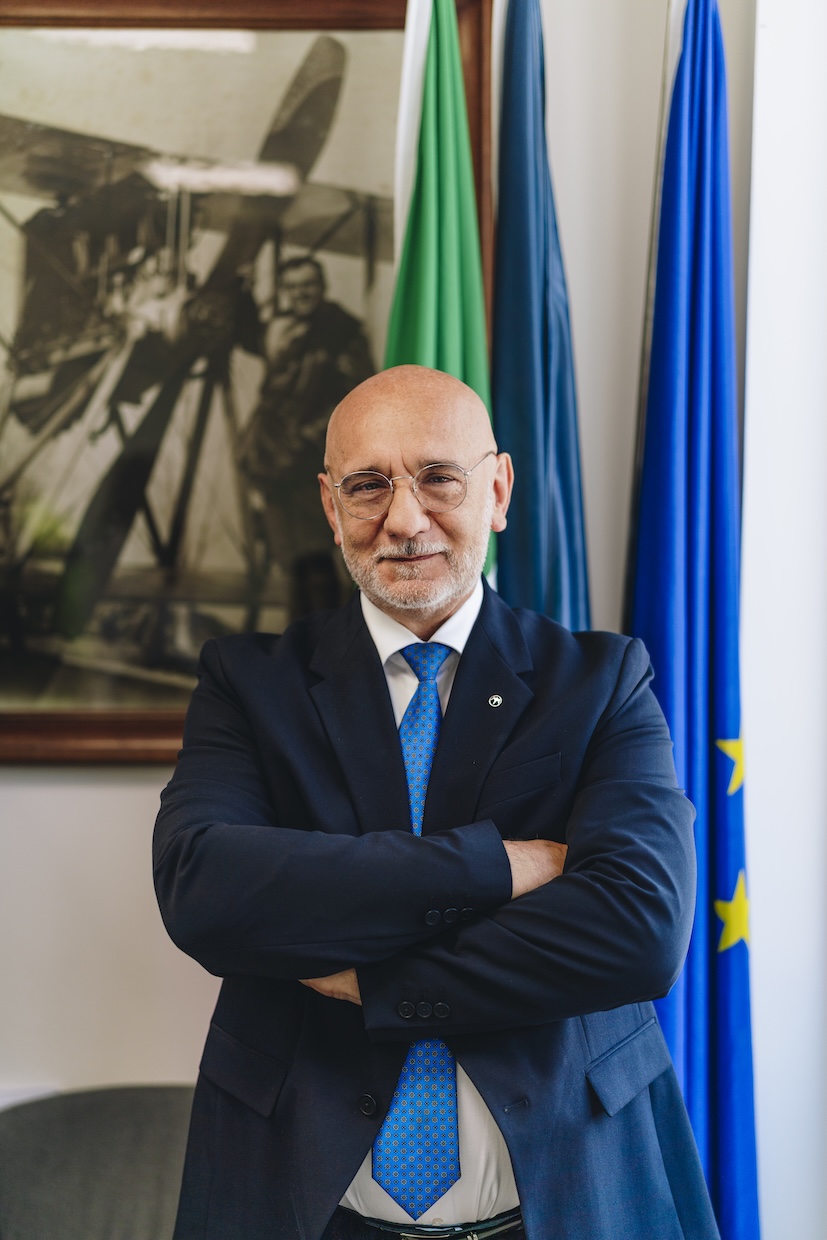
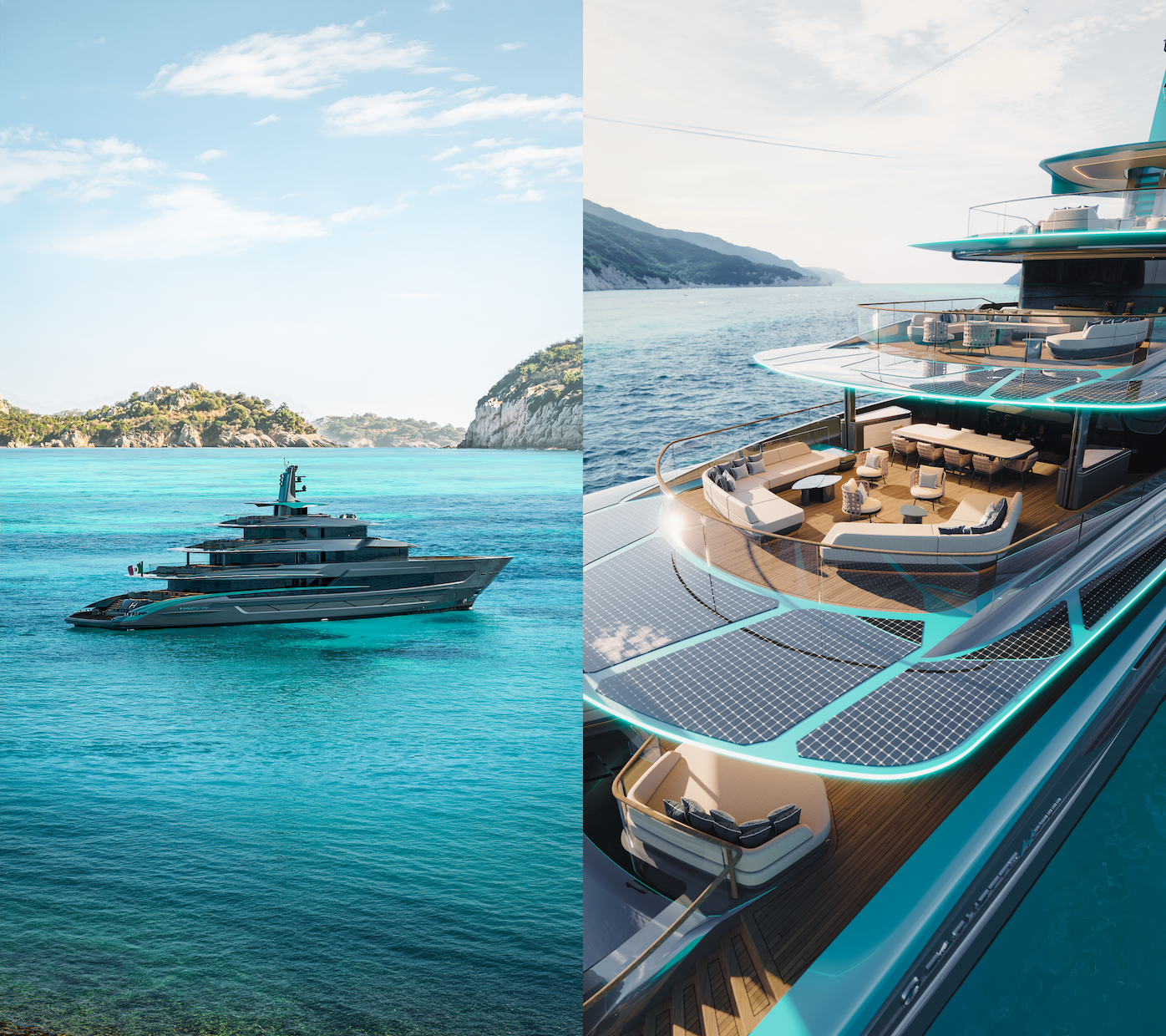
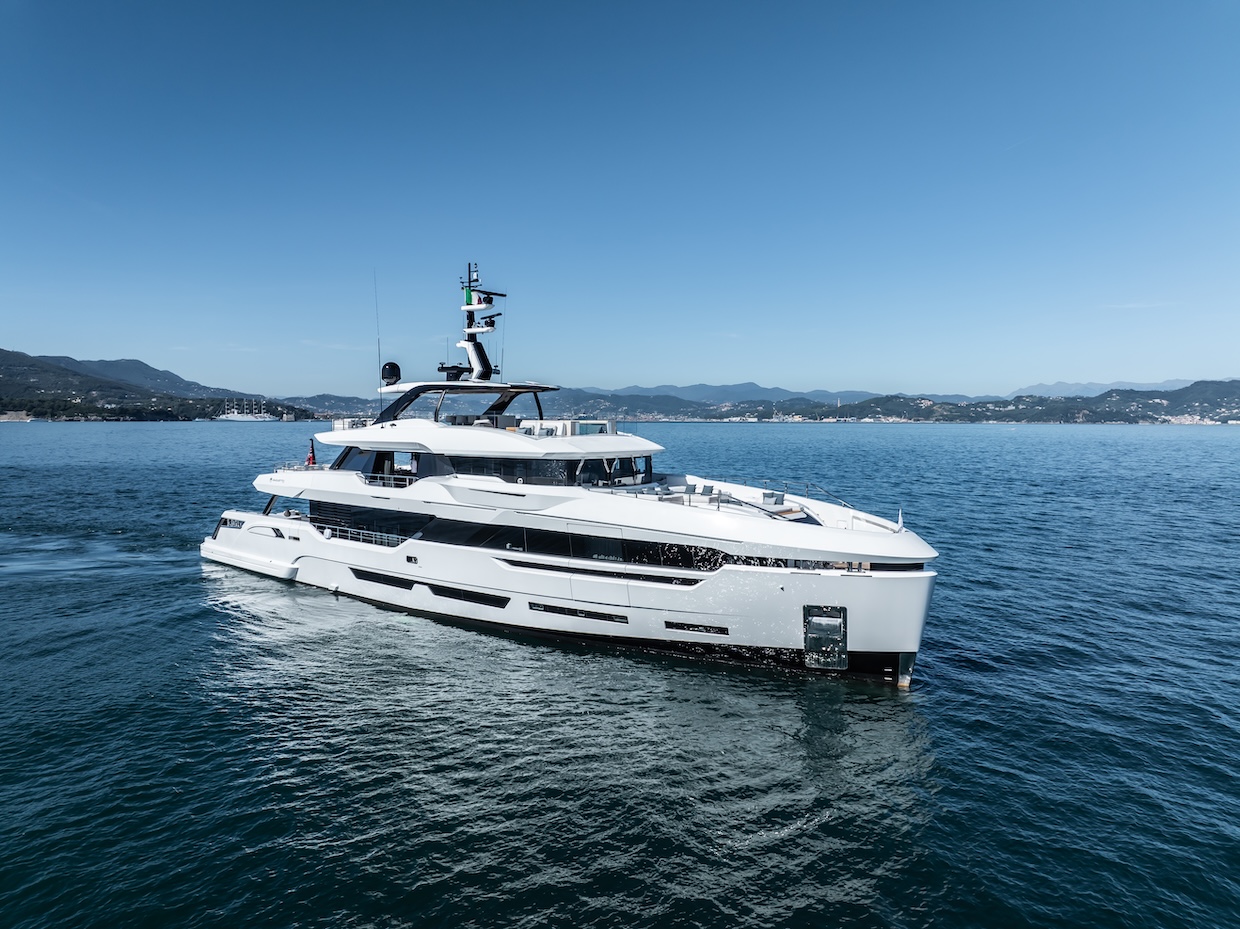
The evolution of the T60, the largest yacht ever launched by Baglietto since 1854, is already in the pipeline. The platform will grow to 62 metres and will be designed to accommodate BZero, the technology through which the La Spezia-based shipyard intends to integrate hydrogen into the yacht’s onboard energy system. This was the main development to emerge from Deprati’s interview with PressMare during the 2026 Monaco Yacht Show.
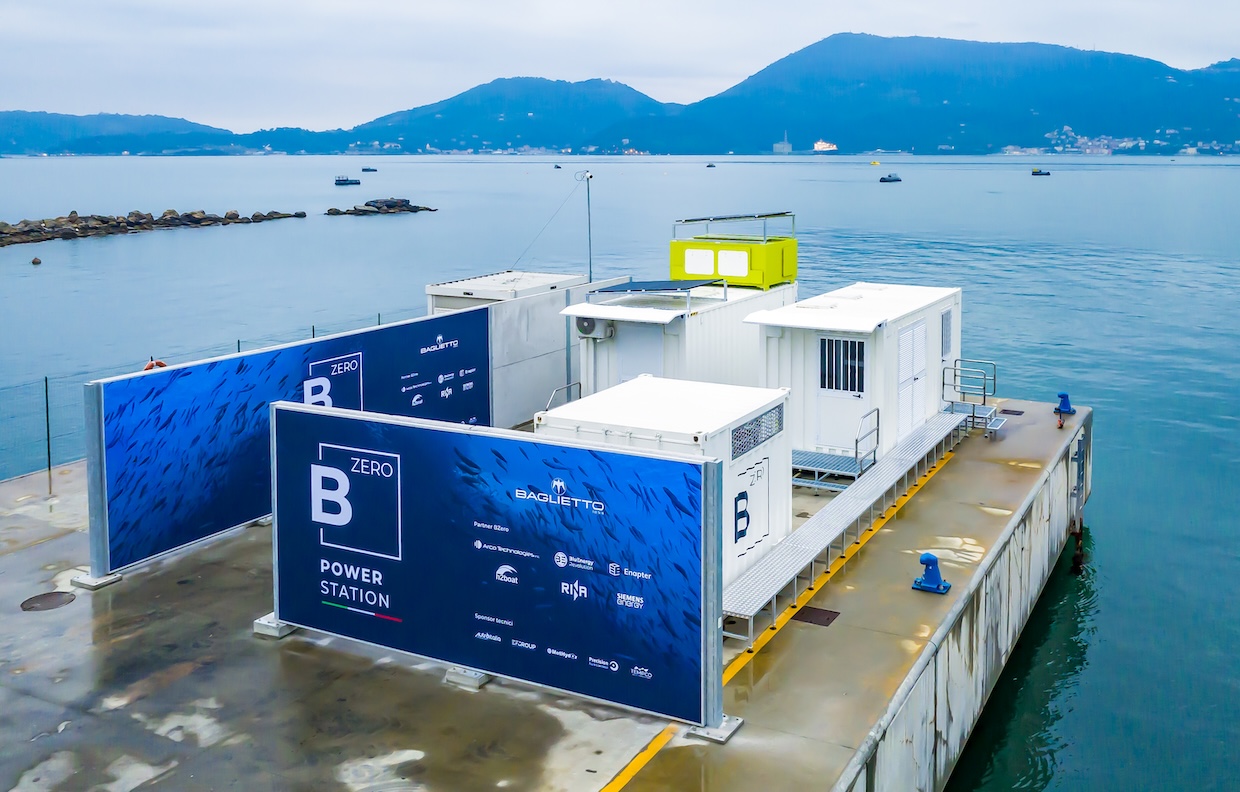
The project represents another step in Baglietto’s work on new energy technologies. The shipyard leads the BZero project and, in its original development phase, involved six partners with engineering teams based in Italy: Arco Technologies, BluEnergy Revolution, Enapter, H2Boat, Siemens Energy and RINA, the classification society responsible for monitoring and validating the various stages.
BZero is designed to extend a yacht’s zero-emission electric range. It integrates fuel cells into a hybrid or diesel-electric platform and, in the configuration developed by the shipyard, also includes a module that produces hydrogen through water electrolysis, primarily using energy from renewable sources, before storing it in low-pressure metal hydrides. Baglietto has been working on the system for several years, and the new 62-metre yacht could now provide an onboard application.
Hydrogen, however, was only one of the subjects discussed with Deprati, whose comments ranged from the future 75-metre yacht to The Italian Sea Group situation and Baglietto’s interest in the La Spezia asset, as well as the supply chain and competition from Turkey.
PressMare - Monaco remains the benchmark show for this segment. What are your impressions of the 2026 edition?
Diego Michele Deprati - I believe it will continue to be so for many years. Although there has been discussion, including within some industry associations, about the possibility of changing things, Monte Carlo remains a global reference point for many reasons. After the first two days, I sense a strong determination among shipyards to present new products and new models, so there is a clear drive to look ahead. Traditionally, we are a little more conservative: we follow this evolution, but cautiously.
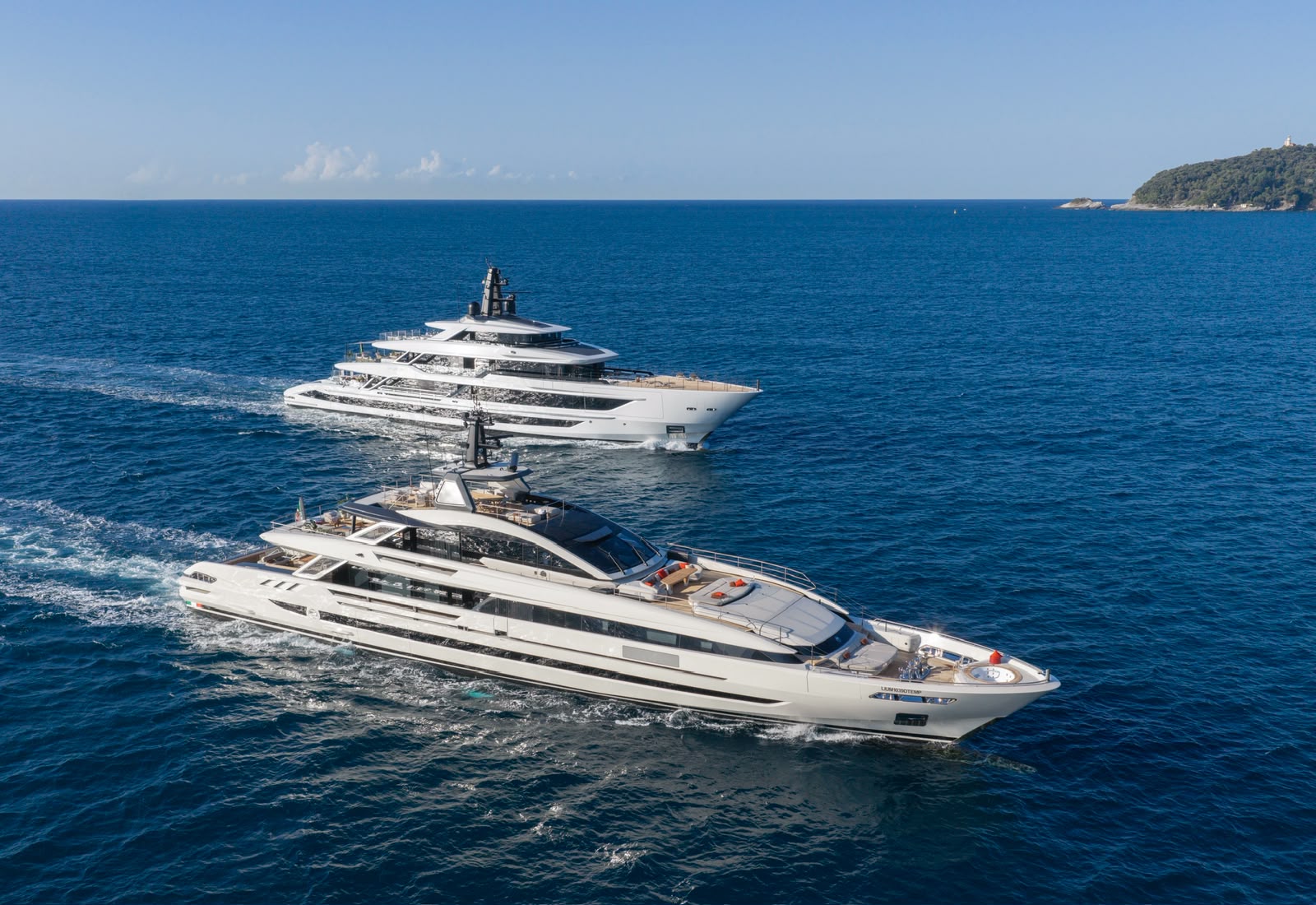
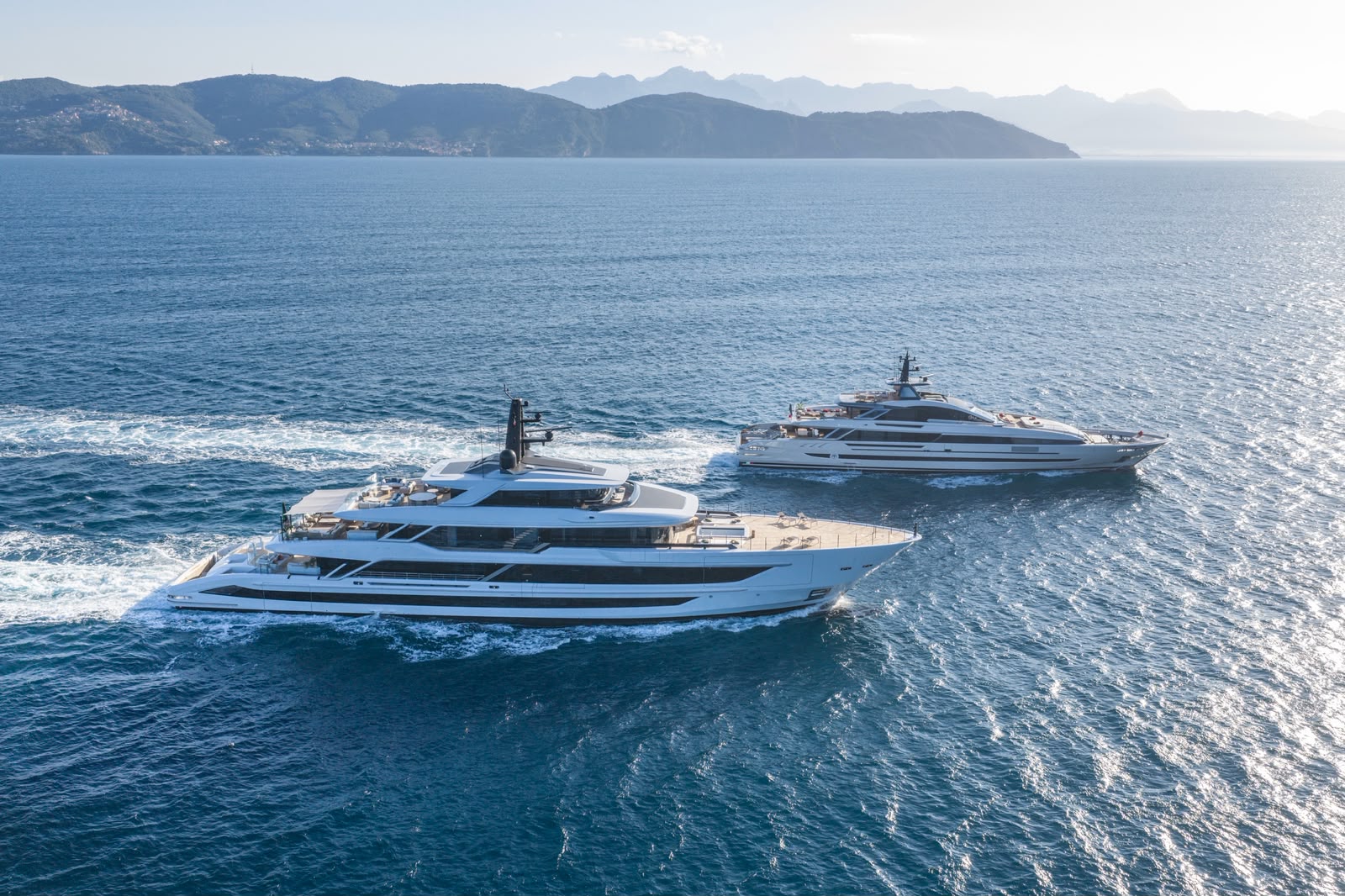
This year we brought two new models, including the Fast50, which has just left the shipyard and exceeded our expectations. We expected a top speed of 30 knots and achieved more than 32. For me, having been a captain, what matters most is how the boat feels under your feet, and at a cruising speed of 27-28 knots we achieved a level of comfort that really impressed me. When I test a boat, my procedure is simple: stabilisers off, maximum rpm and 35 degrees of helm to starboard and then to port. The Fast50 showed excellent stability without becoming a hard-riding boat. I think it is a very well-balanced project.
PM - How many owners still perceive luxury through performance as well?
DMD - Unfortunately, not many. The engineering and technology required to build a yacht of this size capable of cruising at 30 knots are completely different from those of a semi-displacement or displacement yacht: the design, materials and construction technologies all change.
On the Fast50 we worked extensively on weight, and Francesco Paszkowski made a major contribution: we managed to come in around ten tonnes below the design estimate. Lightness, however, costs time and requires very careful work on the interiors and every component, because reducing weight without compromising style, perceived quality and luxury is complex. I believe we managed to strike a good balance here.
PM - On the other side of the equation is environmental impact. Do owners recognise the economic value of hybrid technologies and the solutions you are developing?
DMD - Not enough yet. We have been working on hybrid systems for years and are also developing hydrogen technology, but customers often do not recognise this added value in the cost of the yacht. This is why we are considering a different approach: on the future 62-metre yacht, the hybrid and hydrogen components could be offered directly by the shipyard as part of the project. We want to test them and continue developing them, and we will probably have to be the ones pushing in this direction, because customers remain fairly sceptical today.
PM - Is that scepticism related to safety or to the complexity of the systems?
DMD - Mainly to complexity and reliability. Crew training also has to be considered, because crews do not always have the skills required to manage highly complex systems. If an owner uses the yacht for only a few days of cruising and encounters minor issues continuously during those days, the perception quickly becomes negative.
I believe we have now reached a good level of reliability. This year we delivered the second hybrid unit in the T52 series, fitted with a new Siemens system: it completed the entire season and is now returning without any problems. We also provide continuous 24-hour remote assistance, with Siemens and Baglietto personnel in contact with the captain and chief engineer, allowing us to resolve the vast majority of issues. With this level of service, I continue to regard hybrid propulsion as a valid solution, despite its high cost. But I have to be frank: recently, requests have been limited.
PM - The DOM range, on the other hand, continues to attract orders. How do you explain the success of the DOM133?
DMD - The DOM133 originated during the Cerri Cantieri Navali period and continues to give us great satisfaction. It is a 40-metre yacht with spaces and volumes close to those of a 50-metre, but at a substantially different price point. It is built in light alloy, so it is a metal yacht with significant technical characteristics, and it has a very well-developed hull with excellent fuel consumption and a cruising speed of 15-16 knots.
We have now introduced the DOM155 and sold the first unit, while continuing to receive significant interest in both the DOM133 and the DOM115, our steel entry-level model. The latter is a 35-metre yacht, and there are not many steel-hulled offerings in that size bracket, which has created an interesting market niche.
PM - Metal is gaining ground even in size ranges where composite dominated until a few years ago. Why?
DMD - I was initially sceptical myself about the idea of a 35-metre yacht in steel, because it is inevitably more expensive to build: you only have to consider the difference between working a steel plate and producing a fibreglass component. But when you manage to make a customer understand that a steel yacht of that size really behaves like a small ship, particularly at sea, the perception changes.
I personally tested the first DOM115: its comfort and stability are remarkable. Customers tested it as well, and the market responded. We are still talking about a yacht costing around €18 million, so it is certainly not a product sold on price.
Metal also offers another advantage: product evolution. If we compare the first DOM133 with the latest units, restyling and modifications have introduced substantial improvements. With fibreglass, this process is industrially much more complex and often results in the creation of a new model, with consequences for the value of the previous one as well.
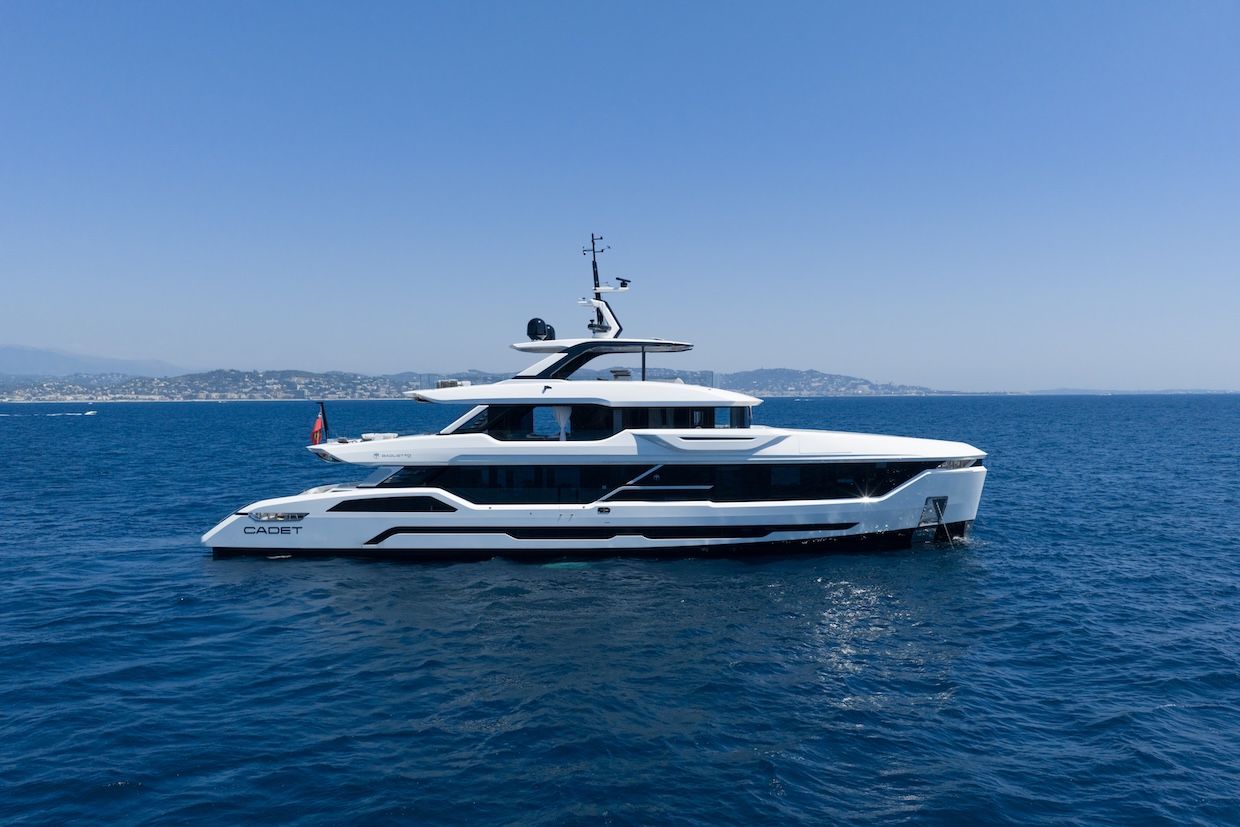
PM - Looking further up the range, is the T60 now the starting point for another evolution?
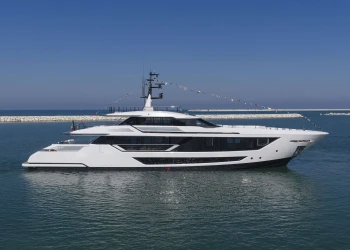
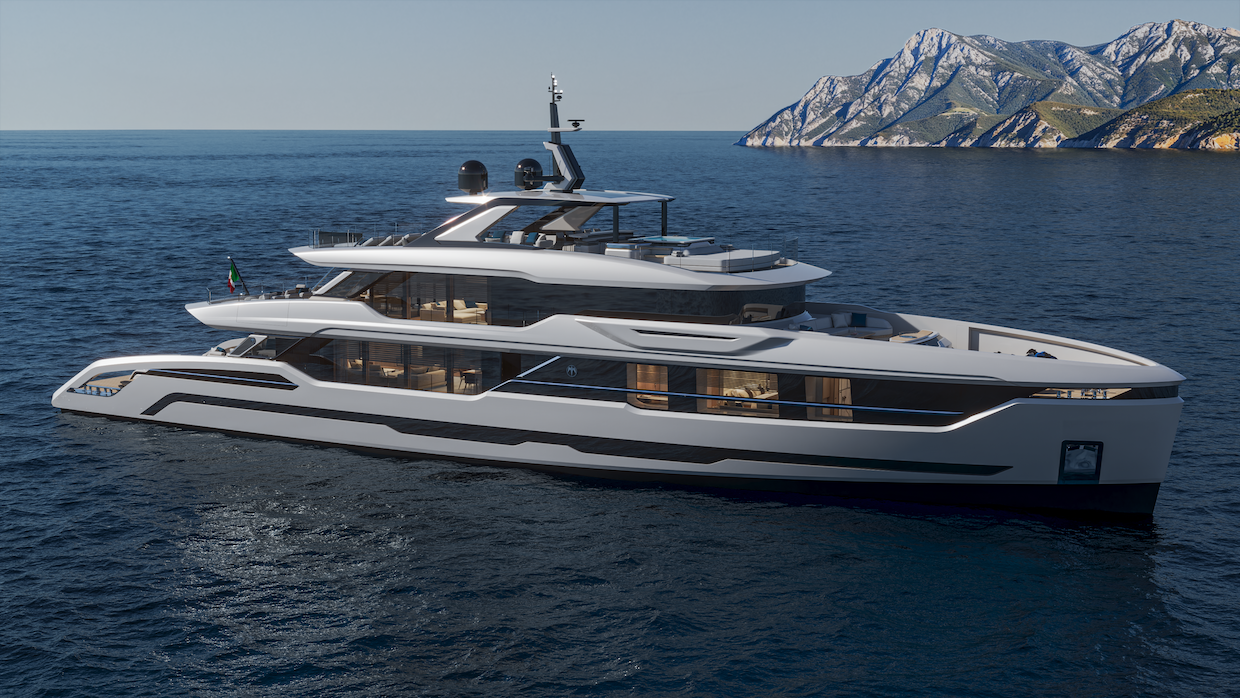
DMD - We have built the first 60-metre yacht and have two more under construction, both already sold, with deliveries scheduled for 2028 and 2029. We are already thinking about its evolution, the 62-metre yacht featuring BZero technology: Francesco Paszkowski has managed to integrate these components into the superstructure without affecting the yacht’s aesthetics. It will already be the fourth unit we put into production.
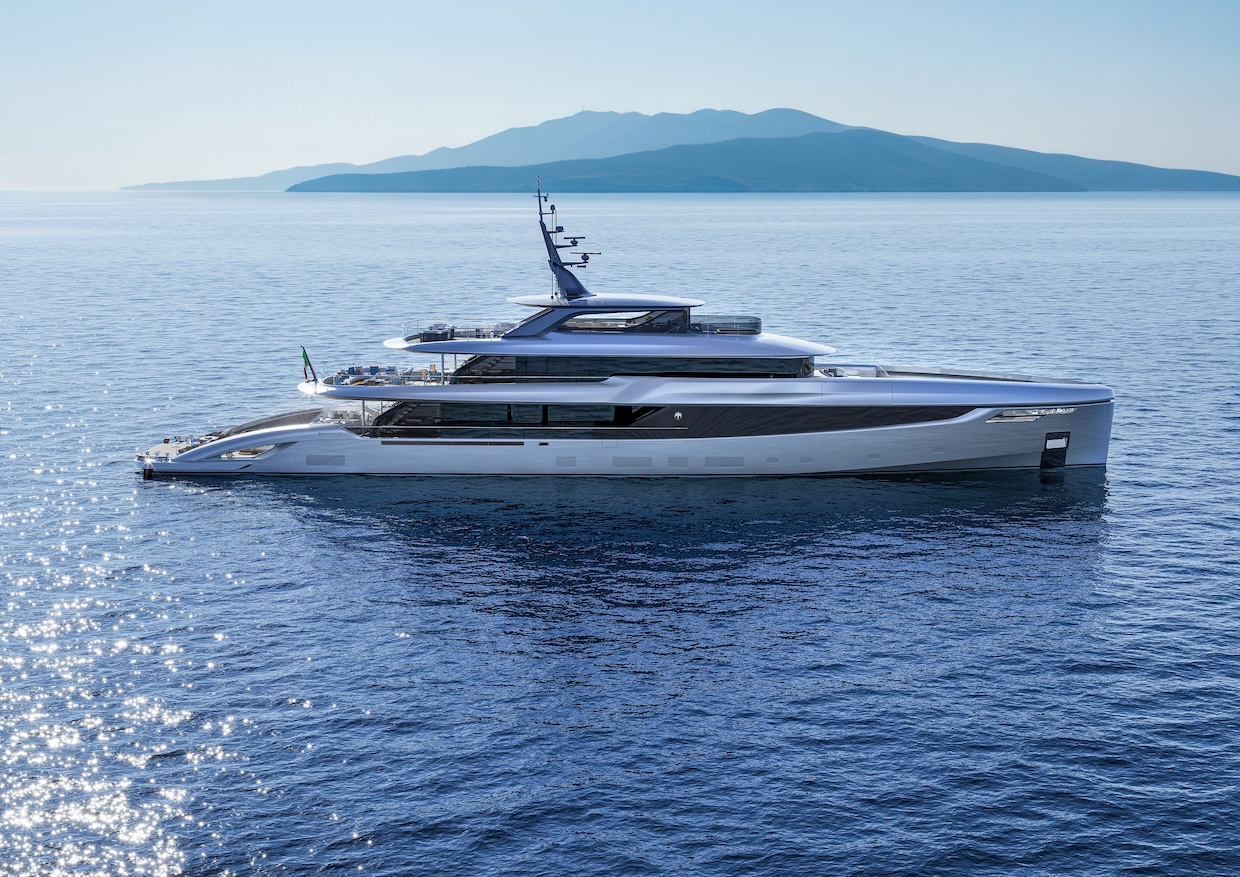
Our objective is to continue moving up in size. We are also working on a 75-metre yacht, and further developments will emerge soon. We proceed in steps that are never too large: first we reached 50 metres, then 60, and the experience we have gained now gives us greater confidence to tackle the next step. We were also very encouraged by the feedback from the captain of the first 60-metre yacht, a highly experienced professional who was very satisfied with the yacht’s behaviour throughout the season. For me, this kind of feedback is particularly important.
PM - Will the future 75-metre yacht be fully custom?
DMD - No, and that is exactly the point. It will be a Baglietto project: we will not start from a customer’s design, but from our own. Of course, we also build custom yachts, but in this case we want to follow the same philosophy as the 60-metre and create a 75-metre yacht that is unmistakably a Baglietto. We are looking at approximately 2,000 GT. The propulsion system is still under study and we are evaluating several solutions. It is our next step.
Today Baglietto has an average of around twenty contracts in place, plus four yachts being built on speculation. Within this order portfolio, we are beginning to see that a yacht of this size can find its own place. We want to gain this experience.
PM - Building larger yachts requires more production capacity and more space. Can you confirm your interest in additional areas or other shipyards in the region?
DMD - I can confirm it, should some of the opportunities we are currently working on fail to materialise. Today, part of our shipyard space is still used for metal fabrication because, within the subcontracting chain, we cannot always find companies capable of providing all the guarantees we require. We would prefer to reserve our existing facility for yacht outfitting. If opportunities involving areas close to our facilities were to materialise, we could achieve a more efficient production configuration.
PM - As part of the procedure concerning The Italian Sea Group, what exactly is Baglietto interested in?
DMD - We are interested in an asset deal concerning the La Spezia shipyard, nothing else. I can imagine that the commissioners and the judge are also interested in finding a solution that takes employment and industrial considerations into account. In any case, the situation remains open and everything is still to play for.
PM - Regardless of the outcome, do you think what has happened has affected the credibility of the Italian yacht-building industry abroad?
DMD - We had come through several years in which Italy had regained considerable international credibility. I believe the situation may have caused some reputational damage, but I do not think it will lead to widespread mistrust, particularly because the other major Italian groups have solid foundations.
I also consider the human and supply-chain aspect particularly important. A significant proportion of the companies supplying The Italian Sea Group also work for us and other shipyards. When a company of that size runs into difficulty, suppliers are left exposed for significant amounts, and other shipyards somehow have to support them, either by advancing resources or ensuring continuity so that they can retain their workforce. The consequences therefore spread throughout the supply chain. I believe this is an issue that also needs careful consideration at political level, because in crises of this magnitude it is mainly supply-chain companies and workers who pay the price.
PM - Did the TISG crisis surprise you?
DMD - There were perhaps some signs that could have been detected. However, I have great respect for those who built that company: it was a courageous journey. Moving in a short period from fibreglass boats to yachts of that size required investment and strong determination.
From my perspective, however, building industrial organisations of a certain scale takes decades: you need structures that have accumulated experience, established teams and an appropriate organisation. Perhaps the journey was too fast and this aspect may have been underestimated. I recognise the courage of those who invested in and believed in the project, but I would not go beyond that.
PM - There has also been considerable discussion in the market about TISG’s particularly competitive pricing, often considered too low. Was this also something competitors perceived?
DMD - I cannot state it as a fact: it was a very widespread view in the market, but I do not want to comment on matters I do not know directly. I would reiterate that one of the riskiest steps may have been moving very quickly into a segment that was not part of the company’s original DNA. Up to a certain yacht size, there is one industrial model and one supply chain; once you enter the world of large yachts, everything changes. You need a different mindset and a different industrial organisation. Even moving from yachts below 500 GT to vessels above 500 GT involves major changes: you need structured, solid companies, and they must be given the resources required to work properly.
PM - Are incidents in recent years, particularly Bayesian, pushing the industry towards stricter safety requirements?
DMD - Useful lessons can certainly be drawn from certain experiences, but the issue does not concern shipbuilding alone. I see an important question of management, training and professionalism. There is always room for improvement from a construction standpoint as well, but in some cases training, preparation and sometimes excessive confidence play a greater role.
PM - Especially as yacht sizes increase, how important is it to have the backing of a solid industrial group and an entrepreneur such as Beniamino Gavio?
DMD - It is certainly an important factor and in several circumstances it has been an advantage. The size and reputation of the group have enabled us to successfully pass various due-diligence processes carried out by yacht owners. Recently, for example, we signed contracts with South American and Brazilian clients: owners normally request bank guarantees and carry out very thorough financial and administrative checks on the shipyard, and being part of the group makes that process easier.
There is also a second element: we are not owned by a fund, but by an entrepreneur with a genuine passion for yachting. Beniamino Gavio experiences the boating world firsthand. Although he keeps a low profile and communicates little, he is a great enthusiast, and owners recognise this: they know they are buying from a group that operates industrially in the sector but where there is also a personal passion for the product. That can influence the final decision.
PM - Baglietto also has a long history in military craft. How is this activity developing today?
DMD - We are mainly working on two projects connected with the Italian Navy, in addition to some activities with Oman. The first concerns the Combat Evo, an evolution of the combat boats we have already built: we delivered the first two units to the San Marco Marine Brigade, and there is also potential linked to the new naval vessels that will need to be equipped with these craft.
The other project is a landing craft: an entirely light-alloy trimaran hull developed by Baglietto together with British company BMT. It is a vessel around 24 metres long, capable of exceeding 22-23 knots with a payload of approximately 40 tonnes and reaching around 27 knots unloaded. New operational requirements increasingly call for mother ships to remain farther offshore, which means faster craft are needed to reach the coast.
My intention is progressively to separate this business unit from the yacht operation. The two activities do not always sit easily together, including from an image perspective. The objective is to create a structure independent from Baglietto. After a period of relative inactivity, we are now seeing movement again in this area and are accelerating our efforts.
PM - Turning to the market, which geographical areas are currently supporting Baglietto’s order intake most strongly?
DMD - North America continues to account for almost 40%, perhaps slightly more, and the United States remains a very important market. We then have around 15-20% in South America, mainly Brazil and Mexico. We are also seeing signs of recovery in markets that are relatively new for us, such as Asia — where, since last year, we have had a partnership with Asiamarine — and Africa.
Global wealth continues to grow and the number of ultra-high-net-worth individuals is increasing: we believe this business still has room for growth. The risk, however, is that strong demand encourages the industry to produce more than it can while maintaining the required quality standards. My philosophy is simple: keep your feet on the ground, do what you know how to do, do it well and, if possible, keep doing it better, without being carried away by volume growth.
PM - Does Made in Italy therefore retain its competitive advantage? And how much is Turkish competition growing?
DMD - Turkey has to be watched very carefully. I have seen Turkish shipyards and products that impressed me: today there are well-built yachts, with details you would not have found until recently, and clear progress in design and styling as well. They also have an advantage in labour costs, which have a very significant impact in our industry. We Italians therefore have to be very careful not to lower our quality standards: if Turkish yards continue to close the gap and the Italian product ends up being equivalent to theirs, it becomes difficult to justify the price differential. We can maintain higher prices, but we have to guarantee a correspondingly high level of quality.
PM - And compared with Northern European shipyards?
DMD - There, mindset and established perceptions also come into play: some owners have always looked to Northern European shipyards, and it is not easy to persuade them to change. I do not think Italian yacht building is now very far from those standards, but we still need to eliminate a few minor lapses in quality. We get very close, but then perhaps make a mistake on a detail where they do not. That is what we need to keep working on.
PM - Could refit become a more important activity for Baglietto?
DMD - Today we carry out refit work on a limited basis, essentially for clients who own Baglietto yachts. It is an interesting business, always active and often with good margins, but given our workload and available space, we have to choose where to concentrate our resources.
Building yachts and carrying out refits are also two different professions, requiring different mindsets, skills, labour and subcontractors, and in my view they should be kept clearly separate. We do not have specific partnerships in refit; however, if an owner asked me today who I would entrust with a major refit project, I know Amico well and have great respect for the work of Engineer Amico.
©PressMare - All rights reserved