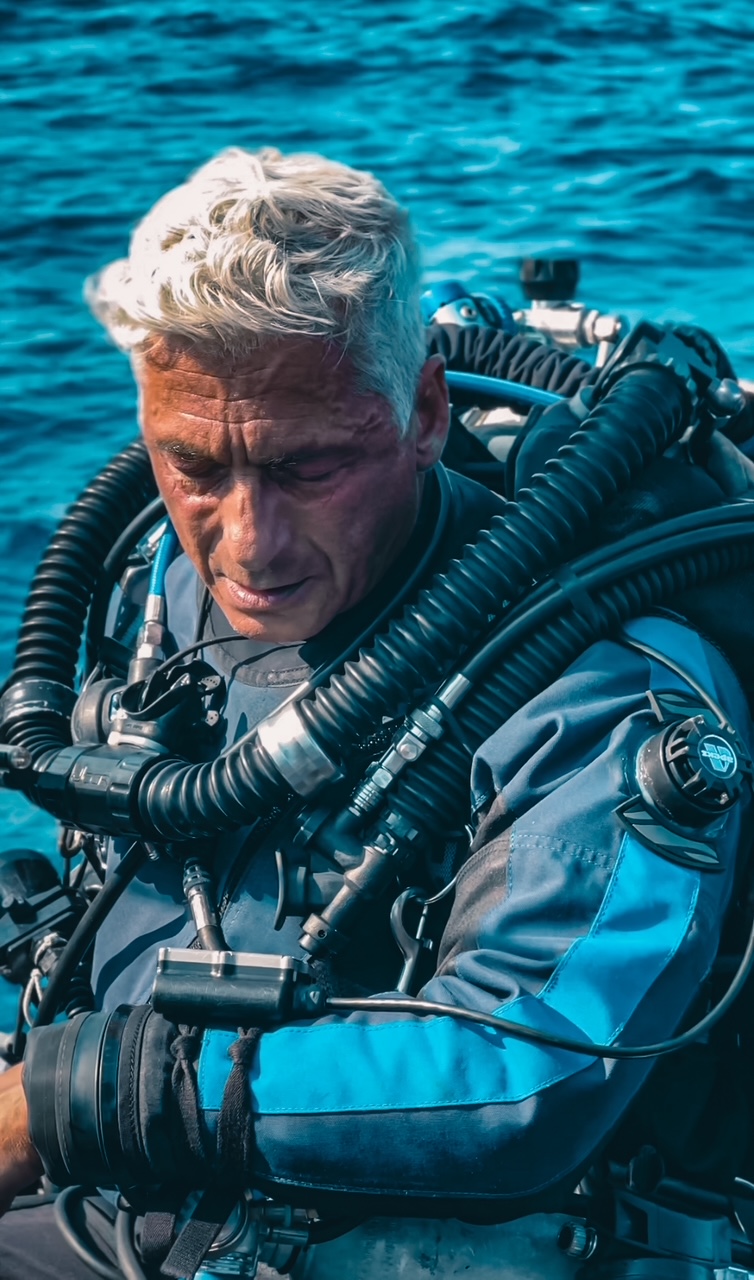
Photo by Beatrice Costa
Submerged sites and boating tourism: how underwater archaeology is reshaping routes in the Mediterranean


For over twenty-five years, the Society for Documentation of Submerged Sites (SDSS) has been engaged in the exploration and documentation of the Mediterranean’s underwater heritage. Leading its activities is Mario Arena, director of the organization and head of its expeditions, coordinating multidisciplinary teams of archaeologists, technicians and divers.
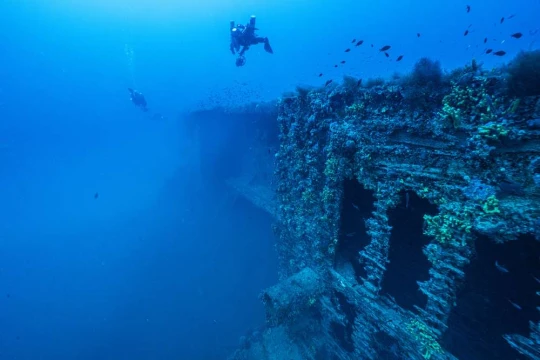
Their field of work is a hidden world beneath the surface: shipwrecks, submerged cities, sunken convoys, and traces of ancient battles and trade routes. A heritage that SDSS aims to bring “virtually to the surface”, making it accessible also to those who experience the sea as boaters.
“Our mission is to study, document and protect underwater cultural and environmental heritage, while making it accessible to the public — including those navigating above these areas without knowing what lies beneath their keel,” explains Arena.
SDSS projects originate from various sources: institutional requests, scientific collaborations, archival research or insights developed directly at sea. The common goal remains the same: to treat the Mediterranean as a vast archive of stories, interpreted with scientific rigor and translated into accessible content for those at sea.
Among the most significant areas are Pantelleria and the Egadi Islands, two very different contexts united by high historical value.
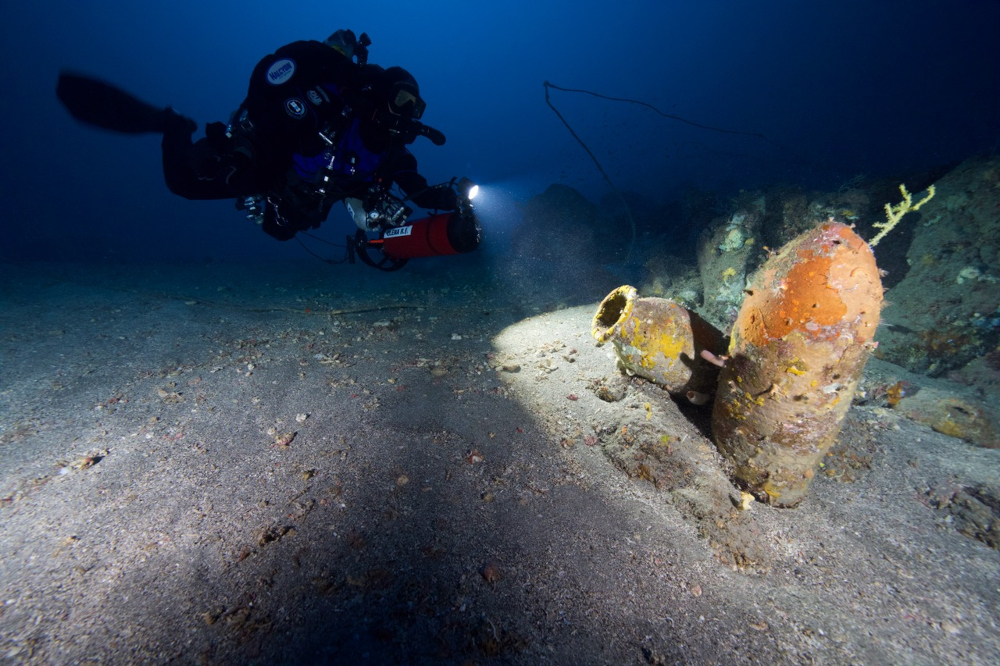
Pantelleria, a volcanic island, features particularly rich seabeds. Along approximately one mile of coastline lie three Punic archaeological sites with hundreds of amphorae — over five hundred distinct forms — dating back to the 3rd century BC, resting among seabeds of varying colors. In the same area, around four thousand Carthaginian coins were discovered, likely intended to pay troops stationed in Sicily during the First Punic War.
The Egadi Islands tell a different story. Between Marettimo and Levanzo lies the site of the naval battle of 241 BC, which marked the end of the First Punic War. Over an area of more than 1,200 hectares at a depth of about 80 meters, the seabed preserves a unique archaeological record: bronze rams, helmets, fragments of armor, weapons, amphorae and coins. To date, it remains the only ancient naval battlefield conclusively identified.
For the boating world, this heritage represents an opportunity that is still only partially explored.
“Knowing what lies beneath the surface can completely change the perception of a route or an anchorage,” Arena notes.
For divers, the impact is immediate: encountering artifacts that have rested on the seabed for millennia fosters a deeper understanding of the historical context. However, even those remaining on board can access this dimension through images, 3D models and digital reconstructions.
New forms of accessibility are emerging in this direction. The Submerged Archaeological Park of Baia is a clear example: accessible with mask and fins or via glass-bottom boats, it offers simplified access to a complex heritage. Looking ahead, technologies such as small tourist submersibles or dedicated platforms could further expand exploration possibilities.
SDSS operates at the intersection of scientific research and dissemination. Site documentation relies on advanced tools: mapping, 3D photogrammetry, 360° stereoscopic video and high-definition imaging.
These data enable highly accurate historical reconstructions and are translated into digital experiences such as navigable 3D models, virtual environments and immersive applications that can also be used on board yachts.
Globally, diving tourism has already demonstrated its ability to transform small coastal towns into major destinations. In the Mediterranean, the presence of iconic wrecks or high-value submerged sites can significantly influence route planning.
An anchorage offering good holding and clear waters, combined with a “place of memory” — whether a sunken convoy, a submerged city or a battlefield — gains an additional cultural and emotional dimension beyond a simple stopover.
Access to these sites, however, requires a structured approach. Sustainable management depends on coordination with public authorities and heritage institutions, which define rules and limits, balancing protection and accessibility.
Safety remains essential: depth, environmental conditions and the fragility of artifacts require site-specific protocols.
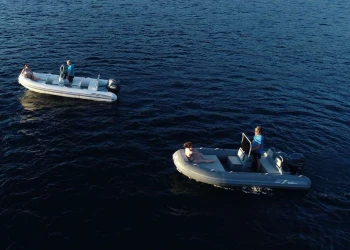
From an operational standpoint, SDSS expeditions use various types of vessels: research ships, motor yachts, workboats and, when conditions allow, large RIBs.
“For distances up to around 20 miles, especially during complex technical dives, a large RIB is often the most efficient solution,” explains Arena. “It must be equipped with a long, gently inclined ladder and a bench–rollbar system to ensure safe and efficient operations.”
Looking ahead, the goal is to integrate archaeological content with onboard navigation systems, enabling real-time identification of “places of memory” and transforming each route into a narrative experience.
“Sailing the Mediterranean can become an experience where every route tells a story and reveals hidden heritage,” concludes Arena. “For boaters, it’s not just about comfort or scenery, but about context, meaning and a deeper connection with what lies just beneath the surface.”
Filippo Ceragioli
©PressMare - All rights reserved