Azimut Yachts: design-to-cost, Avigliana’s production flexibility and technological innovation in the Seadeck 9
Azimut Yachts: design-to-cost, Avigliana’s production flexibility and technological innovation in the Seadeck 9. Interview with Andrea Antichi (Part 2)


After analysing product identity and industrial integration in the first part of the interview, in this second section Andrea Antichi addresses the strategic choices through which Azimut Yachts is approaching the current market environment. From design-to-cost methodologies to the management of production complexity, and from hybrid propulsion systems to digitalisation of processes, the picture that emerges is one of industrial coherence and long-term technical sustainability.
PressMare – During the Azimut Yachts press conference in Düsseldorf in January 2026, it was mentioned that the market is currently moving at two different speeds: strong demand above 24 metres and a much more stagnant situation below that threshold. In a challenging environment for entry-level yachts, what is your concrete strategy to maintain profitability in the 50–60 foot segment without entering into a price war with competitors?
Andrea Antichi – First of all, I would like to clarify that the market below 60 feet is not in crisis. It has simply returned to pre-Covid levels and therefore to a condition of normality.
It requires what I would define as a “strategic squint”: maintaining coherence between industrial and artisanal dimensions while applying different approaches depending on the segment.
In the entry-level segment, where competition is intense and price plays a decisive role, it is necessary to push further towards industrialisation and design-to-cost methodologies.
Designing with manufacturability in mind does not mean impoverishing the product; it means integrating industrial considerations from the very earliest concept phase. The interaction with designers therefore needs to be more structured.
In the higher segments, on the other hand, the weight of craftsmanship increases. The challenge there is to preserve and ensure continuity of skills that are often rooted in historically established territorial clusters.
PM – What exactly does design-to-cost mean?
AA – Design-to-cost is a product development methodology in which the target cost is defined from the earliest stages of design and becomes a technical constraint just like functional, performance and regulatory specifications.
It is no longer about reducing costs downstream. Instead, the product is designed within a predefined economic target, balancing materials, production processes, supply chain and construction complexity in order to guarantee margins and competitiveness.
Applying this logic within the Azimut context requires particular sensitivity. In a niche excellence segment, complexity can itself represent a value that must be protected. The real challenge is to distinguish between complexity that generates recognisability and complexity that exists for its own sake.
Designers and industrial engineers must challenge each other. If a stylistic solution makes the yacht recognisable at a distance, it must be preserved even if it is complex to produce. If it introduces difficulties without creating perceived value, it needs to be reconsidered.
The balance lies not in compressing creativity but in managing it consciously.
PM – The yachting sector does not share the automotive industry’s culture of serial prototypes: the first hull is already destined for an owner. This implies a strong level of responsibility in the development process. How have you structured a validation system capable of reducing technical and managerial risk throughout the yacht’s lifecycle?
AA – In recent years Azimut has carried out substantial work to make the development process more structured and less dependent solely on individual experience.
In a sector where the first unit is not an experimental prototype but a yacht that has already been sold, error cannot be considered a learning phase. It must be prevented upstream.
For this reason, formal validation steps have been introduced – business gates, risk assessment stages and FMEA analyses (Failure Modes and Effects Analysis) on innovative content – which allow potential technical, industrial and service issues to be identified before they translate into operational problems.
FMEA analysis in particular enables us to evaluate potential failure modes of components or systems in advance, estimating both impact and probability, and therefore intervening at the design stage when the cost of modification is still manageable.
Another significant step has been the early involvement of the after-sales department. In the past, service intervened downstream, when the yacht was already in the water. Today the service department participates from the earliest stages, contributing to the definition of system accessibility, furniture and component removability, cable routing and inspection spaces.
If a yacht is expected to remain operational for twenty or thirty years, maintenance cannot be considered a secondary issue. Perceived quality depends not only on finishes and performance, but also on the ease with which it is possible to intervene on systems, generators, air-conditioning units and other equipment.
This approach implies a significant cultural shift. Overcoming the logic of organisational “silos” – where design, production, purchasing, quality, after-sales and commercial functions operate as separate compartments – means adopting an end-to-end vision of the product lifecycle, from concept definition to operational management.
In other words, the yacht is no longer seen only as a product to be delivered, but as a complex system to be maintained efficiently over time. It is precisely this integrated vision that helps reduce risk when the first unit is already effectively a final product.
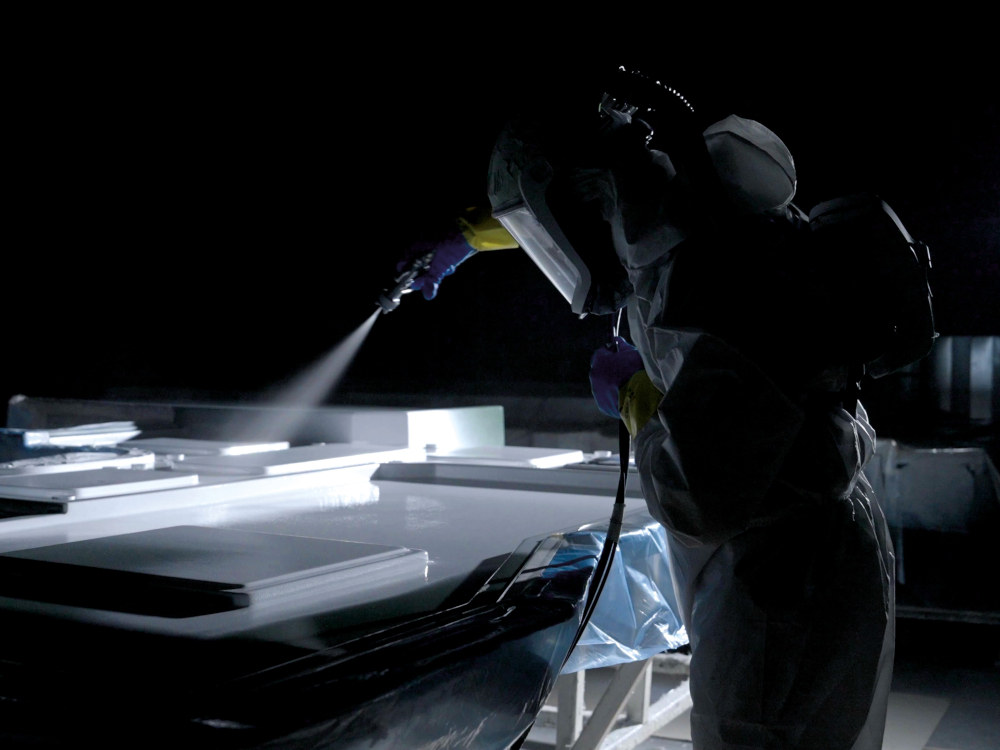
PM – Another aspect that emerges clearly when visiting Avigliana is the plant’s production flexibility. The yard can build the entire range of models under 24 metres hull length listed in your catalogue. How is that achieved?
AA – When speaking about the flexibility of the Avigliana plant, we cannot simply refer to the ability to produce different-sized yachts within the same facility.
The concept is broader and operates on three levels: infrastructural, organisational and human.
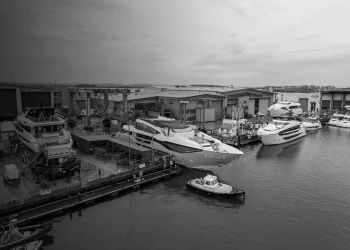
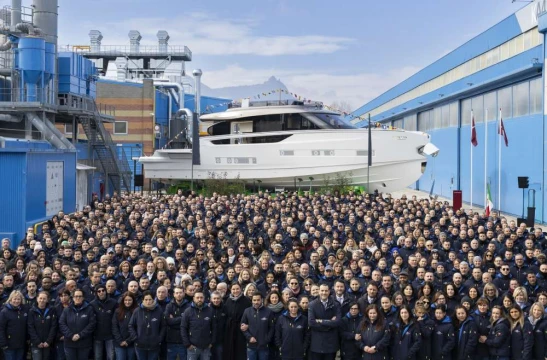
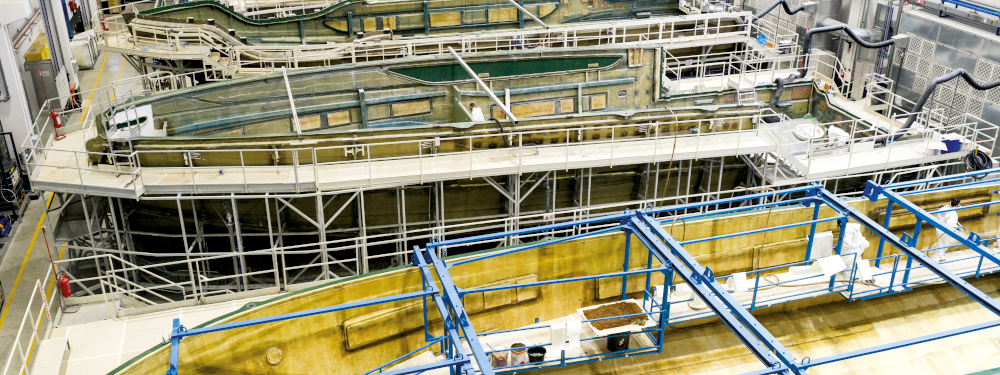
From a structural perspective, the yard has been designed to accommodate units below 50 feet and yachts up to 26 metres simultaneously. This means bays with appropriate heights, overhead cranes with suitable lifting capacities and handling spaces designed for different lengths and weights.
Many production sites are dimensioned for a specific product range, and scaling either upward or downward often requires significant investments. In Avigliana those investments have already been made.
Flexibility is also related to processes. Producing a 45-footer and a 26-metre yacht involves differences not only in length but also in cycle times, lamination volumes, system complexity, component weights and levels of customisation.
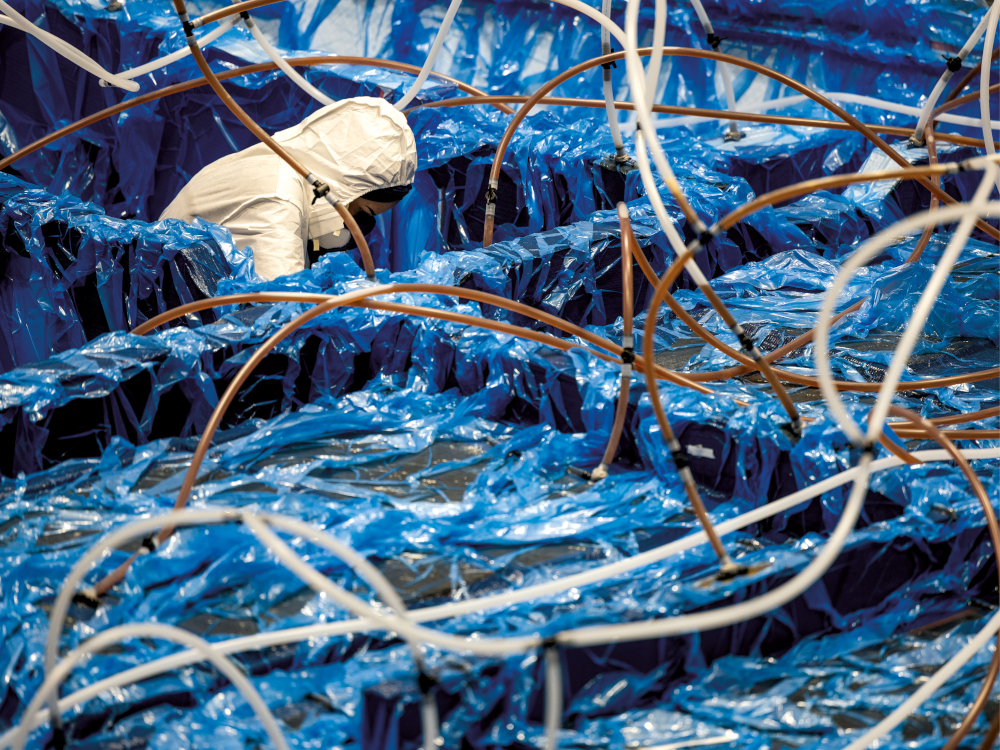
A flexible plant must be capable of absorbing these variations without compromising quality or delivery times. This requires integrated planning, modular internal logistics and an organisation based on production islands rather than rigid assembly lines.
However, the real strategic issue is competence flexibility. As mentioned earlier, yachting is not a pure process industry; it is a competence-based industry.
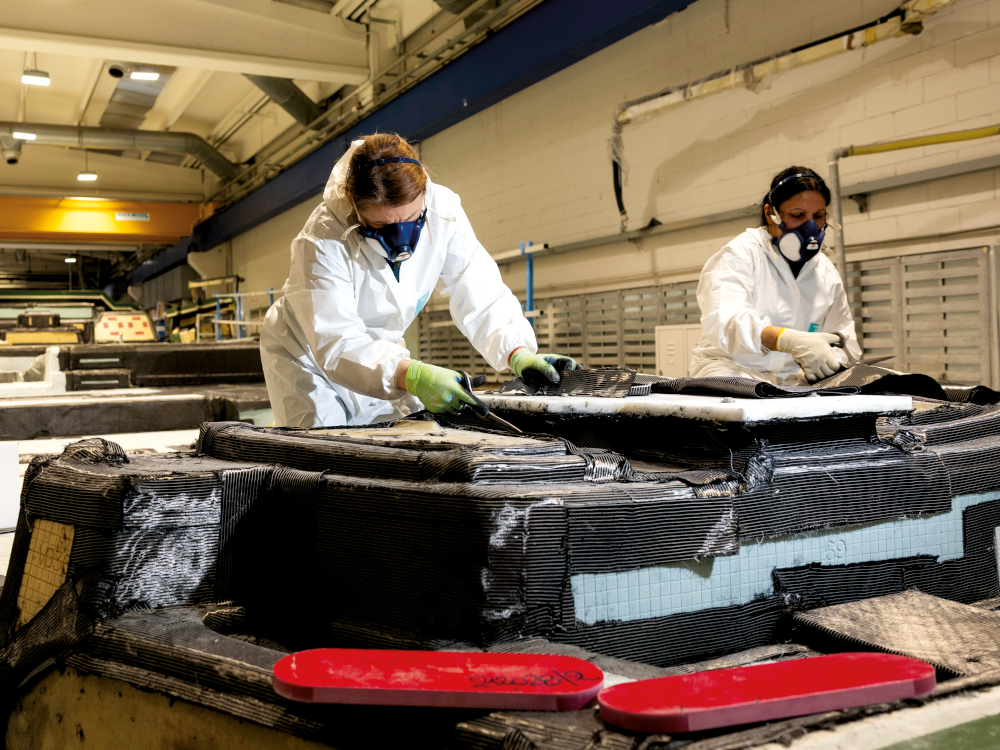
A marine carpenter, an experienced laminator or a complex systems installer cannot be treated as interchangeable roles as in a fully automated production chain. Flexibility does not mean moving people indiscriminately from one station to another, but creating progressive development paths.
A team working on a 50-footer can gradually be trained to handle larger and more complex models, acquiring familiarity with more sophisticated systems, higher quality standards and greater levels of customisation. It is a controlled polyvalence rather than generic interchangeability.
PM – In this way you can respond more effectively to market demand.
AA - In a cyclical market such as yachting, this approach certainly becomes a competitive advantage.
If demand shifts towards larger units, the plant can adapt the production mix without organisational disruption. If a mid-size segment slows down, capacity can be rebalanced while preserving utilisation and margins.
PM – What is the time to market for a new model?
AA – For models produced at the Avigliana facility, it ranges between 18 and 24 months, significantly shorter than in the automotive industry.
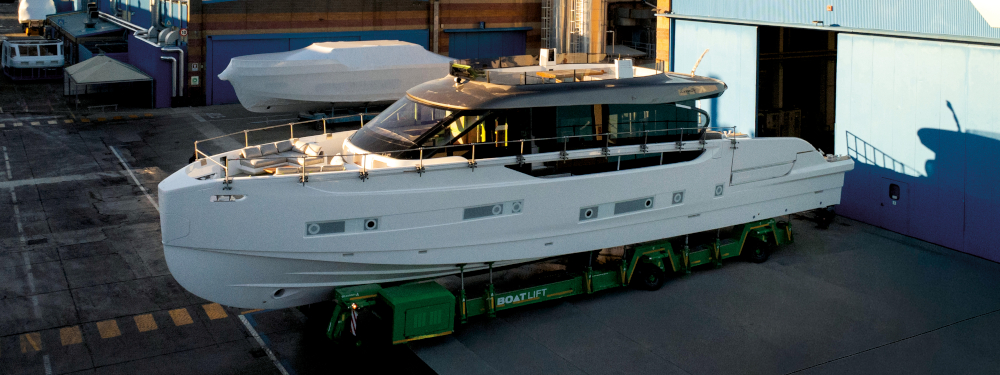
PM – Let’s talk about yachts again, specifically the largest model currently built at Avigliana, the Seadeck 9, whose first unit you completed a few weeks ago.
AA – Seadeck is a range developed around innovation in both layout and technical content. It represented a disruptive project compared with traditional flybridge yachts as well as open motoryachts.
Side terraces and an aft platform integrated with the cockpit create a significantly larger outdoor area compared with yachts of similar length, enhancing outdoor living and the connection with the sea. This concept has had a noticeable impact on the market, and if one analyses the current offer, many builders are now moving in a similar direction.
PM – Being copied is often a measure of the project’s success.
AA – That is fairly normal. However, Azimut’s innovation in this line is not limited to spatial solutions, which means our yachts remain distinctive.
On the Seadeck 9, for instance, carbon fibre represents around 40% of the construction material. The objective is to lower the centre of gravity, reduce weight and improve efficiency.
This is a technological direction Azimut has pursued for several years with measurable results. Lower weight means lower engine loads, reduced fuel consumption and a smaller emissions footprint.
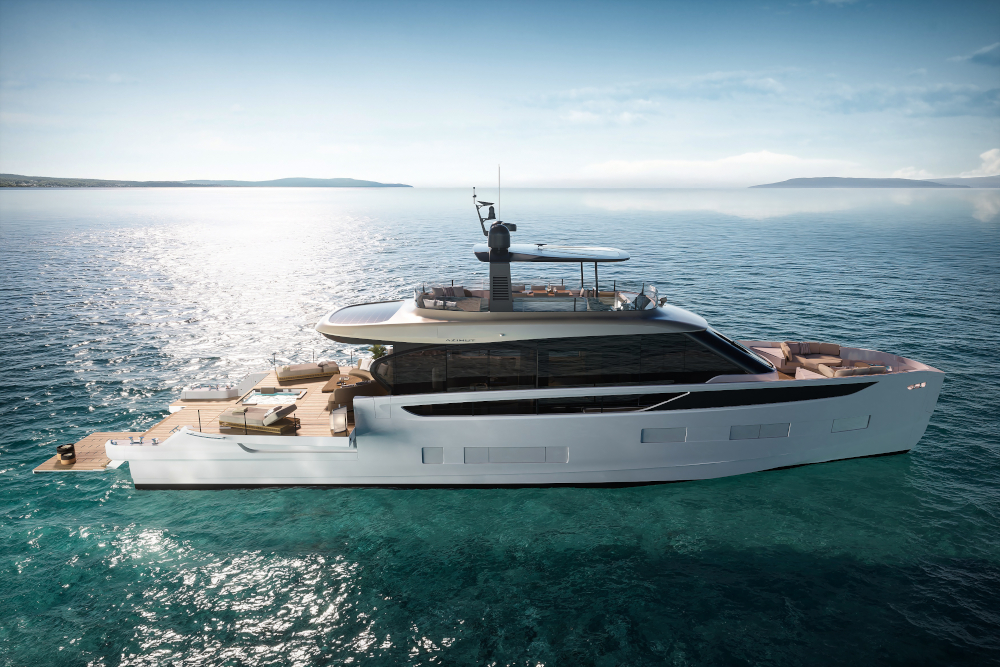
PM – There is also the hybrid propulsion option available on the Seadeck line.
AA – Yes, although the interest we are seeing from clients is primarily linked to the comfort benefits provided by hybrid systems.
The battery pack not only allows short periods of zero-emission navigation but also enables the yacht to remain at anchor for hours without running the generator, eliminating vibrations and noise when the boat is stationary – precisely when owners enjoy it most.
It becomes possible to spend an entire night at anchor with all major hotel services operating, including air conditioning, powered solely by stored energy.
PM – Digitalisation has been widely discussed in shipyards in recent years, but often the topic is reduced to new software or onboard systems. How do you interpret it?
AA – Digitalisation is not an IT project; it is an evolution of the operating model.
The introduction of an advanced ERP (Enterprise Resource Planning) system and integrated planning tools essentially creates a true corporate nervous system. The objective is not simply to collect data, but to enable communication along the entire value chain.
Historically, product companies have been organised in silos. As complexity increases, this model shows its limitations.
Integration means allowing information from after-sales to feed back into design, enabling planning to interact with the supply chain in real time and transforming the warehouse from a storage area into a strategic hub.
This also involves the supplier ecosystem. A yacht is a complex system integrating engines, stabilisers, HVAC systems, electronics and custom components.
Digitalisation allows forecasts to be shared, critical issues anticipated, procurement times reduced and industrial stability improved.
At the same time, the yacht itself is becoming a connected object. Smart control units and monitoring systems allow predictive maintenance, remote diagnostics and new service models. This opens interesting scenarios but requires advanced software capabilities and a systemic vision.
That said, we must avoid the risk of over-technologisation. Technology must improve the onboard experience, not complicate it. If it becomes invasive or unintuitive, it turns into a problem rather than a value.
The balance lies in making complexity invisible to the owner while maintaining rigorous technical control upstream.
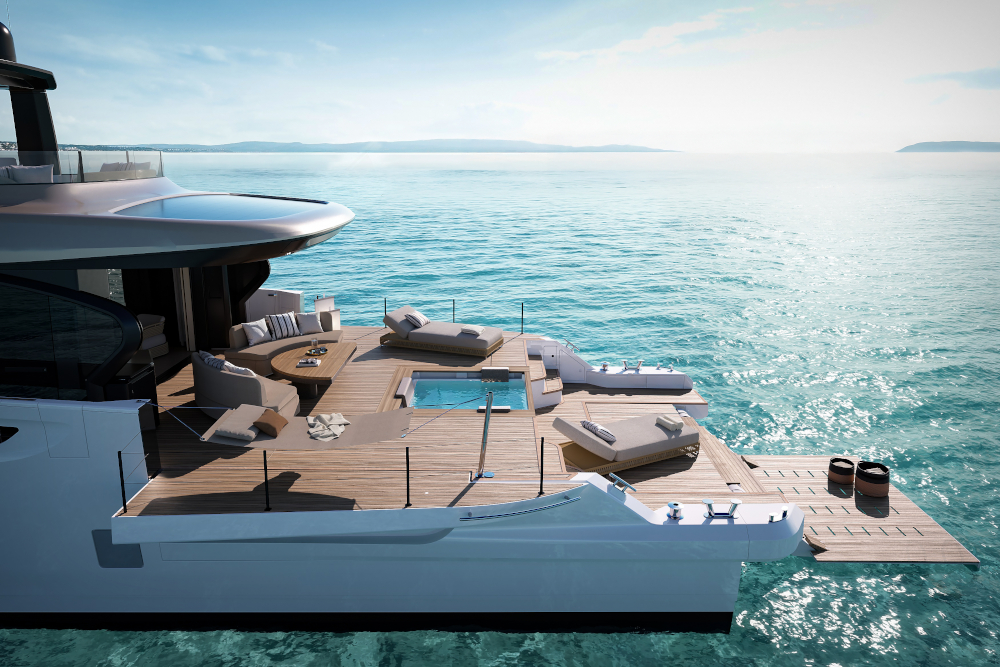
At the end of the visit, the impression is that the real transformation underway is not spectacular. It is not a declared revolution but rather a continuous process of progressive integration.
Industry and craftsmanship are not opposing poles but variables to be balanced. The objective is to maintain product recognisability while integrating method, development robustness, efficiency and systemic vision.
In a segment where a brand can sustain a premium price only if supported by genuine technical substance, the challenge is not to grow in size but to grow in coherence.
In Avigliana, far from the sea, that balance is where the real game is being played.
©PressMare - All rights reserved