
Dragoni and yacht interior design: the role of design in real sustainability


During the panel organised by Smart Interiors Horizon at SEAQUIP Milano 2026, the theme of sustainability emerged from a different perspective: fewer slogans, more design responsibility.
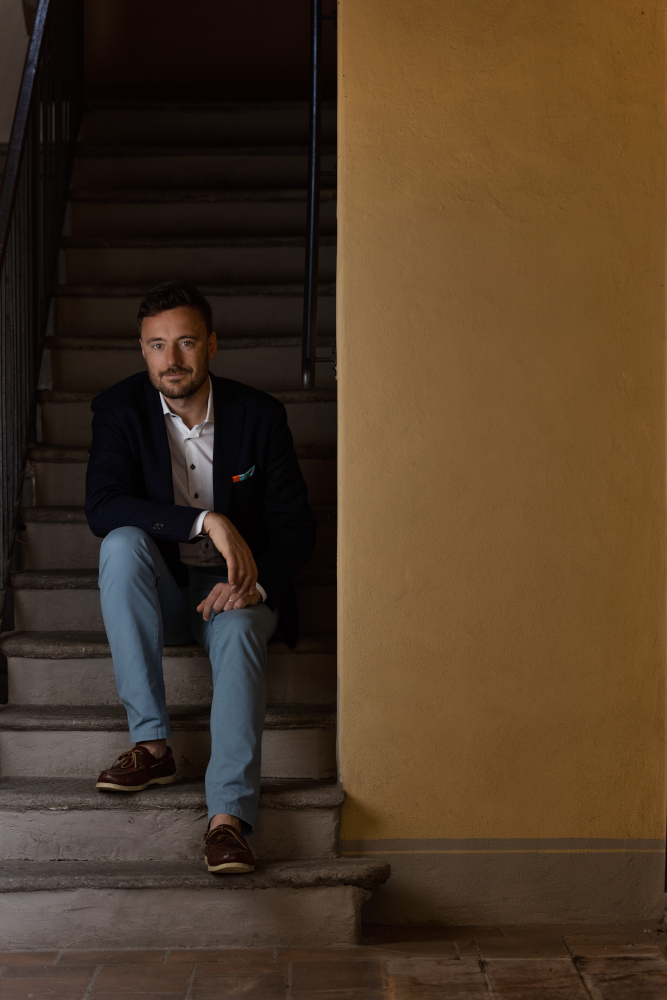
We explored this approach with designer Michele Dragoni, founder of Dragoni Design Lab, who shared a practical and technical view of the designer’s role in guiding more conscious choices across materials, processes and collaboration with stakeholders in the yachting industry.
PressMare – How much influence does a designer have today in steering shipyard decisions towards more responsible solutions?
Michele Dragoni – It depends very much on the context. When the designer works directly for the owner, the room for manoeuvre is greater. There is more control and it is easier to pursue a coherent design vision.
When the client is the shipyard, dynamics change. Some shipyards are more open, others less flexible. The risk is that the project gets “dismantled” piece by piece, losing coherence. And when a project loses coherence, it often also loses its sense of responsibility.
PM – How much can the designer influence this awareness?
MD – A great deal, especially if the shipyard is willing to listen. In that case, a virtuous circle is created.
A project designed with respect for materials reduces waste, simplifies production and improves durability, impacting not only aesthetics but above all real efficiency.
Problems arise when there is a lack of design culture or the ability to technically support choices. Some studios propose ideas without being able to substantiate them technically, which creates distrust among shipyards.
If the designer proves to be an ally rather than an obstacle, the relationship changes completely.
PM – Do you have a concrete example?
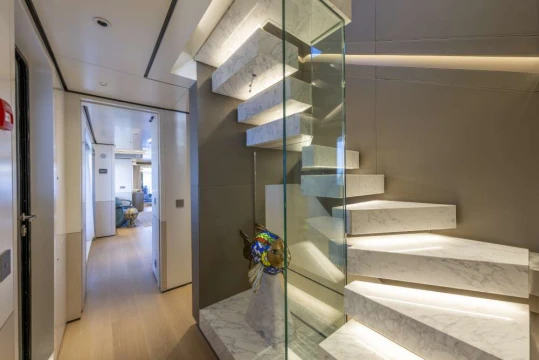
MD – Yes, on a 35-metre yacht we designed a stair wall covered in leather with an integrated handle.
The issue was clear: a fully leather handle, especially in areas subject to wear such as fingernail contact, would deteriorate quickly and require complex manufacturing.
The solution was to visually replicate leather using a lacquered surface, designed to achieve the same visual and tactile effect in terms of colour and gloss level.
The result: less material used, simplified production and greater durability, while maintaining the same aesthetic.
PM – What are the most common mistakes in material selection?
MD – The main one is not respecting the material, both in terms of environmental cost and its intrinsic qualities and limits.
If you use a rare stone, it makes no sense to apply it uniformly to the point of trivialising it. It should be enhanced.
The same applies to leather: if it is not visible or perceptible, it loses meaning.
Another mistake is not considering real use. Light leather handrails, porous marble in operational areas, wood veneers sensitive to sunlight: these choices lead to rapid wear and frequent replacement.
In practice, this is the opposite of sustainability.
PM – How do you handle discussions with owners when less functional choices are proposed?
MD – It depends on the person.
If the owner is experienced, they often understand immediately. It is enough to explain that certain options worsen life on board and increase the crew’s workload, ultimately affecting the service provided to the owner and guests.
If that doesn’t work, I try to involve the captain, who plays a key role, as they experience the yacht daily and have credibility.
In the end, the most effective argument is always practical: showing how a design choice directly impacts the onboard experience.
PM – Do you see differences between younger and more experienced owners?
MD – Not so much in terms of trust in the designer, but in experience. Those who have owned several yachts know what works and what doesn’t.
However, trust is transversal: it can be lacking in both younger and more experienced owners.
PM – Regardless of the owner, how difficult is it today to work with truly sustainable materials?
MD – The main challenge is understanding what is genuinely sustainable. Information is often unclear. Materials presented as sustainable frequently lack objective evaluation.
What is needed is an independent system, a database that analyses materials throughout their entire lifecycle.
Without that, designers must carry out their own research, often without having enough time.
PM – Are there concrete examples of sustainable innovation applied to yachting?
MD – Yes, one interesting example concerns onboard water production. We are working on a technology that converts humidity in the air into potable water.
This reduces reliance on desalination systems, which require invasive maintenance and have a significant environmental impact.
It is a clear example of how addressing a practical need can lead to an environmental benefit.
Sustainability is also responsibility. Conscious design respects materials and simplifies processes, improving life on board.
And it is precisely in this space that the designer can make the difference.
Rebecca Gabbi
©PressMare - All rights reserved