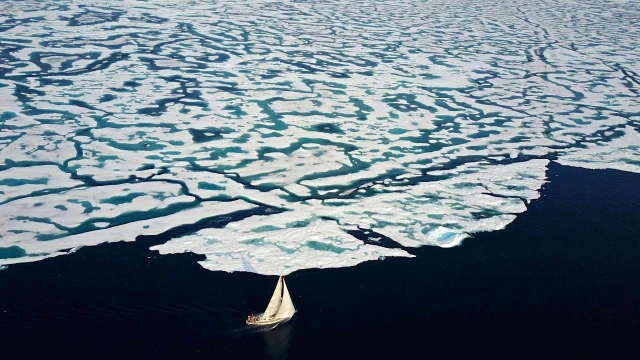
Global Superyacht Review 2026: new routes and geographies reshape the market. Photo Kamana Sailing Expedition, PressMare archive
Global Superyacht Review 2026: new routes and geographies reshape the market


If technology and access models are transforming the way yachting is experienced, observing geography reveals another layer of change. Not so much in the shift of destinations themselves, but in the logic by which they are selected and integrated into the overall experience.
In Fraser’s Global Superyacht Review 2026, the Mediterranean continues to represent the operational core of the sector. Its combination of infrastructure, services, port density and tourism appeal keeps it at the centre of the system, both for charter and private use. However, this centrality no longer implies exclusivity.
Alongside traditional routes, increasing geographical diversification is emerging. New areas — from the Arctic to the Pacific, including parts of the Middle East — are becoming a stable presence on the radar of owners and charter clients, not as marginal alternatives, but as natural extensions of the cruising calendar.
This phenomenon is not driven solely by the search for new destinations, but by a broader shift in expectations. The yacht is no longer used exclusively for seasonal leisure, but as a platform for differentiated experiences throughout the entire year.
In this sense, geography becomes dynamic. The Mediterranean remains central during the summer months, but is increasingly integrated with other regions offering different contexts: remote environments, diverse climatic conditions and less standardised experiences.
The decision-making process is also changing. While in the past destination choices were often linked to established factors — seasonality, accessibility and tradition — today more complex elements come into play, including logistics, security, sustainability and overall experience quality.
This explains why emerging destinations do not replace traditional ones, but rather complement them, expanding the range of possibilities. The yacht thus becomes a tool for global mobility, capable of adapting to increasingly complex itineraries.
From an operational perspective, this evolution has significant implications. Shipyards must design units capable of operating in different environments, while management companies and brokers are required to develop increasingly cross-disciplinary expertise to support more complex and often less standardised itineraries.
Infrastructure is also called to evolve. While the Mediterranean benefits from a well-established network, many emerging destinations require investment, coordination and stronger integration with other transport systems and services.
The result is a market that is not simply expanding geographically, but becoming more fluid, less tied to rigid seasonality and more oriented towards continuous yacht usage.
If routes are multiplying and becoming more complex, the key element remains the industry’s ability to adapt to increasingly sophisticated demand. It is within this balance between product, service and industrial vision that the future of yachting will be defined. This will be the focus of the final analysis.
Cristina Bernardini
©PressMare - All rights reserved